Replit Blog
 Apr 5, 2021
Introducing Kaboom
Games are awesome, making games is even more awesome. I love making games, making games makes me happy, being happy makes me make better games, i hope everyone can be happy and enjoy making games! -- me, today We at replit are thinking about ways to make programming more accissible, Kaboom is an effort to try make game making more accessible and fun for both beginners and intermediate programmers. I want to discuss some core designs of both the library and the editor here. (it's strongly recommended first check out some examples on the kaboom website to get a quick taste of what kaboom looks like) Official website
 Mar 26, 2021
Welcome to the Wonderful World of Clusters
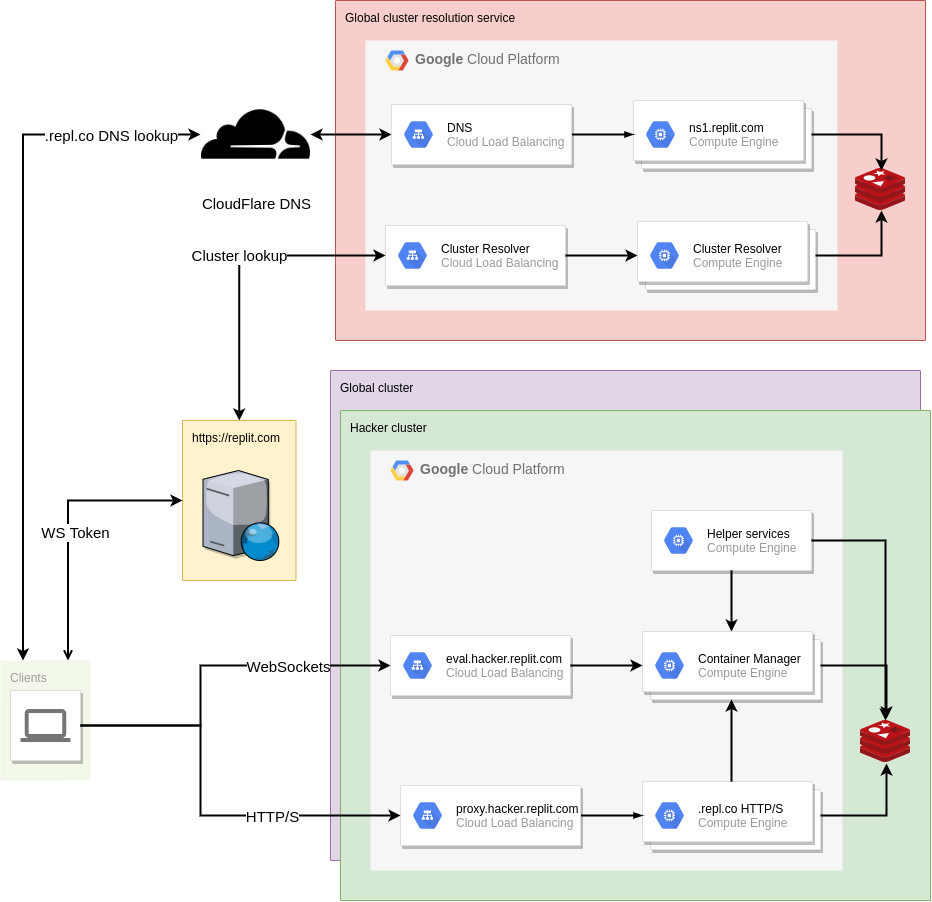
Having a solid foundation is critical for us to be able to fulfill our mission of making programming more accessible, more creative, and more fun. We did a great job of making the platform more stable during last year, but every now and then we would still run into unforeseen problems that cascaded into other parts of the platform, producing a bad experience for everyone. So back in October (just a few weeks after I joined the team) when we had 2 load-related site-wide outages within a week, we knew it was time to do a major overhaul of how our infrastructure handles traffic. And now today, we're announcing that as a side effect of that infrastructure change, Hacker repls now run in newer, more powerful machines, which means that we'll have more room to grow and experiment with more benefits for Hackers (and you might find that things feel a little bit snappier lately). This is the first of a three-part series of blogposts on how we rebuilt our infrastructure over the course of ~5 months. Introducing a new failure domain The original goal of this endeavor was simple, in theory: split the Replit infrastructure into multiple failure domains, so that when (not if) the next incident occurs, it only affects a subset of the users instead of all of them. There are multiple strategies to do so, and we chose to move Hackers to their own failure domain. But what does this split entail? Prior to this change, our backend infrastructure was relatively simple: a Google Compute Managed Instance Group of VMs that run containers, and another one that serves HTTP traffic on .repl.co domains. So in theory if we take the right-hand side of the diagram and make multiple copies of it, treating each one as a completely independent cluster, we solve the problem. Mission accomplished, right? Not quite: clients now need to know where to make their requests to, since they will now need to hit different hostnames depending on which cluster their repls are (since they are now completely independent after all). Clients that wanted to connect to their repl through the workspace were already required to contact the replit.com web server to get an auth token for the WebSocket connection anyways, so it would make sense for the web server to be the source of truth about the repl->cluster mapping. But what about hosting? All repls get a .repl.co domain, and users can CNAME them to be able to get to their app. At this point, the problem started looking very DNS-shaped, and that's kind of what we ended up doing: an external cluster resolution service, that can be used by both the Replit.com web server and individual clients trying to access their apps!
 Mar 22, 2021
Replit Case Study - Creating a 700+ User Web App in a Month
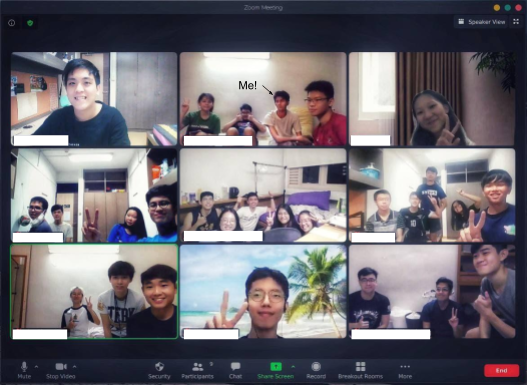
Hey there 👋🏻 My name is Rishabh Anand and I am an ex-resident at the National University of Singapore's (NUS) Raffles Hall of residence. It's one of the on-campus student accommodations that houses students from all levels of undergraduate education at NUS with the majority being freshmen and sophomores. RHDEVS – the software development club at Raffles – was tasked by upper management to build a convenience app for the Hall’s student body. The app itself was nothing new; it has some basic features students would potentially use in their daily hall lives: Laundry Facilities Booking for clubs Events Booking / Management Calendar and Timetable Planner
- Mar 19, 2021
Introducing the Python package cache
Figuring out how to install third-party libraries can derail people from learning to code or starting a new side project. We built the Universal Package Manager (UPM for short) to save people from having to think about package installation at all. Just import the library, press run, and UPM will install it into your repl! Every time you run a repl or a repl wakes up, UPM checks to see if it needs to download and install any dependencies. This is handy (no matter what's gone inside your repl, it will always have the dependencies it needs) but slow: UPM needs to download typically tens of megabytes worth of packages, extract them on the local filesystem, and sometimes also pre-compile them for better runtime performance. Or at least it used to be slow until yesterday when we enabled the Python package cache, so now the most popular Python packages are pre-populated in pip's cache (/home/runner/.cache/pip), so the download step is going to be mostly gone for the vast majority of Python repls! It also uses pre-built wheels as much as possible to avoid even having to pre-compile code. How does it work? We had two goals in mind when we started designing this: it should be as transparent as possible, which meant that users would still be able to add packages to the local cache while avoiding copying files around (which would have defeated the purpose of using a cache in the first place), and
 Mar 11, 2021
Replit Case Study - Catalyst Coding Club
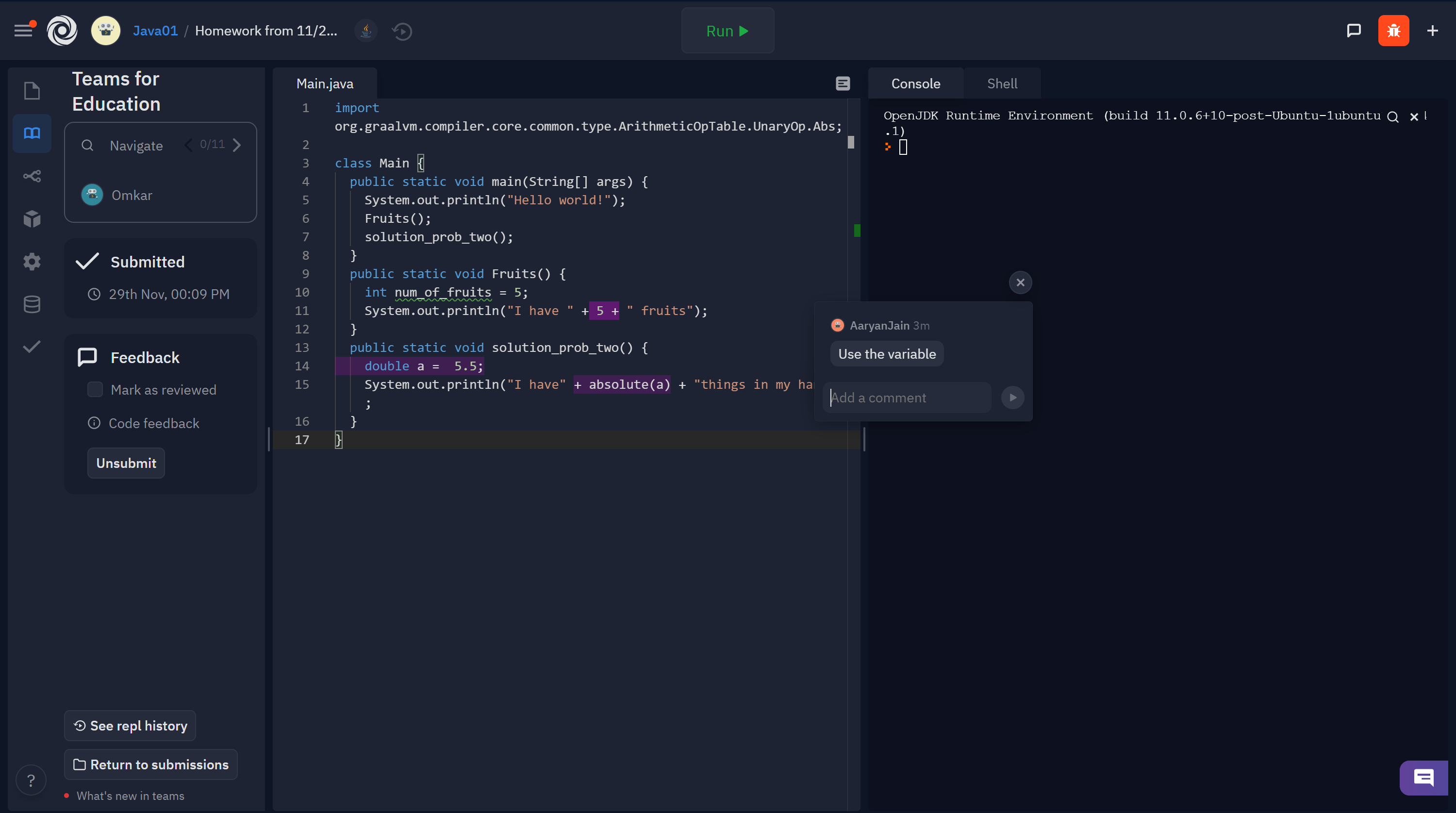
Realizing the lack of exposure to STEM skills for younger students, a group of high school students started Catalyst, a club to introduce students all ages to CS and making sure it is accessible for everyone. Located in Redmond WA, Catalyst strives to produce an environment in which students can thrive and become passionate about the technological world. It is our goal to help ensure students in our community get the exposure they need to computer science and make an informed decision about their future careers. Working on projects and organizing discussions are only a couple of the ways we go about exploring computer science. Whether it is the intricacies of a Python Loop, the making of a div in HTML, or the application programming in Java, we strive to inspire genuine interest in our students over the span of a school year. With the rise of COVID-19 in the United States, many states were forced to shut down schools and resume operations online. This has been detrimental to the learning capabilities of students, especially the younger ones. Now that most resources have been moved online, schools and organizations have been looking for programs that can help aid them in teaching various concepts to students and help those especially at a younger level learn about various concepts using simulations. Our organization was many of many that needed a way of teaching coding online to our students. Transitioning to online learning as a club has been difficult for us because usually in a normal environment, we would be able to help students debug their issues in person. Adding on to that most of the issues beginners and students face is with the editor itself. We searched for resources that can help us teach these passionate students about CS for several weeks, and that is when we stumbled upon Repl.it. Repl.it is a solution that fixed most, if not all of our problems. We didn’t have to worry about editor issues thanks to the built-in editor Repl.it has that supports several languages, from Python to Java to HTML. Not only does it have a built-in editor, it also has a unique suggestion system which helps us teachers pinpoint problems in the students’ code. Repl.it is built with many features that all in all really help us teach our students and make learning CS a lot easier and complex algorithms more understandable.
 Mar 10, 2021
Markdown Preview
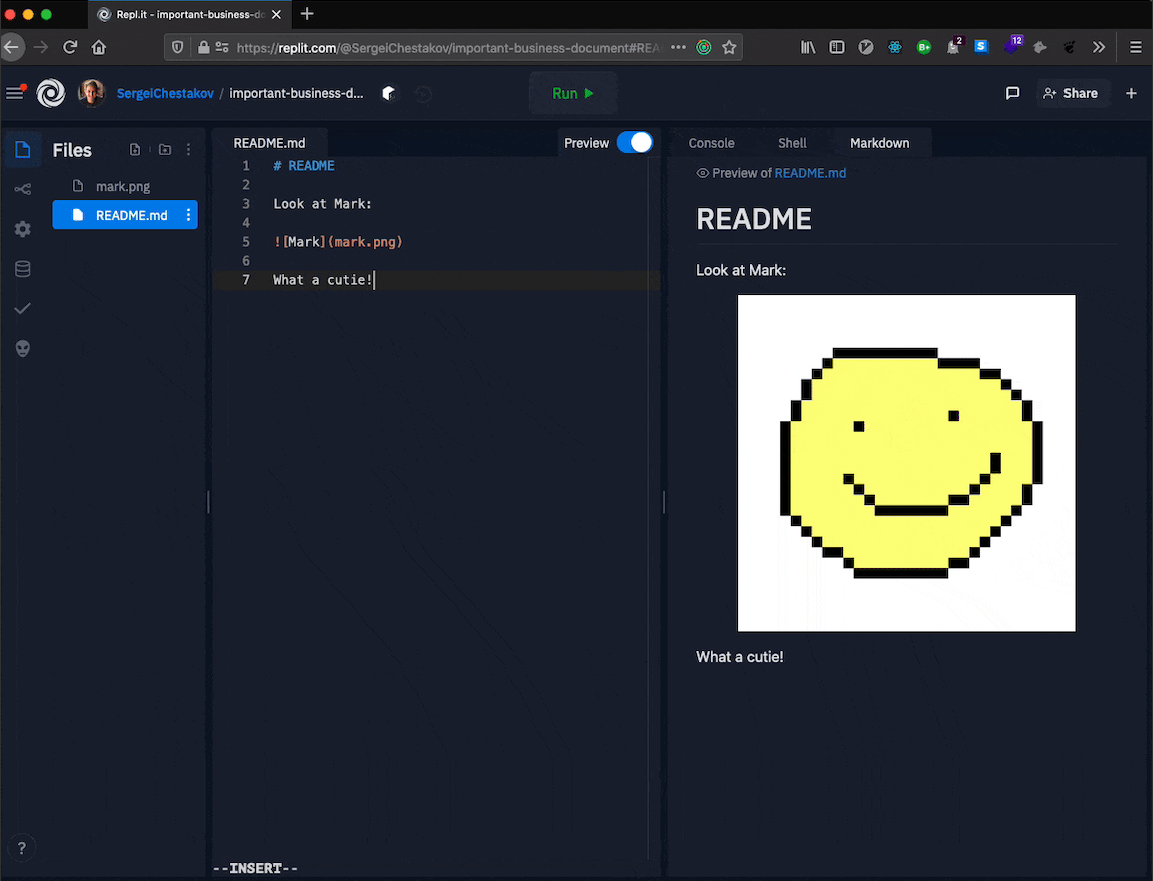
It's always been super fast to start writing markdown in a repl. However, the more we used it, the more we realized there were some key features we were missing that would make our lives easier. Which is why we're excited to announce all of the new improvements we've made to the markdown editing experience on Replit! Now, if you open up a markdown file (a file with a .md extension), you'll notice that a new tab appears to the right of your editor with the file's contents. This allows you to see a live preview of the rendered markdown right as you type it! You can also toggle the preview off if you no longer wish to see it. The file that's being previewed will persist in the markdown tab until you open another markdown file or toggle it off explicitly. This has the added benefit of being able to see instructions or notes, like the repl's README, alongside your code. You'll also notice in larger documents that the preview window stays synced with your current position in the file. As you type or move your cursor in the editor, the markdown pane will scroll with you, consistently keeping your cursor in the center of view. Lastly, we've added the ability to render local images that you reference in your markdown file directly in the preview pane!
 Mar 9, 2021
Replit Dotcom
tl;dr In the next few days, we'll be moving domains from "repl.it" to "replit.com." Nothing is required on your end -- all urls will automatically redirect and you'll remain logged-in (as if by magic). Nothing else changes. We prefer if people referred to us as "Replit" (pronounced rep-lit 🔥). To understand the origins of our name and how we got here, it's useful to tell you the Replit genesis story: Back in university, where I was studying Computer Science, I had to set up a development environment for every subject on each computer I wanted to use to work on homework. Whether it was object-oriented programming in Java, Data Structures in C++, or Operating Systems in C, they all had their unique setup process complete with gigabytes worth of IDEs, system dependencies, and packages to download. Even worse, IT admins locked down some computer labs at school, and you had to chase them down to install software. Still worse, sharing code was a nightmare. You had to email files around, and more often than not, they didn't run on the professor or other student's machines because of versioning issues. Around the same time, we saw giant leaps in browser and web technologies. Inspired by Google Docs, I had an idea: Why not write and run code in the browser. Make it extremely easy to share code in a reproducible environment. Another inspiration for such a system was a cloud portable Virtual Machine where you wrote code and shared the entire machine that could be cloned by others. Another mental model useful for inventing what became Replit was REPLs—inspired by Paul Graham's Lisp essays, SICP, and Scheme—I thought a REPL was the easiest way to spin up an environment to learn to program. After years of work, in 2011 we had a prototype, which we initially called "JSRepl".
 Mar 8, 2021
Introducing Threads: Have Conversations Around Code
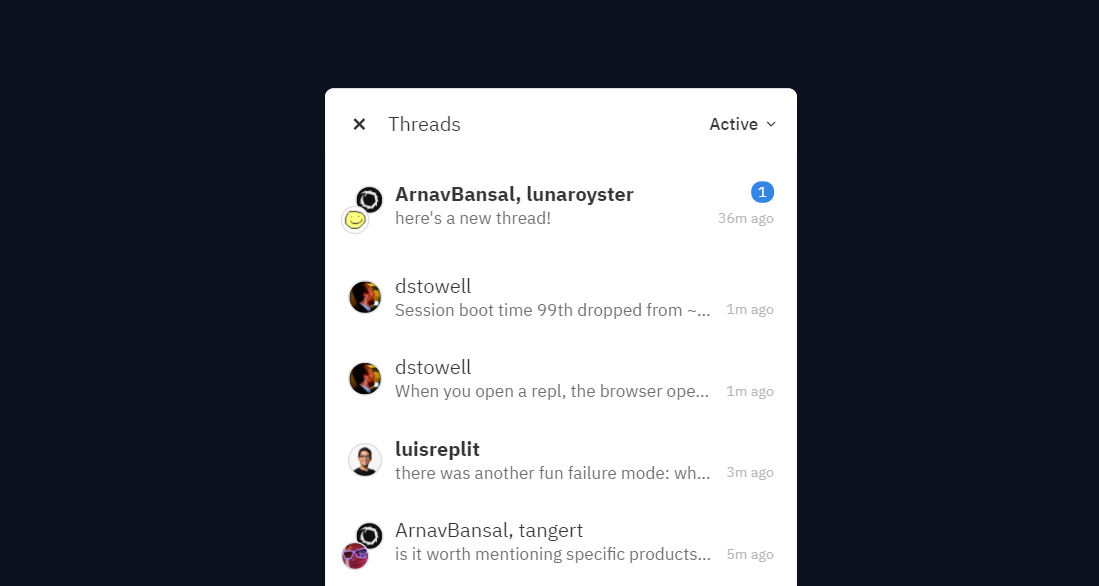
A few months ago, we announced Annotations for our education users, a feature which lets Replit collaborators highlight code and discuss it in context. As classrooms were remote, Annotations became a major part of our teachers' workflow. Over a 100,000 annotations have been created since its launch. Students have used it to ask questions and clear doubts. Teachers have used it to provide feedback, and help students debug issues with their code. We've learnt a lot from them. And now, we're building Threads to make the experience complete. As repls have become more powerful, the way people use them has evolved.
 Mar 1, 2021
Replit Teams for Education is Leaving Beta!
*Edit: As of March 2022, Teams for Education is free for all educators. You can gain access here. At Replit we believe that computers give people superpowers. With computers, anyone who's willing to learn can spend more of their time on creative invention rather than tedious drudgery. They help us automate repetitive tasks and build on the collective knowledge of all the great thinkers, inventors, artists, and teachers who came before us. Computer science teachers around the world are bestowing these superpowers upon the next generation of creators and builders. We built Replit Teams for Education for them, and today we're officially taking Teams for Education out of beta. Sign up for a free trial if you haven't already!* Thank you teachers for beta testing Teams, for giving us invaluable product feedback, for helping one another out as part of a vibrant and diverse community of Replers, and for being a part of the history of computers.
 Feb 25, 2021
HTTPS by default
The easiest, fastest way to put a server on the internet should also come with secure defaults. That's why we're excited to announce that Replit is now HTTPS-first, which brings additional privacy, integrity, and security benefits to servers hosted on our platform. This applies to every HTTP server repl on Replit. HTTPS-first Our hosting infrastructure makes it easy for anyone to instantly have a secure, HTTPS-secured server by default without having to lift a finger. Any repl can open up a port and we'll automatically give it a publicly-accessible URL. Routing requests from the internet through to individual repls is handled by a component of our infrastructure we call the proxy.
 Feb 17, 2021
Series A to Revolutionize Computing
Our mission is to give everyone in the world computer superpowers. We build powerful yet approachable tools & platforms for developers, students, and educators. We see a new generation of hackers and entrepreneurs rising to seize the power of computers and the internet to create software that empowers them and their communities. They refuse to be programmed by the software priesthood that wants them to endlessly consume ads. Instead, they build a more free society where computers work for and under human users, not the other way around. The world we're describing is coming, and we exist to accelerate the shift. Join us! Replit is a multiplayer computing environment that makes it fun to learn how to code, build, and share apps with other people. You can create a cloud-powered computer in milliseconds -- we call them "repls" -- and you can create as many of them as you'd like, all for free. Repls come with storage for your code and files, a database for your data, and a multiplayer editor & console to code with your friends. For $7/month, you'll get more powerful machines and, with one-click, make them run forever.
 Feb 8, 2021
Hosting Apps with Always On
Today we're excited to announce that Always On repls are available to all hackers! Anyone with Hacker plan can choose up to 5 repls and keep them running all the time. Users with a free plan can access Always On power ups using Cycles! With Always On, you can for example spin up and host an app like a Discord bot in 30 seconds: As a reminder, Replit gives you most of what you need to rapidly build and ship apps in the cloud -- at lightning speed: A blazing fast online IDE Automatic Package Management Automatic hosting
 Feb 3, 2021
Introducing Spotlight pages
Replit has never been just about code. It's also about the stories we tell, the apps and games we build, and how we collaborate. It's a part of Replit's DNA to make our community baked into the experience of learning and making. Today, we're announcing Spotlight pages: a new way to showcase your repls to the world. Whenever you visit someone else's repl, you'll see its Spotlight page where you can play with the repl's output, browse its code, and comment all in one place. And if you want to start a multiplayer session with someone new, you can directly request to edit their repl. Here's a demo of adding a new feature to a game using the Kaboom framework on Replit.
 Feb 1, 2021
The Internet of Fun
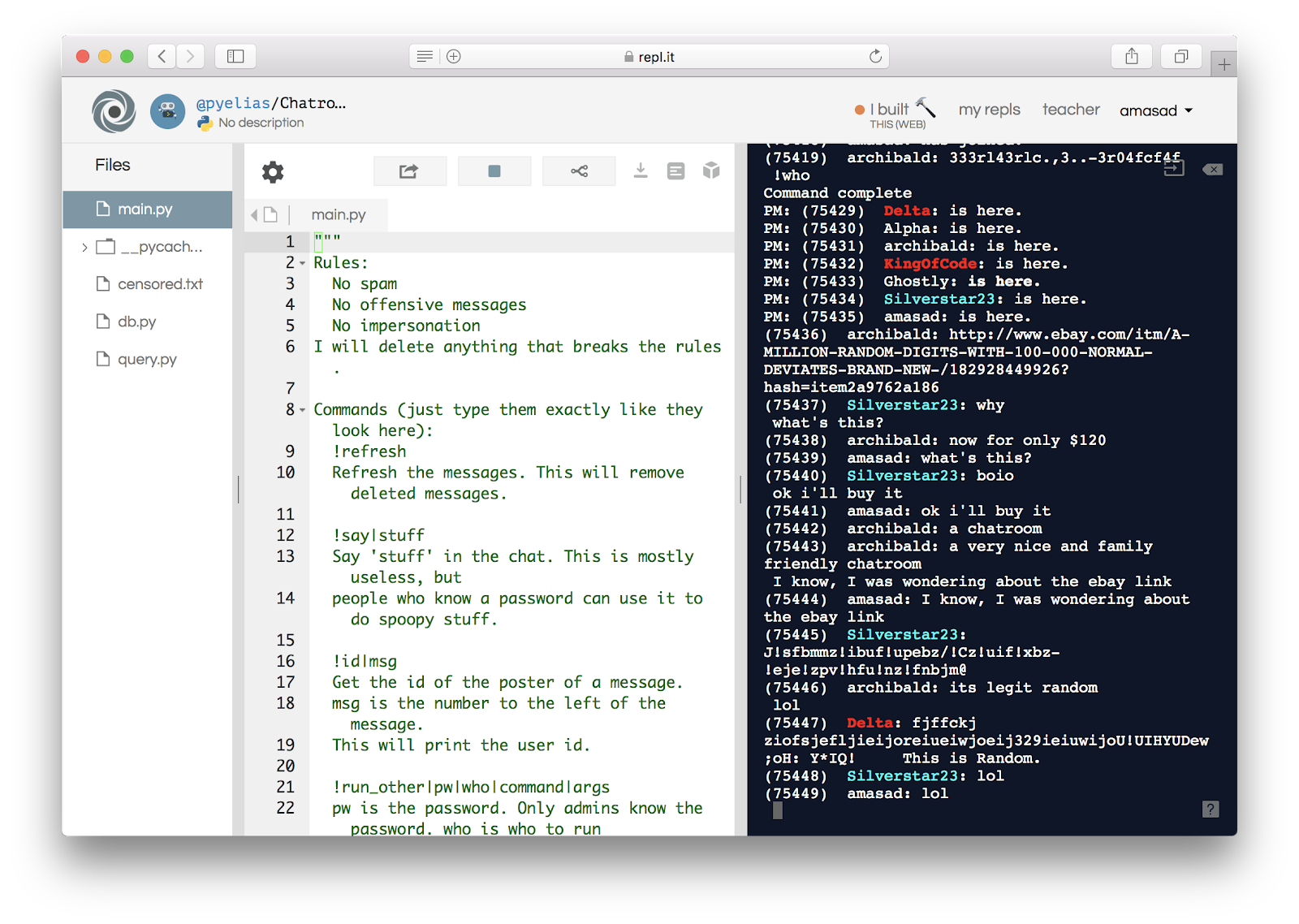
Yesterday, I accidentally built a chat app. Surprisingly, it wasn't the first time it happened. Before I tell you how Hackernews turned (this blog's) HTTP logs into chat, let me tell you about how a 12-year old user hacked the first chat app and community space on Replit right into a Python REPL. In 2018 we didn't know we had such a strong community of tinkerers. We knew people make games with Replit and share it with other people. But we didn't realize we'd already been a Schelling point for young hackers. One day, @pyelias created a post on our support forum saying he built a Chatroom and linked to a repl. I thought it would be a simple chatbot or something similar because I hadn't seen internet-based apps on the platform until that point. We had just opened up internet access to everyone, but we didn't support web hosting or any advanced features Replit has today. It was a very constrained environment.
 Jan 31, 2021
Killing Containers at Scale
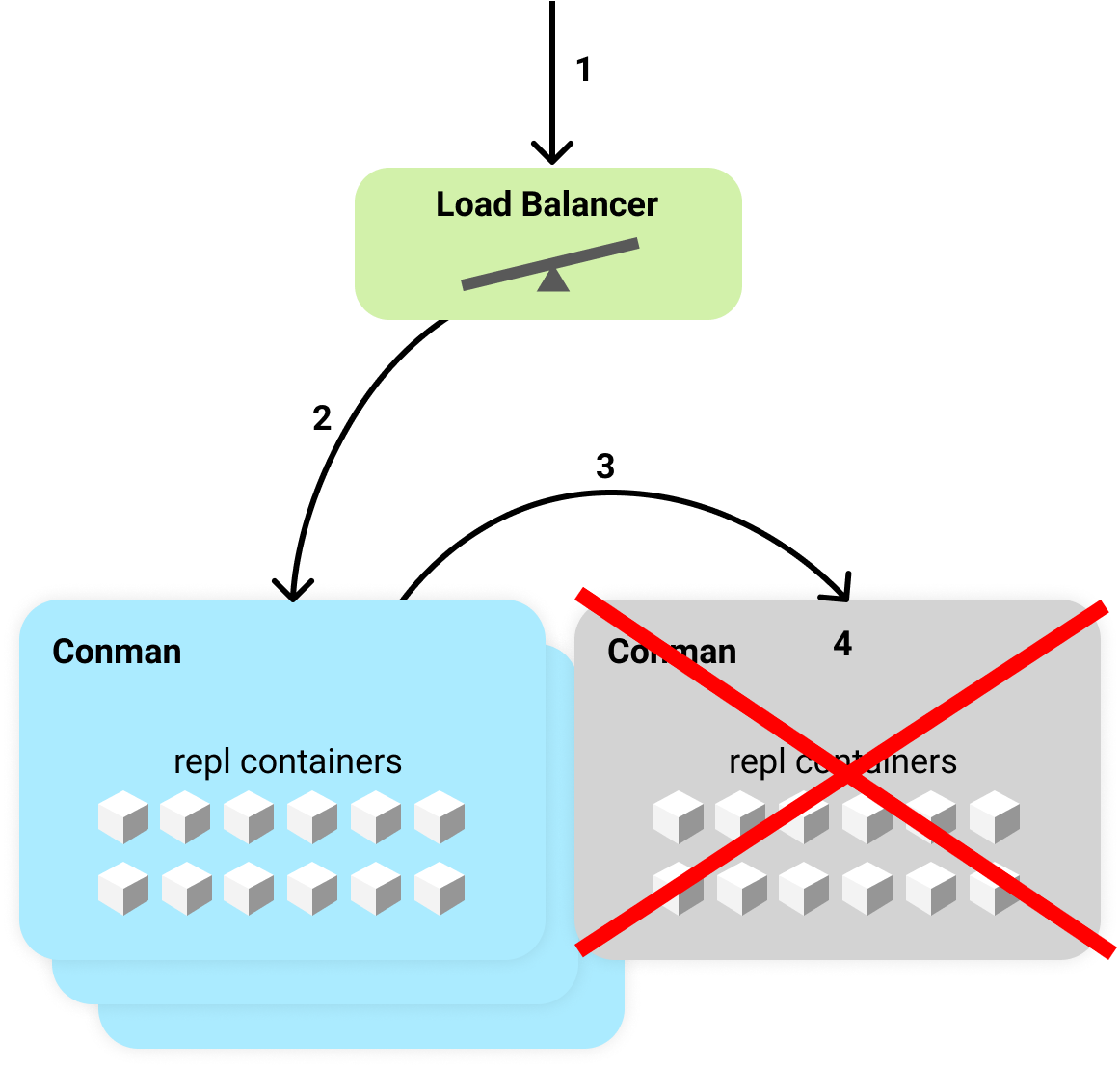
To make it so that anyone with a web browser can code on Replit, our backend infrastructures runs on preemptible VMs. That means the computer running your code can shutdown at any time! We've made it really fast for repls to reconnect when that happens. Despite our best efforts, though, people had been seeing repls stuck connecting for a long time. After some profiling and digging into the Docker source code, we found and fixed the problem. Our session connection error rate dropped from 3% to under 0.5% and our 99th percentile session boot time dropped from 2 minutes to 15 seconds. There were many different causes of stuck repls, varying from: unhealthy machines, race conditions that lead to deadlock, and slow container shutdowns. This post focuses how we fixed the last cause, slow container shutdowns. Slow container shutdowns affected nearly everyone using the platform and would cause a repl to be inaccesible for up to a minute. Replit Architecture Before going in depth on fixing slow container shutdowns, you'll need some knowledge of Replit's architecture. When you open a repl, the browser opens a websocket connection to a Docker container running on a preemptible VM. Each of the VMs run something we call conman, which is short for container manager. We must ensure that there is only a single container per repl at anytime. The container is used to facilitate multiplayer features, so its important that every user in the repl connects to the same container.