Replit Blog
 Oct 27, 2026
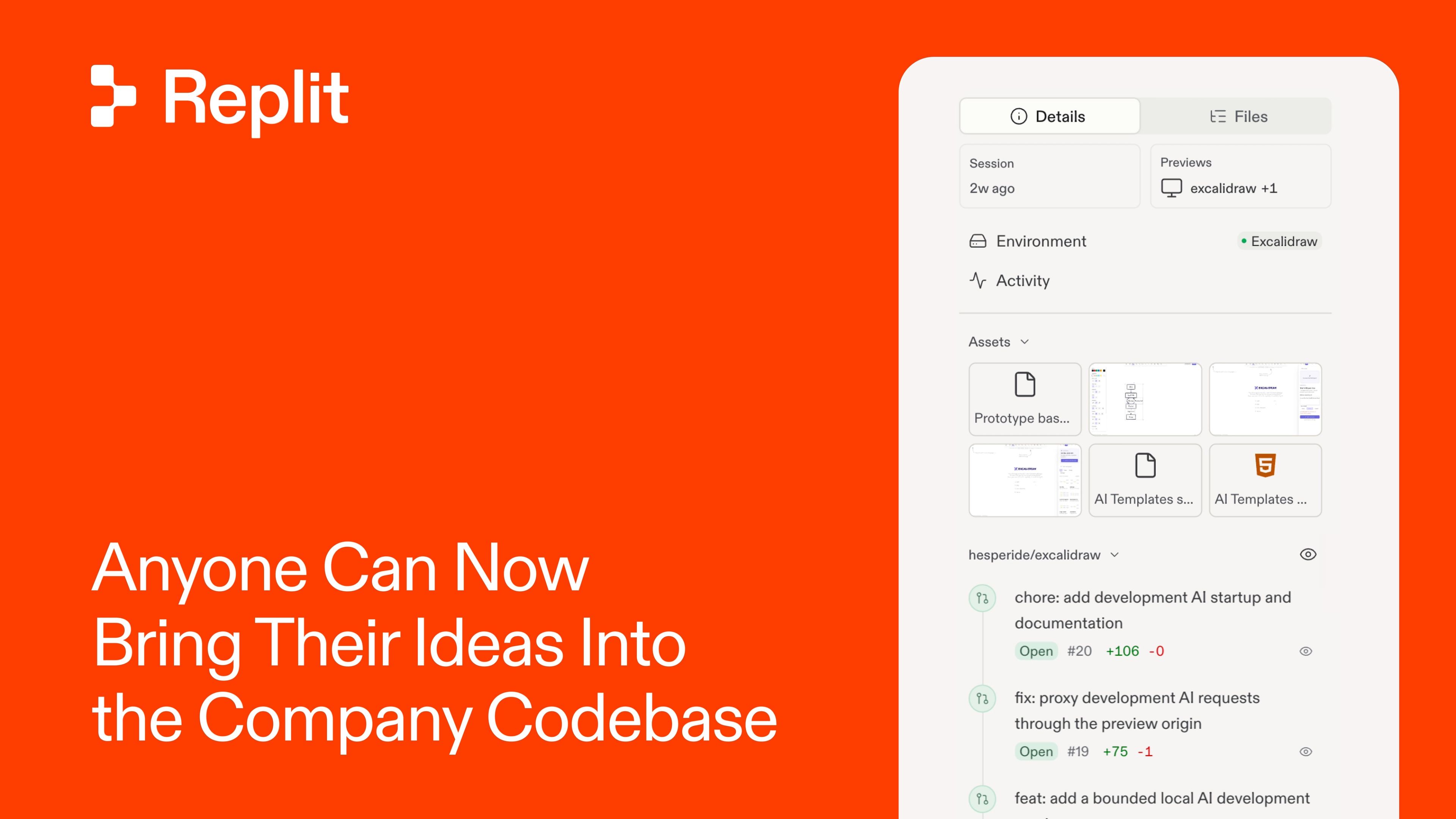
Anyone can now bring their ideas into the company codebase
Replit Cloud Agents build and test high quality changes, with engineers in control of what ships.
 Oct 22, 2026
Security vulnerabilities across the internet: How Replit is protecting your business
The vulnerabilities disclosed this week affect software that much of the internet depends on. They create real risks for businesses and more work for the teams responsible for keeping their applications secure. As AI makes more vulnerabilities easy to find, those teams will face more pressure to respond. At Replit, the security of our customers and the software and businesses they are building is our top priority. We’re handling much of the work for them directly: patching infrastructure, updating language tooling, and blocking exploits. Helping you build software also means helping you keep it secure once it’s running. We manage the environment your apps run in. This means we can apply many of these protections without you having to do anything. If you need to republish an app, we’re notifying you directly.
 Oct 22, 2026
Replit Monitoring Agent: Your very own software engineering team
Replit Monitoring Agent can detect production issues, investigate the cause, validate a fix, and publish it automatically.
 Oct 16, 2026
Bring Your Own Cloud to Replit
Enterprise isolation and control. The same simple experience for users.
 Oct 13, 2026
Introducing Replit Solutions Partners
Code is becoming a basic tool for every company. Our Solutions Partners help organizations put it to work.
 Sep 29, 2026
Free the models: Harness design at the frontier
Model routers are everywhere right now, but they have a fundamental limitation. No matter if based on advanced heuristics or a small model that reads each turn and picks which LLM to use, a router will always be less capable than the model it’s choosing for. Replit Agent lets the model decide instead. The main agent, or core loop, chooses its subagents’ tier and effort, and adjusts its own as the task unfolds. Given that freedom, GPT-6 Astra hands routine implementation to less costly subagents and decides for itself where its tokens are worth spending. On both DeepSWE and Terminal-Bench, Replit Agent is Pareto-efficient against Astra on its own: no published Astra baseline costs less and scores higher. It also beats a sidekick architecture, the same setup with one long-lived worker, by 11 and 16 points. Why we scaffold less Every model release invalidates assumptions baked into the harness. As models become stronger at long-horizon tasks, they don’t need as much scaffolding at the harness layer. In practice, we’ve observed them lean more towards delegation on their own: using subagents for context management and parallelism. Recent breakthroughs, Navier–Stokes among them, came in part from coordinating swarms of agents powered by frontier models [1]. But the frontier is jagged. The strongest coding model is not necessarily the strongest at designing UIs or making slides, nor the best at writing emails. So we design our harness to let each model work its own way, with the guardrails it still needs and quality at minimum cost as the goal.
 Sep 25, 2026
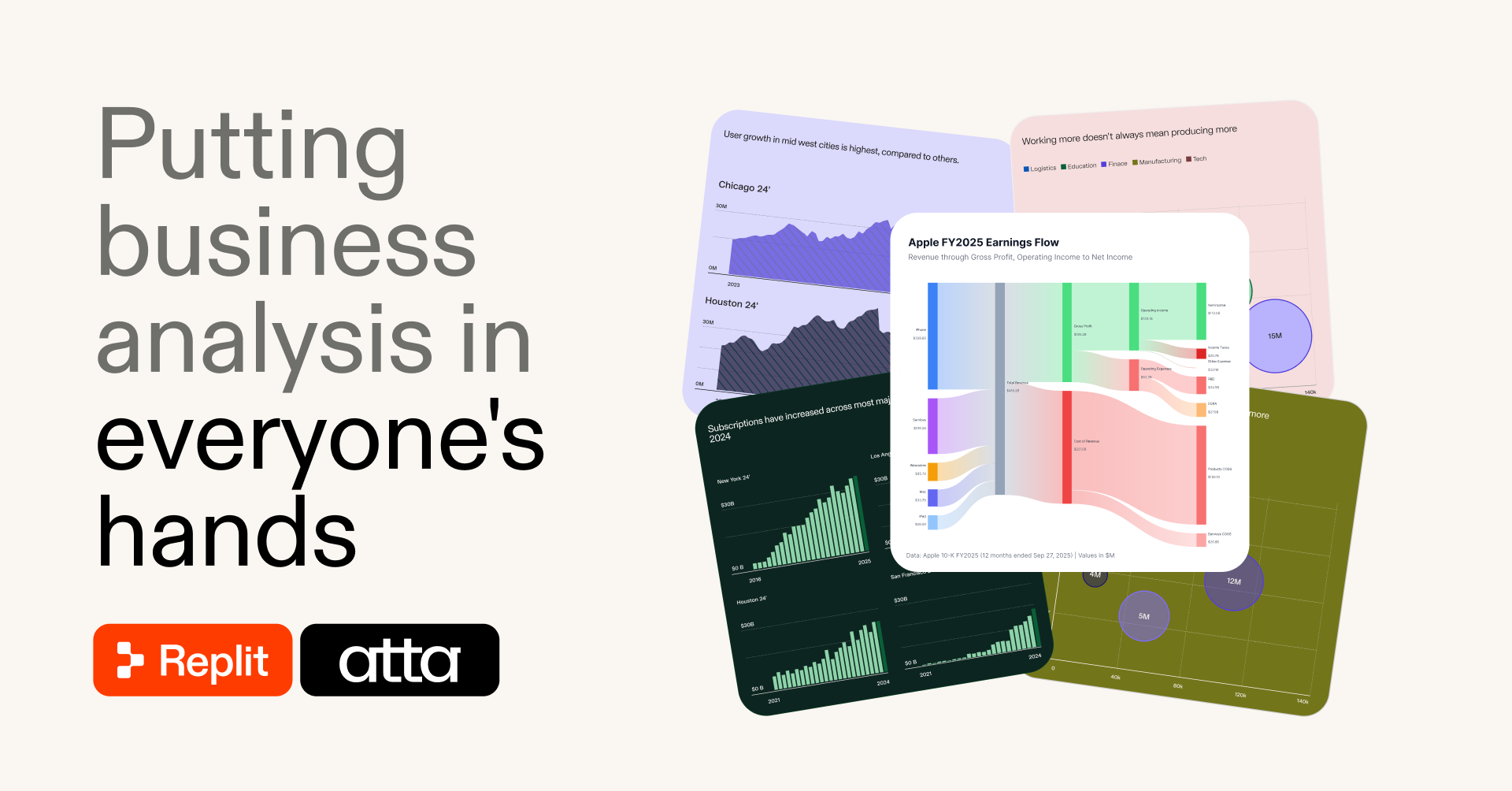
Putting business analysis in everyone’s hands
Replit is acquiring Atta to make it easier for anyone to explore data, understand what’s changing, and communicate what matters—starting with interactive charts in chat.
 Sep 10, 2026
Databricks Integration is Now Available with Native Lakebase Support
The Replit | Databricks integration gives enterprise teams a faster path to utilizing governed data for production-ready applications. Today, we’re excited to announce the integration is generally available alongside a new capability: native Databricks Lakebase support. This builds on the foundation introduced from our public preview announcement this past June. The result is one seamless path from idea to production: Replit accelerates application creation, while Databricks hosts and provides governed access and security to live enterprise data. Through Lakebase, Databricks also delivers a managed database for storing and updating application data. With native Lakebase support, teams can build full-stack, context-rich apps that combine live Databricks warehouse data with information created and updated through the app. When an app built with Replit is ready to deploy, Replit Agent automatically provisions its Lakebase database, eliminating the need for manual setup. New Capabilities for a Faster, Safer Launch Automated Preview Deploys: Test your apps before they go live. Replit automatically creates a separate preview environment that keeps test data isolated from live business data in Databricks, giving teams a safe place to build, review changes, and make adjustments.
 Aug 26, 2026
Intelligent Model Routing on Replit
Replit now picks the best model for every task, automatically.
 Aug 18, 2026
Replit Introduces Free Mode to Expand What is Possible with AI
With OpenAI, Replit now helps you accomplish even more, every day.
 Aug 17, 2026
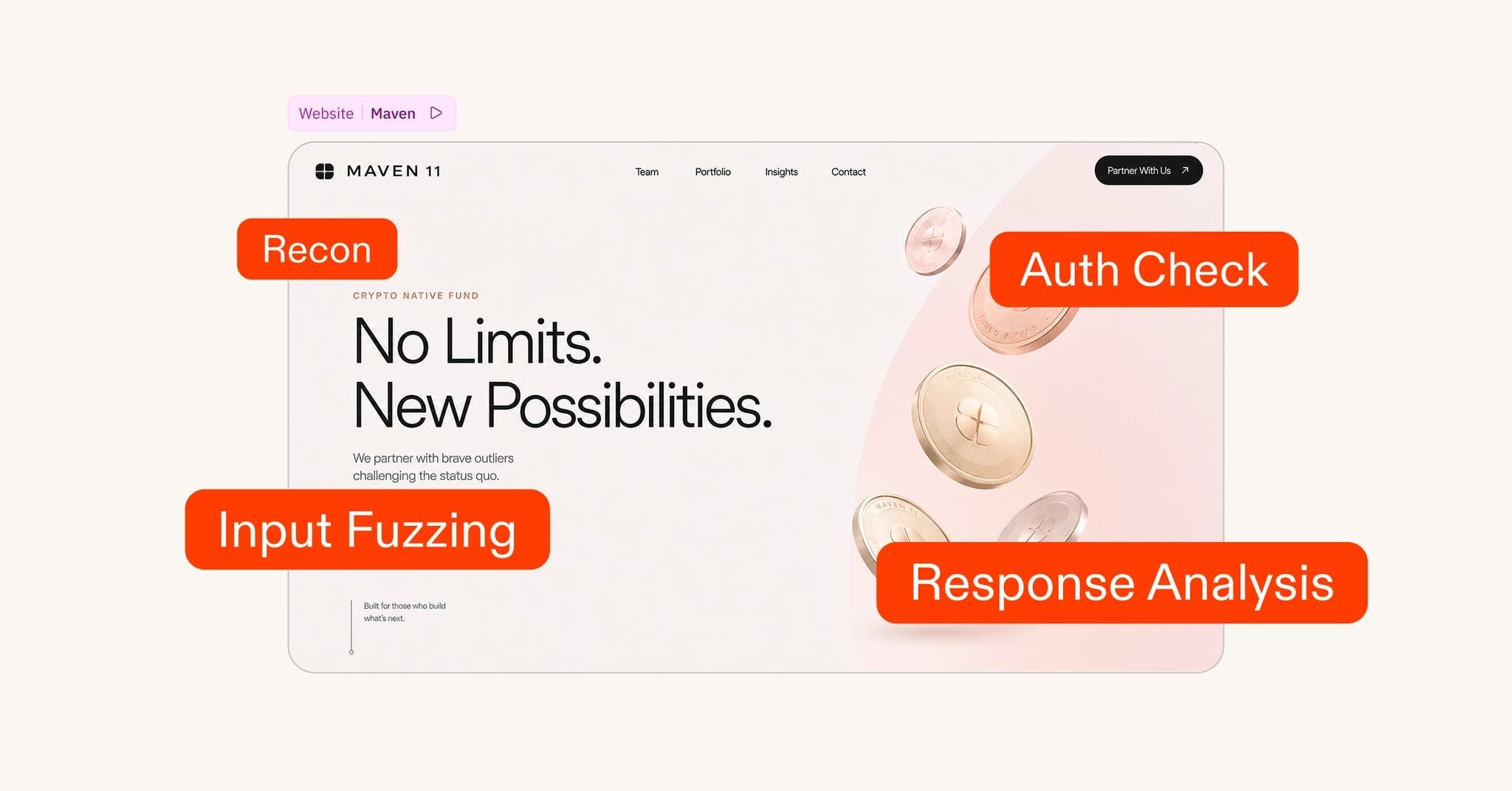
Black-box pen tests on Replit
See how Replit's new black-box pen testing simulates real attacks to find vulnerabilities hidden from code-only scans.
 Aug 16, 2026
Govern Replit at scale
New Enterprise Governance tools for Replit
 Aug 3, 2026
AI adoption starts with truth
The semantic layer is the foundation AI adoption is limited by trust. A user who gets burned by a confidently wrong answer will double-check the next one, eventually routing consequential work around the system entirely. Once that happens, AI remains a tool at the edges rather than infrastructure at the center… useful, but never trusted with the workflows where its value compounds. Before a company can benefit from more capable agents, those agents need a reliable way to know what the company considers true. A semantic layer tells an agent which tables are sources of truth and how they relate. That's the floor. It is necessary, and it isn't sufficient. A semantic layer is not plumbing. It is the first act of governance for an AI-native company: the shared definitions of the business, the canonical metrics, the sources of truth, and the relationships an agent is allowed to rely on. Without it, an agent does not have a data problem. It has a language problem: several tables can each look plausible, and the model has no grounded way to know which one means "revenue," "active user," or "customer." Getting that floor right changes the shape of everything above it. A semantic layer is not the product; it is the shared contract that lets a company safely add a system of specialized capabilities instead of one generic chatbot. Once an agent can ground itself in the right entities, metrics, and relationships, it can reliably run multi-step workflows, call focused tools, retain reviewed knowledge across runs, reuse validation and analysis code, and operate through durable services where work already happens.
 Jul 29, 2026
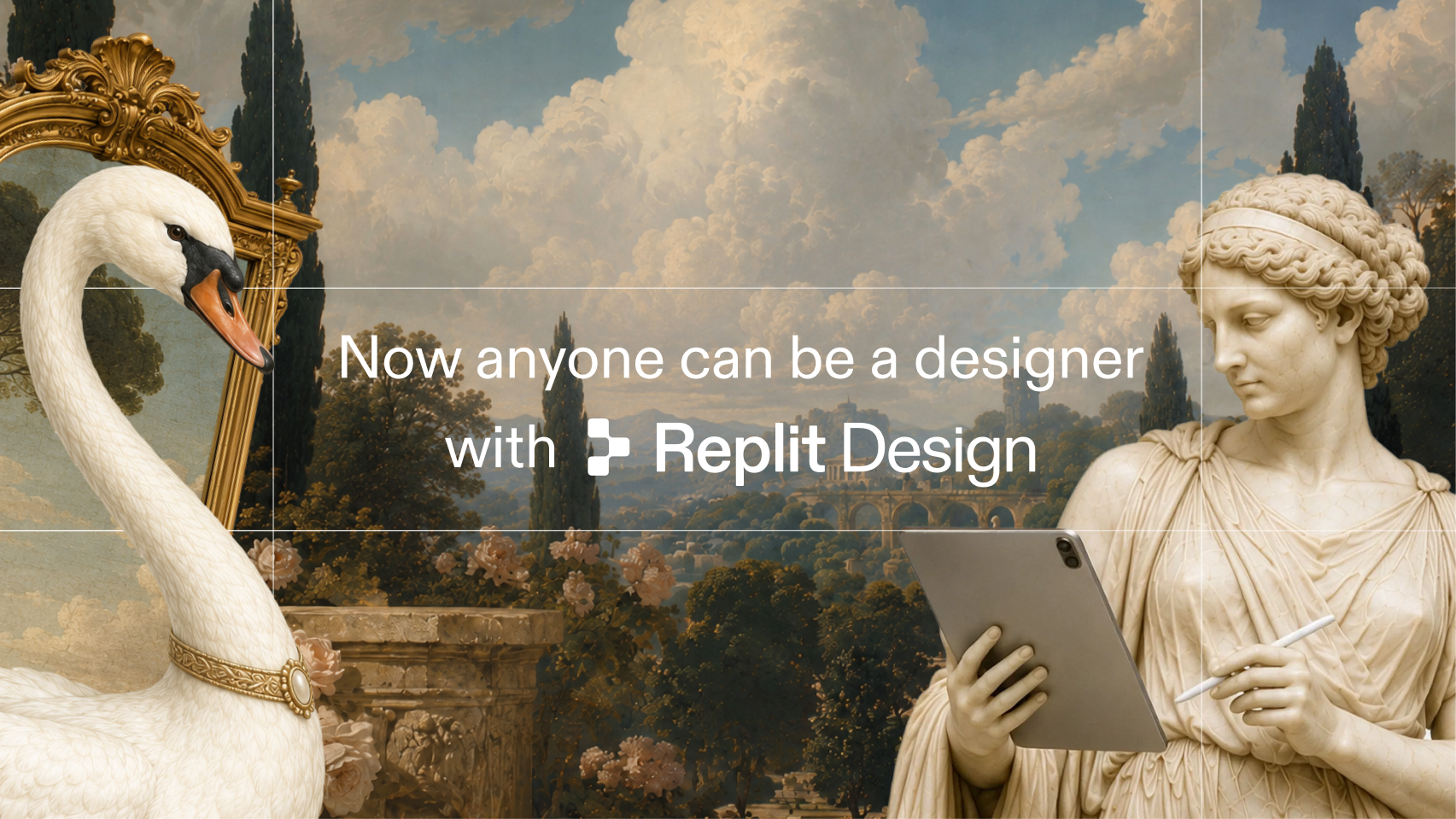
Introducing Replit Design
The next era of design, for everyone