
We believe enterprise software should move at the speed of ideas.
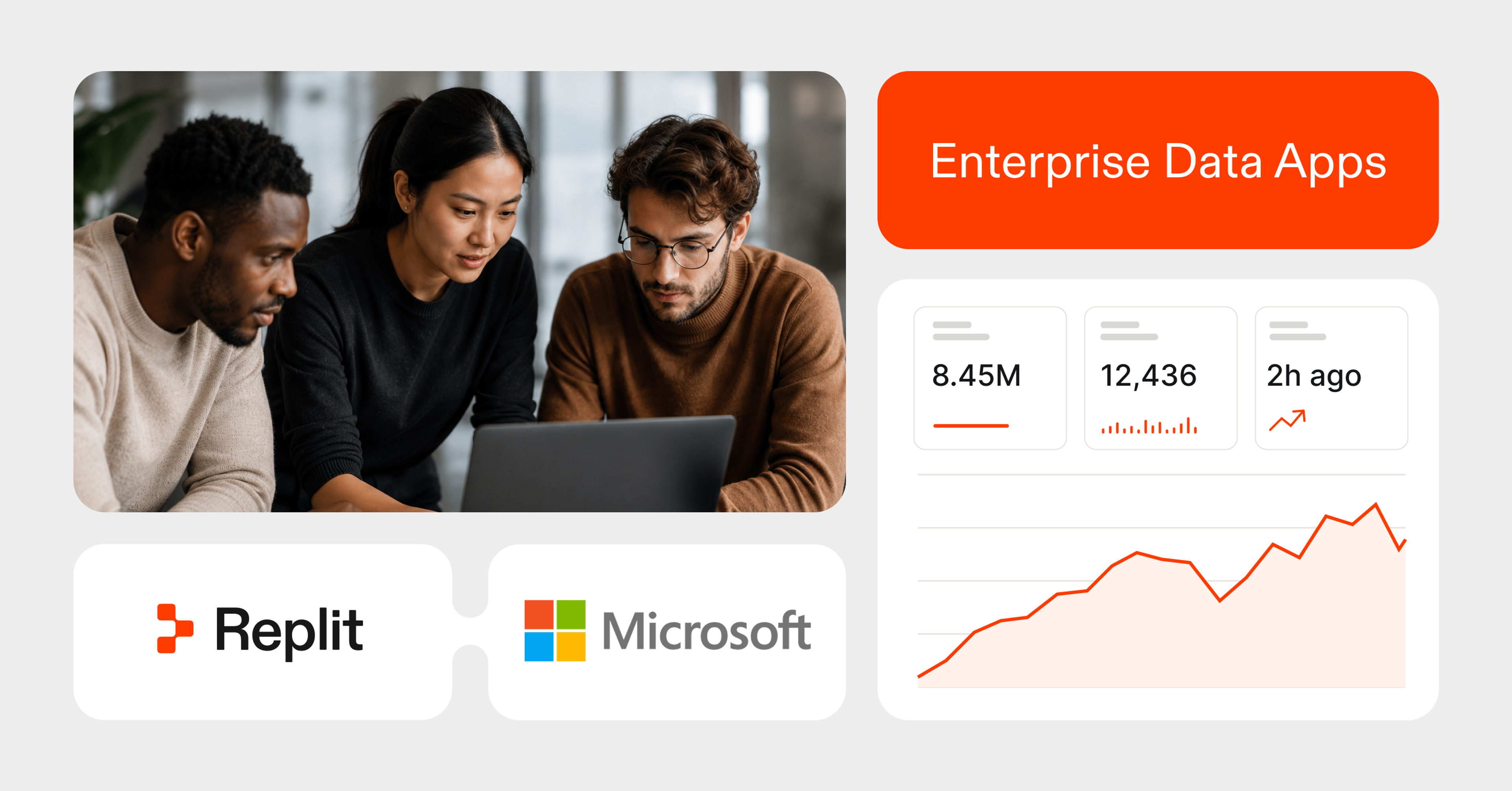
Today, we’re collaborating with Microsoft to make it dramatically easier for enterprises to build AI-powered apps in Replit and deploy them directly into Microsoft Fabric with enterprise-grade governance and security built in.
The integration helps teams go from prompt to production faster- turning governed enterprise data into internal tools, dashboards, workflows, and AI applications in a fraction of the time traditional development requires.
Bringing AI-Native Development to the Microsoft Data Ecosystem
Microsoft Fabric is a unified platform for enterprise data, bringing together analytics, governance, storage, and business intelligence into a single environment. At the same time, Replit has emerged as one of the fastest ways to build software using AI-assisted development.
With the introduction of Rayfin, a new open-source SDK and CLI for building application backends, business teams can now go beyond simply connecting to data. They can define and deploy complete, production-ready applications directly on top of it. This enables a new workflow: applications can be described, generated, and deployed directly to Fabric, where enterprise data already lives.
The integration connects those two worlds.
“Organizations today want to move faster from data to impact without compromising on governance, security, or scalability. Our collaboration with Replit helps customers turn their Microsoft Fabric data into production-ready applications using AI-powered development workflows that dramatically simplify the path from idea to deployment. Together, we’re enabling enterprises to build a new generation of intelligent, data-driven applications directly within their existing Microsoft ecosystem.” -Arun Ulag, Executive Vice President, Azure Data at Microsoft.
Now, teams can use Replit’s AI-powered software creation platform to create applications that work natively with Fabric data and deploy directly into the Microsoft ecosystem. Instead of spending weeks wiring together authentication layers, APIs, deployment tooling, and governance policies, business teams can focus on describing the application they want to build while Rayfin defines the backend in code and Fabric runs it securely at scale.
From Data Access to Full Application Deployment
Basic integrations between development tools and enterprise data platforms often stop at connectivity. Business or data teams can access data, but still have to rely on developers to manually build and manage the surrounding infrastructure needed to turn that data into a production application. This includes implementing the required governance, compliance, and audit hooks demanded by enterprise IT.
This integration goes much further.
With Rayfin, applications built in platforms like Replit can be automatically scaffolded with a complete enterprise-grade backend, including data models, authentication, and access policies, and deployed directly into Microsoft Fabric. Deployment becomes part of a unified workflow rather than a separate infrastructure project.
That means:
- Applications can securely connect to governed Fabric data sources
- Authentication and enterprise access controls are built into the flow
- Teams can deploy apps directly into their existing Microsoft data ecosystem
- Developers avoid maintaining custom complex application infrastructure and deployment pipelines
The result is an end-to-end experience for building enterprise-grade data applications, not just another data connector.
“We appreciate how quickly we can build and iterate in Replit, but for some of our business, our data needs to stay governed and centralized in Fabric. With Rayfin, we finally have both—fast development in the tools we prefer, and the confidence that our applications run on top of our enterprise data platform. This is exactly what we’ve been looking for.”
— Cody Luth, AI Solutions Architect*,* Leatherman
What This Unlocks for Enterprise Teams
For organizations already using Microsoft Azure, this partnership creates a much faster path to building internal software, all while keeping governance, authentication, and security inside the Fabric environment they already know and trust.
Teams can rapidly create:
- Department-specific productivity tools
- Operational dashboards
- Data exploration tools
- Workflow automation apps
- Reporting interfaces
Instead of exporting data into disconnected tooling stacks, applications can live alongside the organization’s existing Microsoft infrastructure.
For business teams, this means less time spent on setup and more time spent solving business problems.
For enterprise IT teams, it means maintaining centralized governance and compliance while still enabling rapid software creation.
AI Changes the App Development Workflow
The bigger shift is what this enables from a product-development perspective.
A business user can now:
- Describe the application they want to build
- Have Replit’s AI agent scaffold the application automatically
- Use Rayfin to define the app’s backend servicesOptionally connect the app to existing enterprise data in Fabric via Rayfin connectors
Deploy and run within your organization’s Fabric tenant All within a single workflow.
That dramatically compresses the time between idea and published app.
What previously required coordinating across multiple systems: engineering teams, DevOps , and weeks of infrastructure setup can now be handled through a seamless, AI-assisted workflow that spans app development and production.