On the heels of Google announcing native Kotlin support on Android yesterday, we thought it'd be cool to get a Kotlin REPL up so that people can try it.
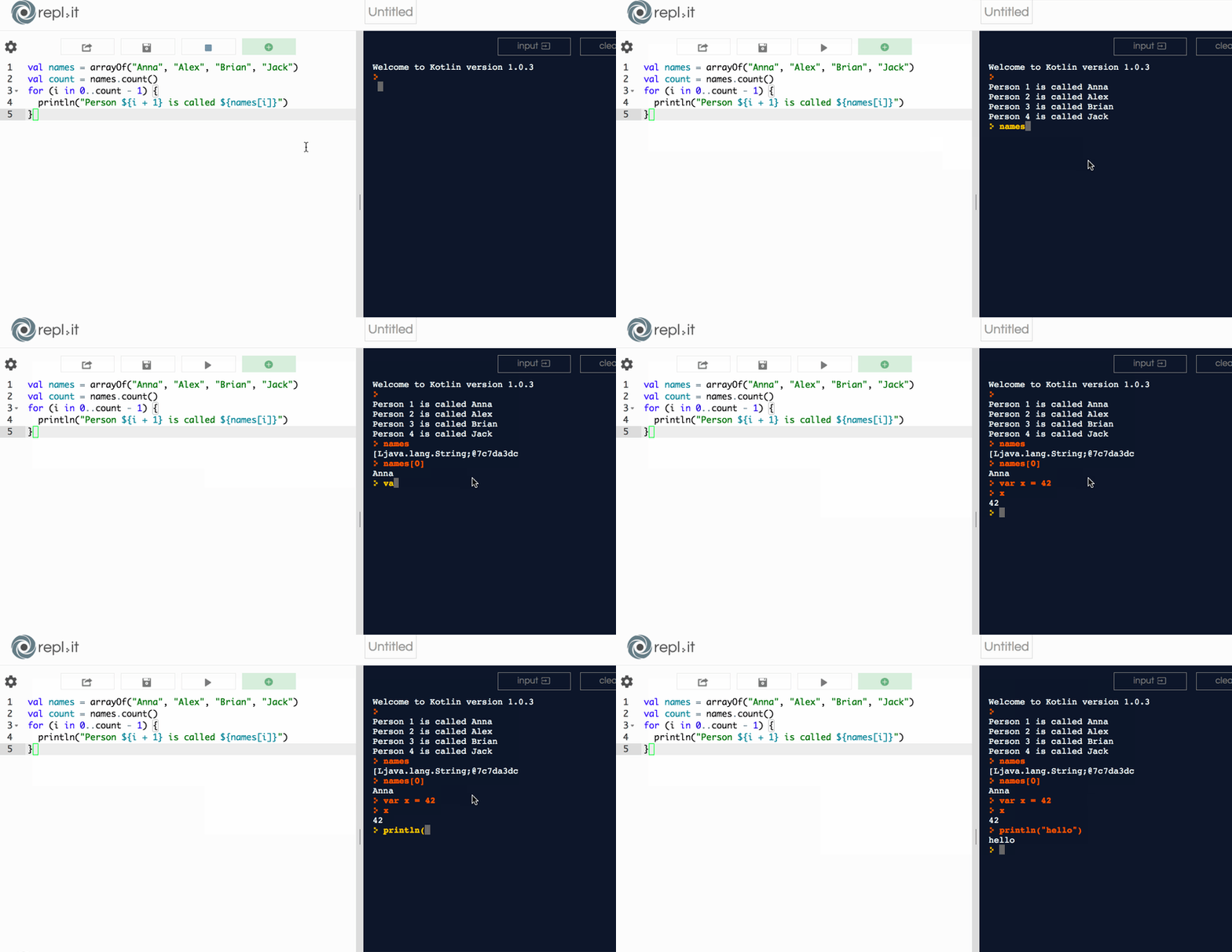
Give it a spin here.
It's still in beta so let us know if you hit any bugs.
Updated at:
On the heels of Google announcing native Kotlin support on Android yesterday, we thought it'd be cool to get a Kotlin REPL up so that people can try it.

Give it a spin here.
It's still in beta so let us know if you hit any bugs.
More

Every team has conventions. How you structure a project. How you handle secrets. Your design system, your testing standards, your code style. The problem: AI Agents don’t know your conventions. So you explain it again on every prompt, paste in your standards doc, or just hope someone remembered to add the context. It is one of those small frictions that compounds quietly until you are spending more time re-teaching the Agent than actually building. Today we're launching Agent Customization: a way to give Replit Agent the context it needs to work the way you or your team actually works, across all projects. It has two parts: Custom Instructions and Skills. Custom Instructions Custom Instructions are always-on guidelines injected automatically into the agent's context on every project, every session, before anyone types a single word. Write them once, and the Agent applies them to every project in the workspace, automatically. If you want the Agent to not commit secrets to version control, always use TypeScript strict mode, or follow your company's data handling policy — that goes in Custom Instructions. You don't ask each time. It just knows.

Replit already scans your projects for vulnerable dependencies, and audits your dependencies before you publish. But risk shows up earlier than that, while you are developing, the moment a malicious package gets installed. Today we're launching Package Firewall, in partnership with Socket (a software supply-chain security company) . Package Firewall blocks malicious and compromised packages from ever being installed into your app, even while you are building. This network-level security protection eliminates any window for malware to be installed into your project. It's on by default for every builder, with nothing to set up. Since rolling out a week ago, Package Firewall has been blocking around 8,000 packages per day across builders on Replit. Over the course of a year, millions of vulnerable package installs will be blocked, leaving builders and their users safer: “Replit is helping define how the next generation of software gets built, with AI agents working alongside developers to create and ship applications faster. That makes install-time security more important than ever. By partnering with Replit, Socket is enabling builders to move quickly while keeping malicious packages out of the development workflow and stopping supply chain attacks before a single line of malicious code runs." — Feross Aboukhadijeh, CEO, Socket How it works When you or the Agent run an install command like npm install or pip install to install a new dependency, the request passes through Package Firewall. If the package is clean, the install runs as usual and you won't notice a thing. If Socket has flagged the package as malicious or compromised, the install is blocked before any code reaches your environment.

Starting today, anyone can design and launch a custom Shopify storefront by chatting with the Replit Agent. Describe the store you want, and Agent generates a custom front end, creates a new Shopify store, and adds your products from the same conversation. When you're ready to sell, claim the store in Shopify, activate payments, and use Replit to deploy your storefront to a domain. From the first prompt to taking real orders is roughly ten minutes. Why we built this Replit builders already ship real software, from internal tools, to side projects, to full businesses. But selling physical products is different: managing physical inventory, fulfillment, tax compliance, shipping, and multi-channel selling. Shopify is the gold standard for that, powering retail businesses of every size. What was missing was a way to design a storefront for Shopify with the same conversational workflow Replit builders already use for everything else. That's what this integration adds: a beautifully designed front end generated from a prompt, with Shopify provisioned, configured, and managed from inside Replit itself. You describe what you want, and Agent builds it. The result is yours to refine, backed by Shopify's commerce infrastructure end to end. How it works Most of the experience happens inside Replit. You'll only need to visit Shopify once to sign in or create an account, claim your store, set up payments, and publish. After that, you can build your storefront, manage products, and run your store directly from Replit.