How Musixmatch Cut Its Product Cycle From Six Months to Two With Replit
Musixmatch powers lyrics for the world’s biggest music platforms: Spotify, Apple, Google, and more. Their mission is simple. Help fans connect with songs and ensure songwriters and rightsholders get paid.
“The best thing about Replit is that we changed the mindset of our company. Now, we are all product builders.”
For this story, we spoke with Pierpaolo Di Panfilo, VP of Product; Niche Chathong, Senior Product Designer; and Valentino Dus, Engineering Manager, to understand how Replit changed the way Musixmatch builds.
- The challenge: Musixmatch faced slow six-month product cycles and a growing backlog of low-priority tools that rarely shipped.
- What they built: By adopting Replit, the team built a full-stack artist merch tool, letting artists design and ship lyric T-shirts in just a few clicks, and enabled designers, PMs, and ops to prototype and launch internal dashboards and experiments themselves.
- Value realized: With more people building, Musixmatch sped up product launches and empowered non-engineers as true product creators, with 1,000+ shirts shipped and ~120 people building on Replit.
The Challenge
Before Replit, Musixmatch followed a familiar, linear product development process. As Niche describes it, the team ran a classic double‑diamond cycle: discovery, definition, design, and development, on roughly six‑month timelines.
For designers, that meant a long wait between shipping a concept and seeing how real users reacted. Prototypes were often limited to static mocks or partial experiences, and it could take months to understand whether an interaction worked in the real product.
At the same time, Musixmatch’s stack and audience were already large:
- Native mobile apps and a high‑traffic lyrics website for fans.
- Web tools for artists to manage their lyrics and presence.
- Internal tools and dashboards to keep data quality and operations running.
That scale created two related constraints:
- Slow feedback loops. Designers and PMs had to rely heavily on engineering capacity to see working versions with live data. Shipping even a first version of a new idea could take weeks or months.
- Stalled “nice‑to‑have” projects. Lower‑priority internal tools and experiments sat on the roadmap because they couldn’t justify a full engineering project.
Musixmatch knew it needed a faster way to test ideas with real data, reduce the gap between design and deployment, and let more people inside the company participate directly in building products.
Why Replit?
“Thanks to Replit, in some way, we all became product builders so we can expand our impact inside the company at all levels,” says Di Panfilo.
Musixmatch started exploring AI‑powered tooling as part of a new internal ritual called “Ai Vibes”—Friday sessions where teams experimented with modern AI tools and shared what they built.
During those sessions, Replit quickly stood out. From the first prompts, teams saw working full-stack experiences that delivered on three fronts:
- Respected their design system. Product teams were able to plug Musixmatch’s existing design language into Replit so prototypes and tools felt visually consistent with the rest of the product.
- Worked with real data. Designers like Niche could explore live Musixmatch data directly in Replit, seeing edge cases, empty states, and behavior at scale instead of guessing from static mocks.
- Lowered the barrier to building. Product designers, PMs, and even operations staff could stand up tools without waiting in line behind engineering projects.
What they built?
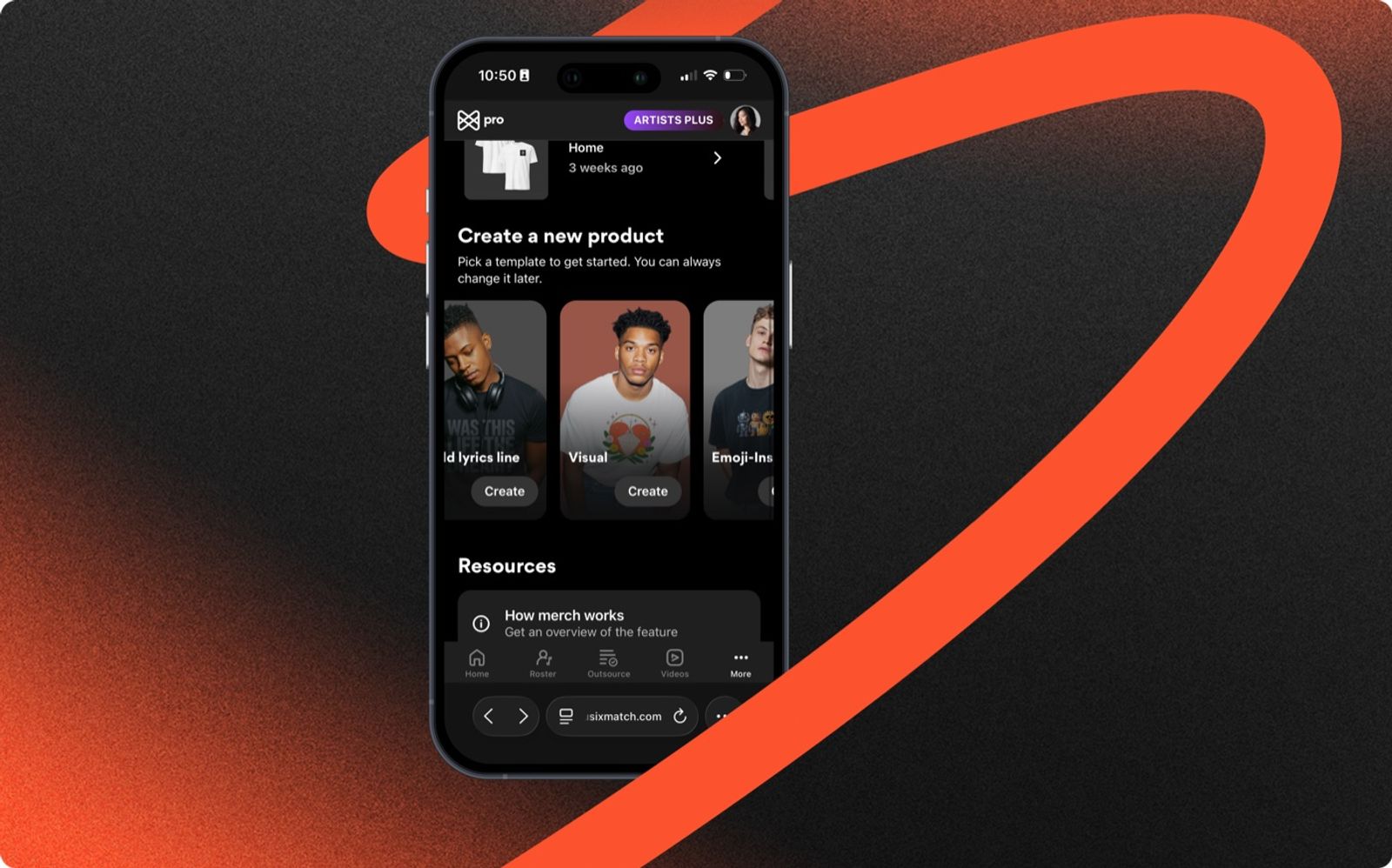
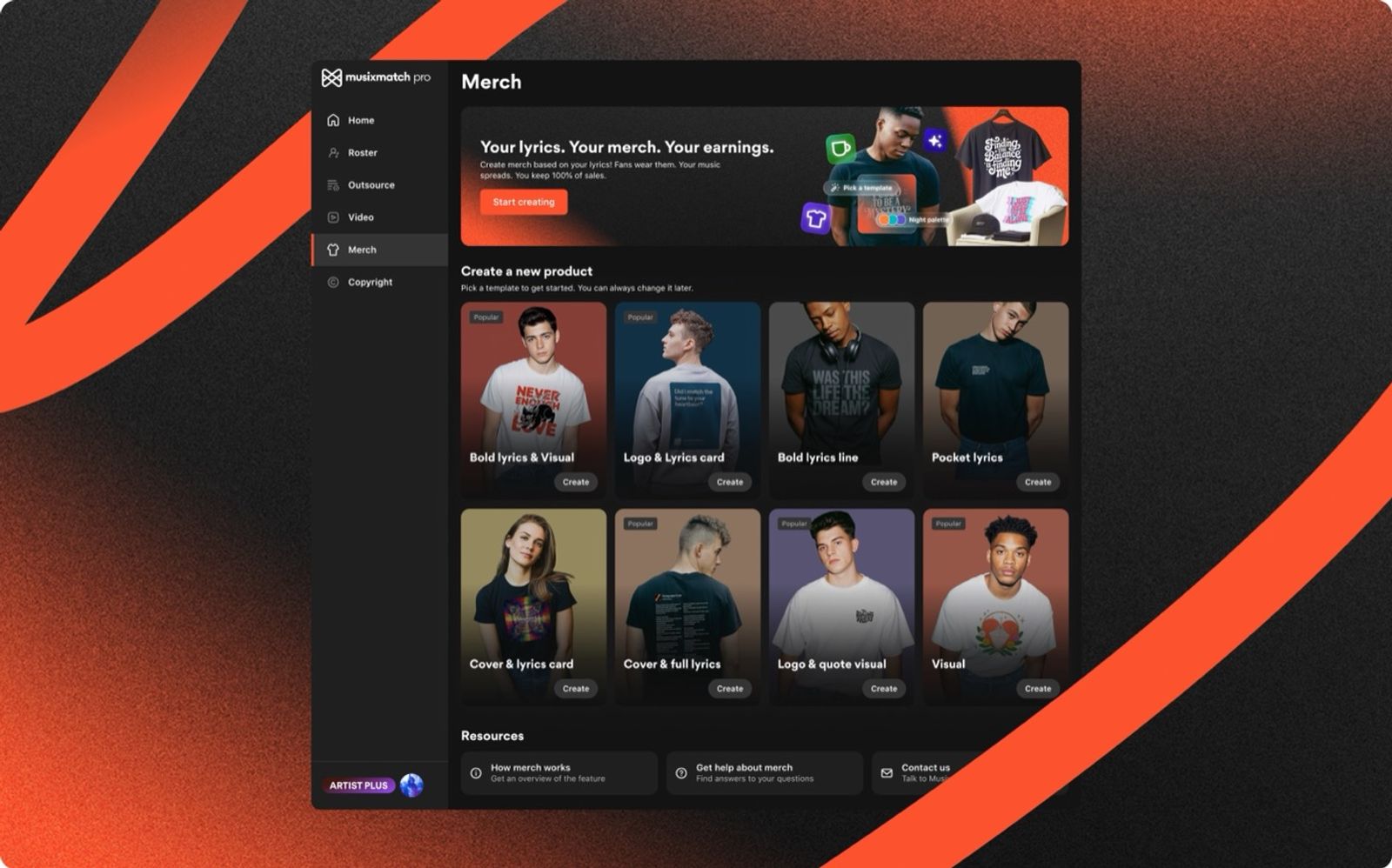
Here’s what that looked like in practice. The flagship example is Musixmatch’s new artist merchandising tool.
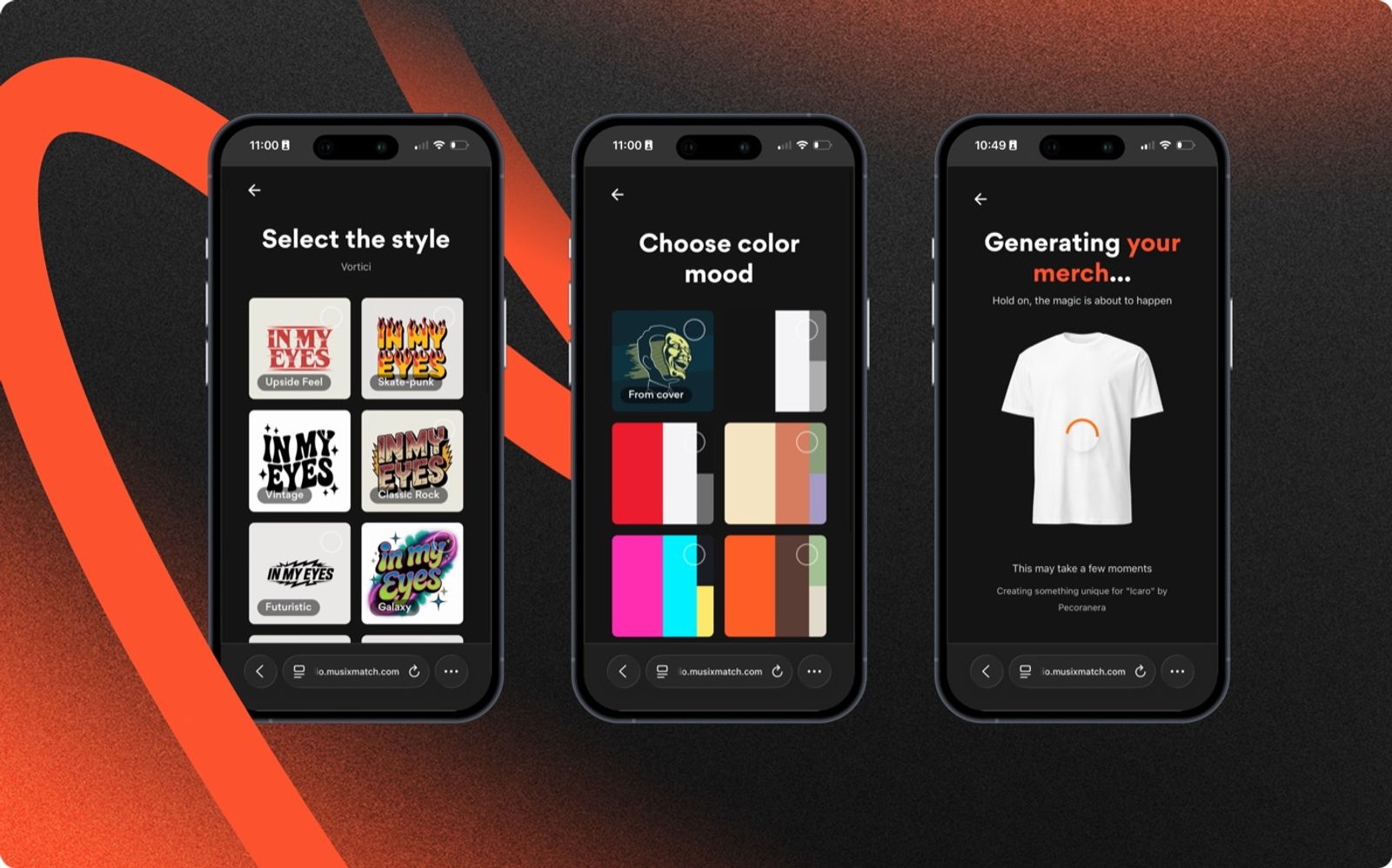
Musixmatch wanted to give artists a fast way to turn their lyrics into merch. The idea: a web experience where an artist can pick a song, generate a lyric‑driven T‑shirt design, and have it printed and shipped in just a few clicks, without a heavy production workflow.
Using Replit, the team:
- Prototyped the MVP in two “Vibe Day” Fridays. During internal Replit‑focused build days, the merch concept went from idea to working prototype in a matter of days.
- Connected directly to Musixmatch APIs. Valentino’s team wired Replit to existing artist and lyrics data so the tool drew on real catalog information instead of sample content.
- Gave designers their own branches. Valentino created a dedicated Replit branch for Niche so she could adjust layout, spacing, and UI details herself, without filing tickets or waiting on engineering cycles.
- Integrated with existing artist tools. The merch flow fit into Musixmatch’s navigation so moving between the existing product and the new merch flow felt natural for users.
“With Replit we were able to cut in half the time of development, so we were able to ship to the market very fast.”
Beyond merch, teams across Musixmatch now use Replit to build:
- Internal dashboards that expose data more clearly to non‑technical teams.
- Research prototypes with real, production‑like data for user testing.
- Lightweight tools to automate operational workflows that previously required engineering support.
Value realized
What changed after the merch tool and wider Replit rollout?
Before Replit, the merch concept would have followed a long, staged path: weeks of design exploration, handoff to engineering, initial build, deployment, and only then real user testing.
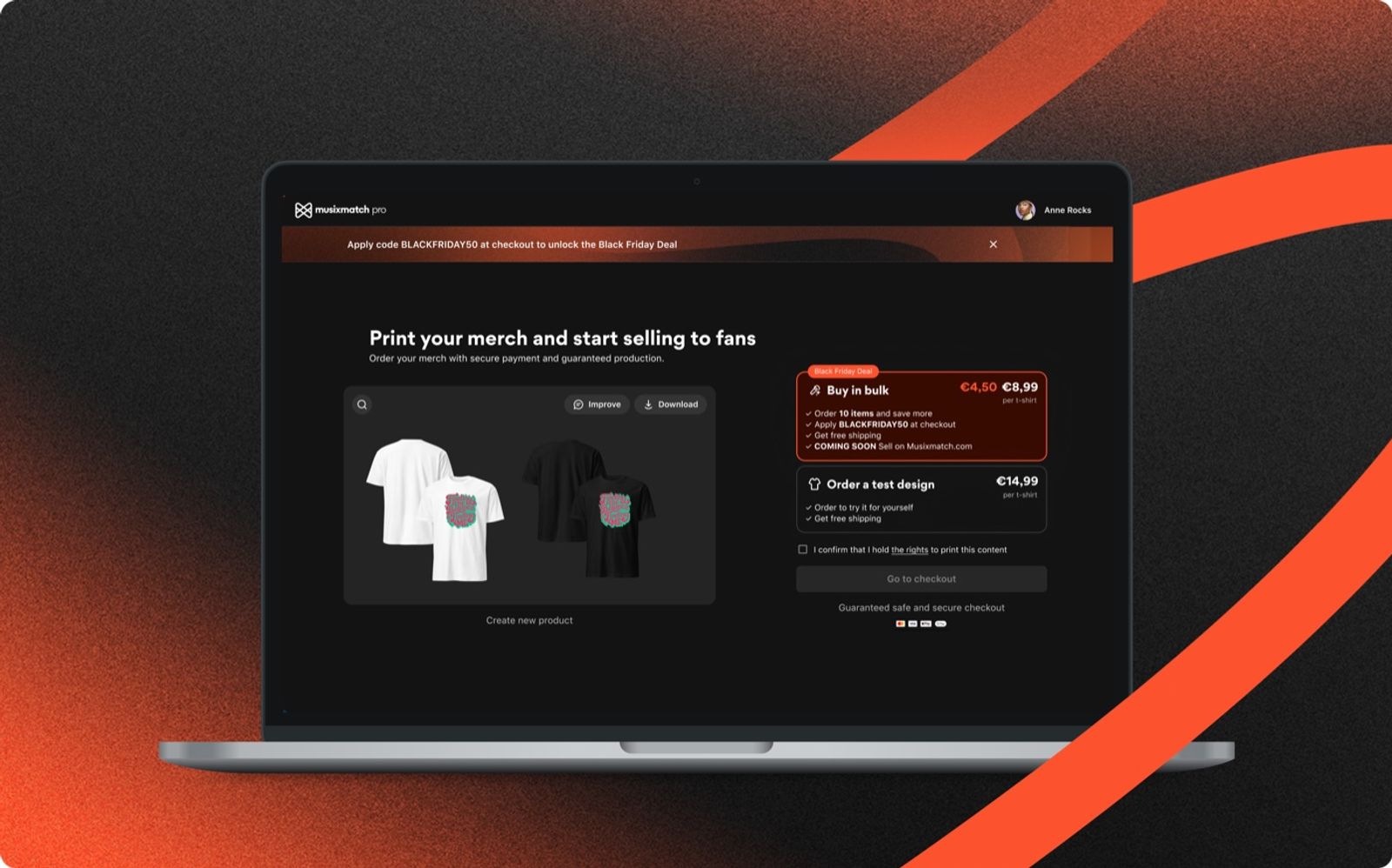
With Replit in the loop, that all completely transformed:
- Faster time-to-market for new products. The team moved from a six-month product cycle to an initial merch prototype within the first week and a production launch in about two months.
- New revenue and engagement from merch. Within roughly two months of launch, artists had already ordered more than 1,000 T-shirts through the new tool, creating a fresh revenue stream and a tangible way for fans to express their connection to lyrics.
- A more hands-on, tech-savvy team. Niche describes becoming more tech savvy and comfortable working directly with data. Pierpaolo notes that Musixmatch adopted Replit across about 120 people, and that non-engineers now feel like full product builders.
- More experiments with the same headcount. Ideas that would once have lingered on the roadmap can now be built by a single motivated team member. Operations staff can stand up their own internal tools; PMs and designers can test product-market fit before committing a full squad.
- Reduced risk of falling behind. All three interviewees point to the risk of ignoring AI-powered development. Without tools like Replit, Musixmatch would ship slower, test fewer ideas, and risk watching competitors bring similar concepts like merch to market first.
For Musixmatch, Replit didn’t just speed up one project. It raised the bar for how quickly new ideas should become something real for artists and fans.
Founded in 2010 in Bologna, Italy, Musixmatch is the world’s largest platform for music lyrics and translations. Its catalog spans millions of songs in dozens of languages, built and curated with the help of a global community of contributors.
Musixmatch powers synced and translated lyrics experiences for many of the world’s biggest music platforms — including Spotify, Apple Music, Instagram, and Google — while helping songwriters and rightsholders get properly recognized and paid. Its mission is to help fans everywhere connect more deeply with the music they love.
Start building today.
Join the companies and creators shipping the next generation of software.