Understanding the Cursor AI landscape
Cursor is a VS Code fork that integrates AI models directly into your development workflow, offering intelligent autocomplete, chat-based assistance, and multi-file refactoring.
The platform offers a free plan, with paid tiers layered above it. However, a shift from request-based to usage-based billing caused backlash, and many developers now want a Cursor alternative with more predictable costs.
That is where the alternatives come in. Some add AI to your current editor, some replace the editor, and a few skip it entirely to build and deploy for you. This guide walks through nine of them, verdict by verdict.
How we picked these tools
The list spans four ways to replace Cursor. Extensions add AI to the editor you already use, standalone editors and IDEs swap the whole surface, open-source agents give you end-to-end control, and cloud platforms build and deploy for you.
To make the cut, a tool had to be actively maintained, publicly priced and independent of Cursor itself.
| Tool | Best for | Free plan | Paid plans from |
|---|---|---|---|
| GitHub Copilot | AI in multiple IDEs with GitHub integration | Yes | $10/month |
| Replit | Building and deploying full apps from prompts | Yes | $20/month |
| Windsurf (now Devin Desktop) | Agent-first desktop IDE workflows | Yes | $20/month |
| Zed | Raw editor speed with optional AI | Yes | $10/month |
| Cline | Full control over models and spend | Yes | Pay per model use |
| Tabnine | Enterprise privacy and self-hosting | No | $39/user/month |
| Amazon Q Developer | Teams building on AWS | Yes | $19/user/month |
| JetBrains AI Assistant | JetBrains IDE workflows | Yes | $10/month |
| Aider | Terminal pair programming with Git | Yes | Pay per model use |
Product and pricing information: vendor product and pricing pages, August 2026.
Top Cursor alternatives for 2026
GitHub Copilot
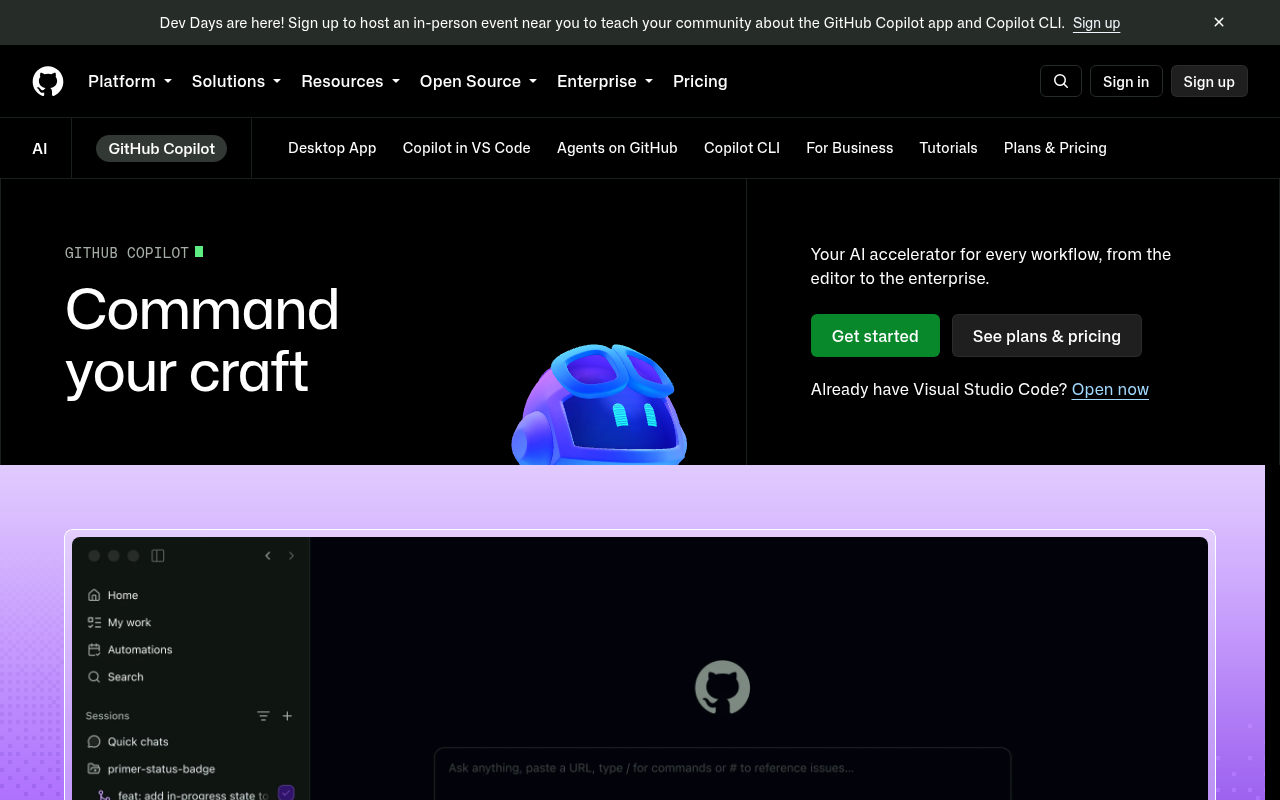
GitHub Copilot works across VS Code, JetBrains IDEs, Neovim and Visual Studio, so you can keep your current editor. It began as autocomplete. Today it is a full agent platform, with a Copilot CLI that brings the assistant to the terminal.
Real-time completion, chat and multi-model support are the base layer. Paid plans add a cloud coding agent, AI code review and third-party agents such as Claude Code and Codex. Give the agent an issue and it hands back a finished pull request for review.
Because GitHub builds it, context from your repositories, issues and pull requests flows into everything it does.
For teams, Business seats add organizational license management, policy controls and IP indemnity, so admins keep oversight as agent use spreads.
Model selection lets you pick the engine per task, and the free tier includes 2,000 completions per month. Paid plans for individuals start at $10/month.
Pros:
- Works in the IDEs most teams already use, with deep GitHub integration
- Free tier plus a predictable $10/month entry price
- Model choice, including premium models on higher tiers
Cons:
- Heavy agent use draws down monthly AI credits, so costs can step up
- Strongest inside GitHub-centric workflows and less compelling outside them
- No self-hosted or air-gapped deployment for teams with strict data rules
Bottom line: Copilot is now the most complete mainstream assistant, folding completions, chat, review and agents into one subscription. Its moat is GitHub: repository context feeds every suggestion. The safest pick if your code lives on GitHub and you want AI in the editor you already have.
Replit
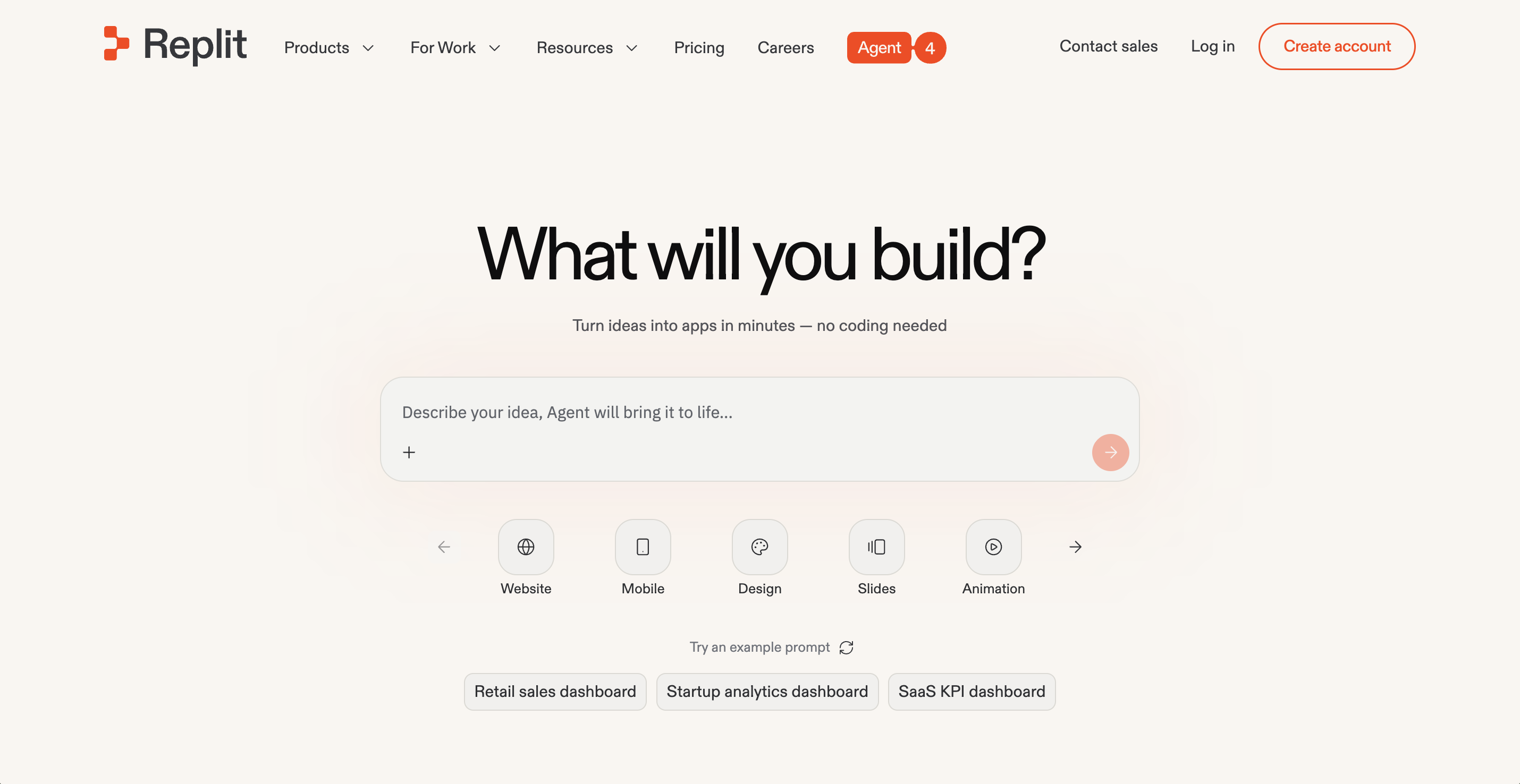
Replit takes a different approach from every desktop tool on this list. Nothing gets added to your editor. The whole environment lives in the browser: workspace, database, hosting and deployment.
Agent 4 enables autonomous coding from natural language prompts. Describe what you want and our Agent plans the build, writes the code, tests it and deploys it while you follow each step.
The output goes well past prototypes: full web apps, internal tools and dashboards, data pipelines, automations, even slide decks and design work.
Browse the public gallery to see real user builds before you sign up. A partnership with Microsoft Azure brings SOC 2 Type 2 infrastructure, SAML SSO and private deployments to enterprise workspaces. Enterprises like Rokt have built 135 internal applications in 24 hours.
Replit pricing is built on effort-based pricing, so simple tasks cost less than complex ones. Starter is free. Paid plans start at $20/month.
Pros:
- Zero setup, with building, running and deploying all in the browser
- Agent 4 delivers full working builds from a prompt, well beyond code suggestions
- Ready-to-go output, from full web apps and dashboards to internal tools and slide decks
Cons:
- A browser-first workflow is a change of habit for developers attached to desktop IDEs
- Ambitious agent builds consume more credits under effort-based pricing
Bottom line: Replit is the only tool here that replaces the whole stack around the editor, from workspace to hosting. Agent 4 makes that stack usable from a single prompt. If the goal is a working, deployed app, the free Starter plan is the fastest way to find out.
Windsurf (now Devin Desktop)
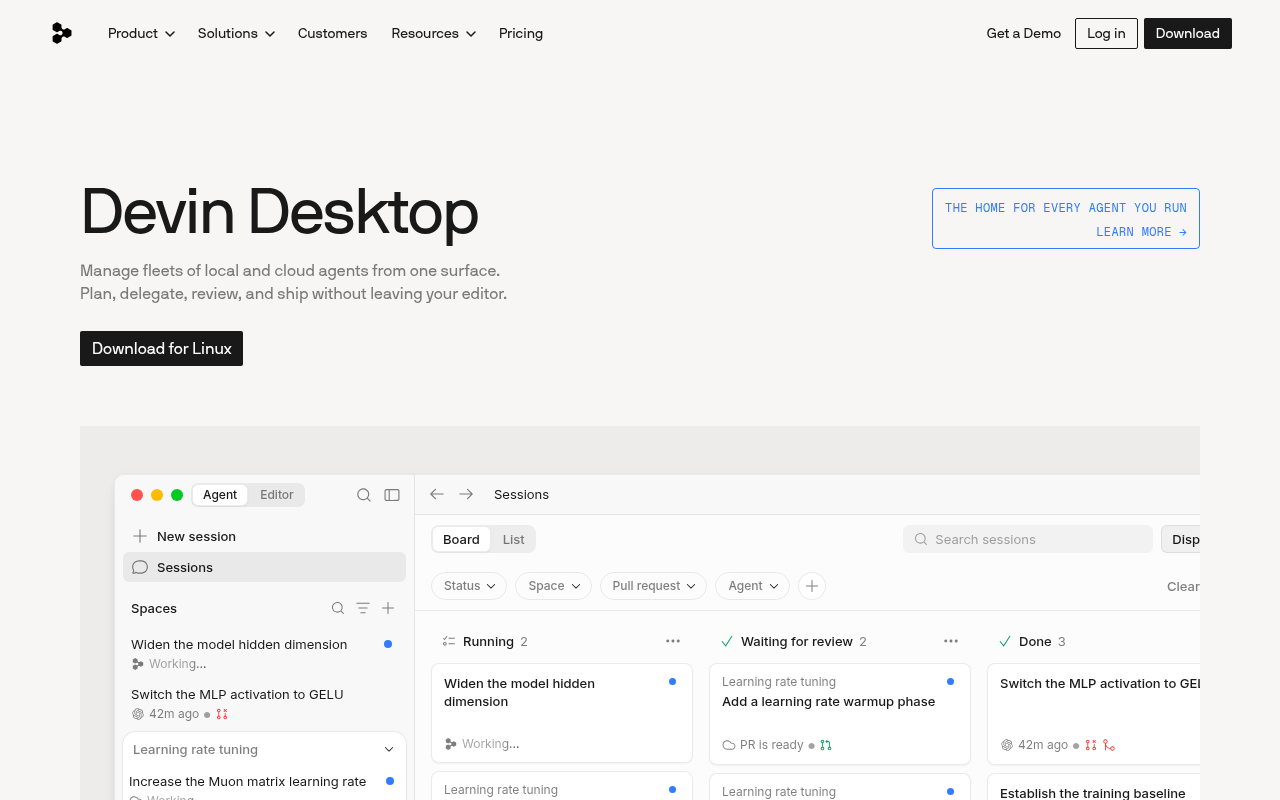
Windsurf (formerly Codeium) built its reputation on a clean interface and agents that could take on whole tasks. In 2026 it changed hands and names again.
After Cognition acquired the company, the editor became Devin Desktop. windsurf.com now redirects to devin.ai. The IDE carries on, and your plans, extensions and settings migrate automatically.
Devin Desktop adds a command center for running local and cloud agents side by side. You also get unlimited free use of Cognition's SWE-1.7 coding model, plus outside-agent support through the Agent Client Protocol.
Fast Context finds the files an agent needs in milliseconds. Supercomplete aims at whole next edits.
Windsurf for JetBrains remains available as a separate download, and legacy Windsurf plans keep their existing pricing and terms. A free plan is available. Paid plans for new users start at $20/month, level with Cursor.
Pros:
- Polished agent workflows with free unlimited SWE-1.7 usage
- Existing Windsurf setups migrate to Devin Desktop automatically
- Free plan includes unlimited completions and inline edits
Cons:
- The old $15/month price advantage over Cursor is gone, Pro now costs $20/month
- Two rebrands in two years make the product's direction harder to predict
- JetBrains support lives in a separate plugin, outside the flagship desktop app
Bottom line: The IDE remains strong, and its agent workflows are among the most polished in the category. The open question is identity. Two rebrands in two years make the roadmap harder to read than Cursor's own, so let the free plan settle whether the agents win you over.
Zed
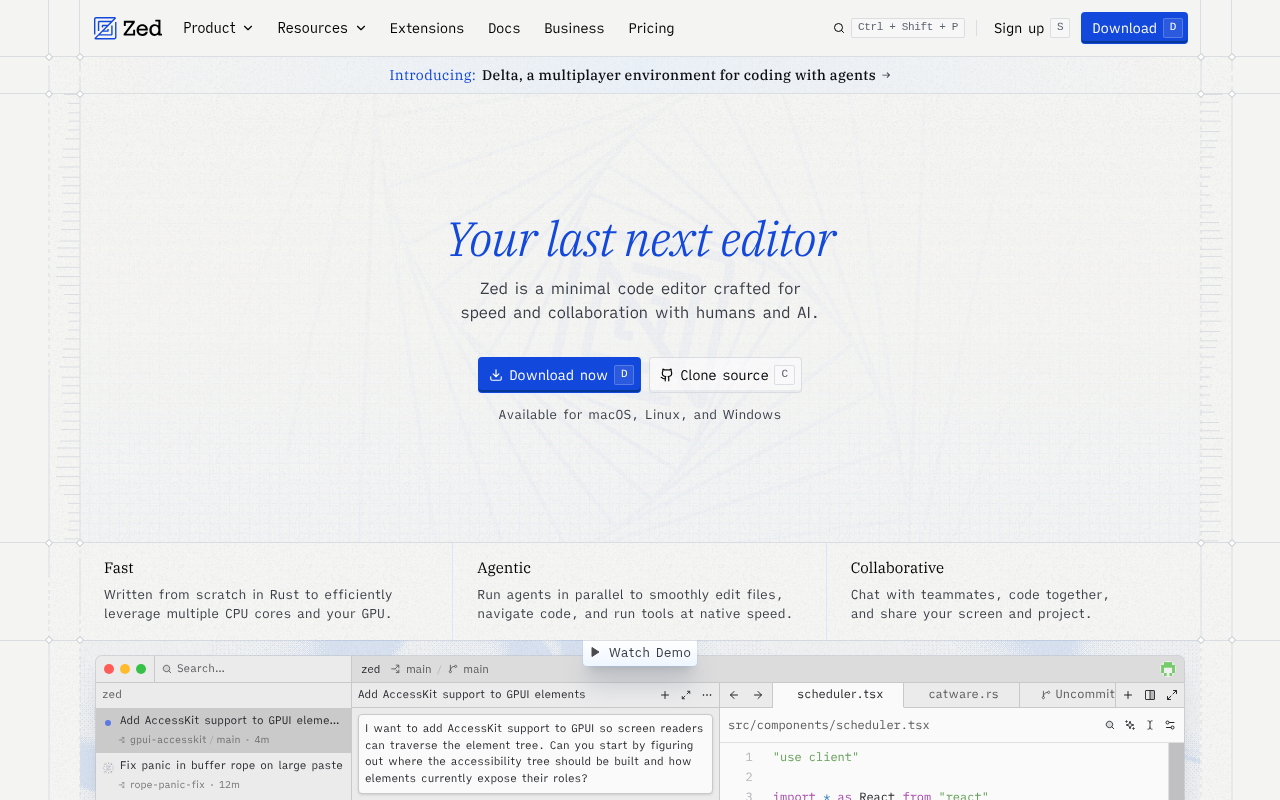
Speed is the reason people switch to Zed. The editor is written from scratch in Rust and renders on the GPU. It stays responsive in projects that choke other editors.
Multiplayer collaboration comes built in. Weekly releases keep improvements landing on a steady schedule. Version 1.0 has shipped, and the editor now runs on macOS, Linux and Windows.
Because the whole editor is open source, you can read, patch and extend it yourself. You can even switch the AI off and keep the editor.
For AI, Zed connects to the major model providers and to external agents such as Claude Agent and Codex CLI. The free Personal plan includes 2,000 accepted edit predictions and takes your own API keys.
Paid plans start at $10/month with unlimited edit predictions, and a Business tier adds organization-wide AI policies and data governance.
Pros:
- Exceptional performance with a fully open-source codebase
- Free plan supports your own API keys and external agents
- Now available on macOS, Linux and Windows
Cons:
- Extension ecosystem is still younger than VS Code's
- No SSO or SAML for teams yet
- Hosted AI usage beyond the included credits bills at API list price plus 10 percent
Bottom line: Zed is the best pure editor on this list. Its collaboration features go further than anything VS Code ships natively, and the AI layer stays optional by design. Teams that need SSO will have to wait.
Cline
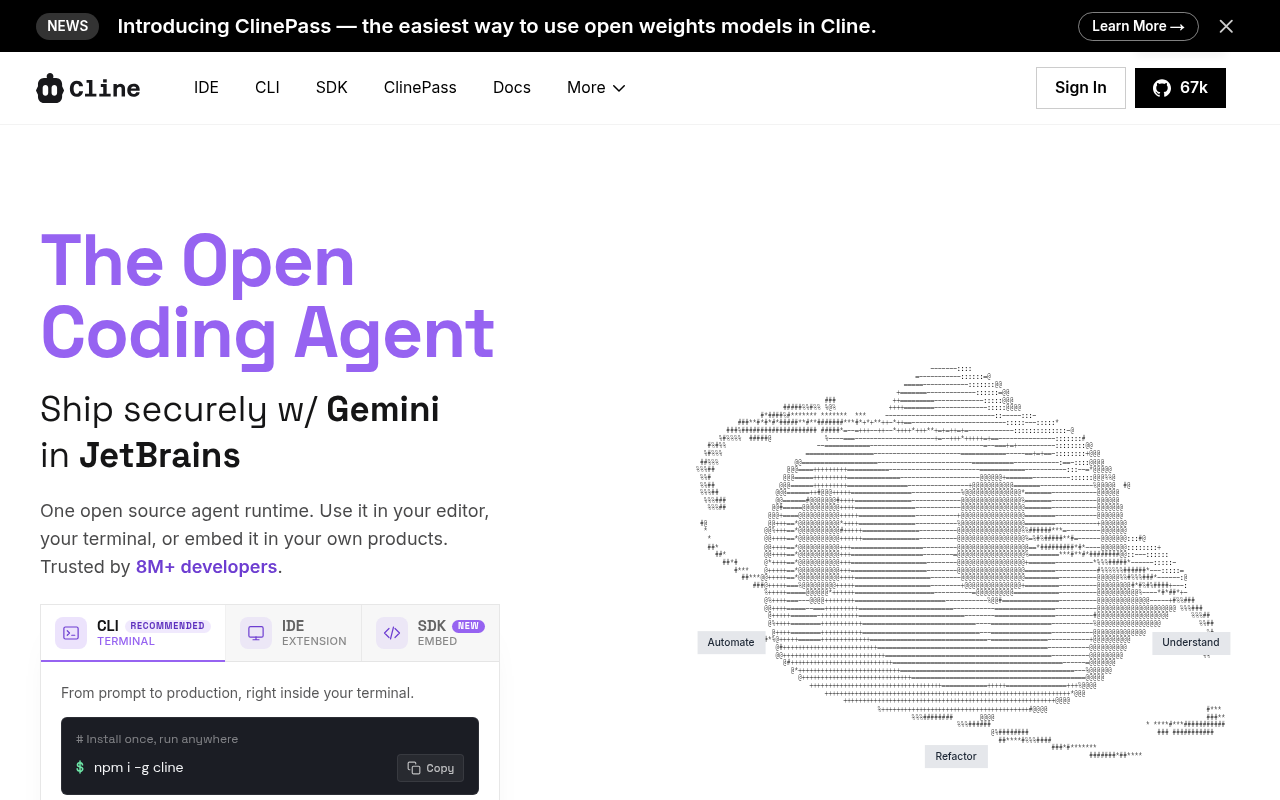
Cline started as a VS Code extension and grew into one of the most widely used open-source coding agents. Today it counts more than 8 million installs under an Apache 2.0 license.
It runs in VS Code, in JetBrains IDEs in early access, and straight from the terminal through a CLI. The same agent follows you into CI pipelines.
Plan and Act modes let you agree the approach before any code changes. You approve each step, or flip on auto-approval.
Control is the point. Bring your own API keys for Anthropic, OpenAI, Google, OpenRouter or local models through Ollama, and pay only for the model usage itself. Rules files teach it your coding standards, and MCP support connects it to databases, APIs and internal tools.
It also chats through Slack, Linear and Discord, and coordinator agents can run specialists on schedules.
Pros:
- Free and open source, with no subscription required
- Total model flexibility, including fully local setups
- Plan and Act modes keep the agent's changes reviewable
Cons:
- Costs are only as predictable as your API usage
- Takes more initial configuration than subscription tools
- Results depend on the models you bring, so quality varies with your provider and budget
Bottom line: Cline earned its install base by staying open and model-agnostic while rivals locked down. If you want to see and control every step, from plan to API bill, it will reward you. Expect some setup time before it feels effortless.
Tabnine
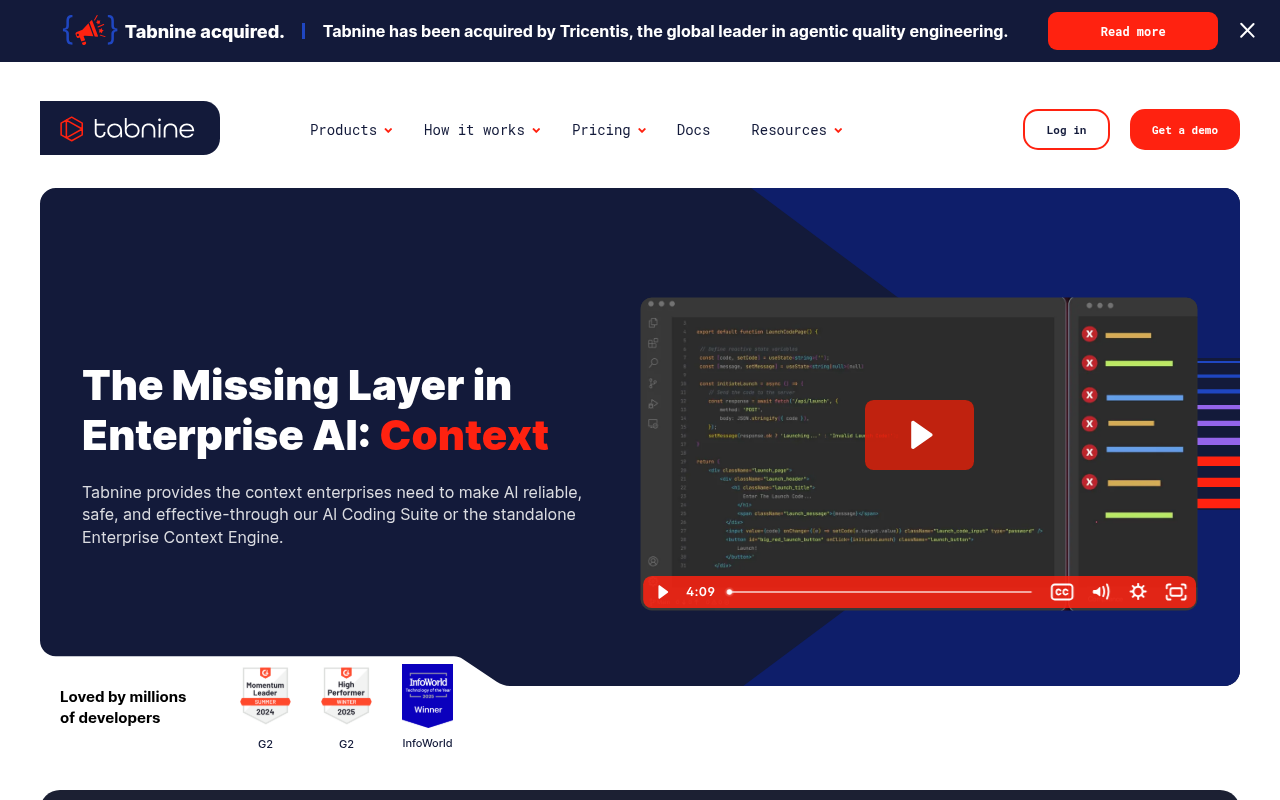
When your buying decision runs through a security team, Tabnine is the tool built for that path. Since Tricentis acquired it in 2026, that enterprise positioning has sharpened further.
Plans are annual and per user, starting at $39/month, and the earlier free tier is gone.
The Code Assistant platform covers completions and codebase-grounded chat. The Agentic platform adds autonomous agents, a terminal CLI and a context engine that reads Git, Jira and Confluence. That engine applies your architecture, dependencies and standards consistently.
What the higher price buys is deployment freedom few rivals match: SaaS, VPC, on-premises or fully air-gapped. Zero code retention is standard. SOC 2, ISO 27001 and IP indemnification come with it.
It supports every major IDE. Models come from Anthropic, OpenAI, Google, Meta and Mistral. Governance controls set which models and behaviors are allowed, and usage stays auditable per user and team.
Pros:
- Deployment options down to fully air-gapped environments
- Zero code retention with enterprise compliance certifications
- Model-agnostic and works in every major IDE
Cons:
- The free tier is gone and pricing is annual per user
- Built for organizations, so individuals get little value for the price
- No self-serve checkout, plans are quoted through sales
Bottom line: Tabnine no longer competes for individual developers, and it aims squarely at regulated enterprises. Within that lane the offer stands alone: no rival here matches fully air-gapped deployment with zero code retention. If security review is your hardest buying step, shortlist it first.
Amazon Q Developer
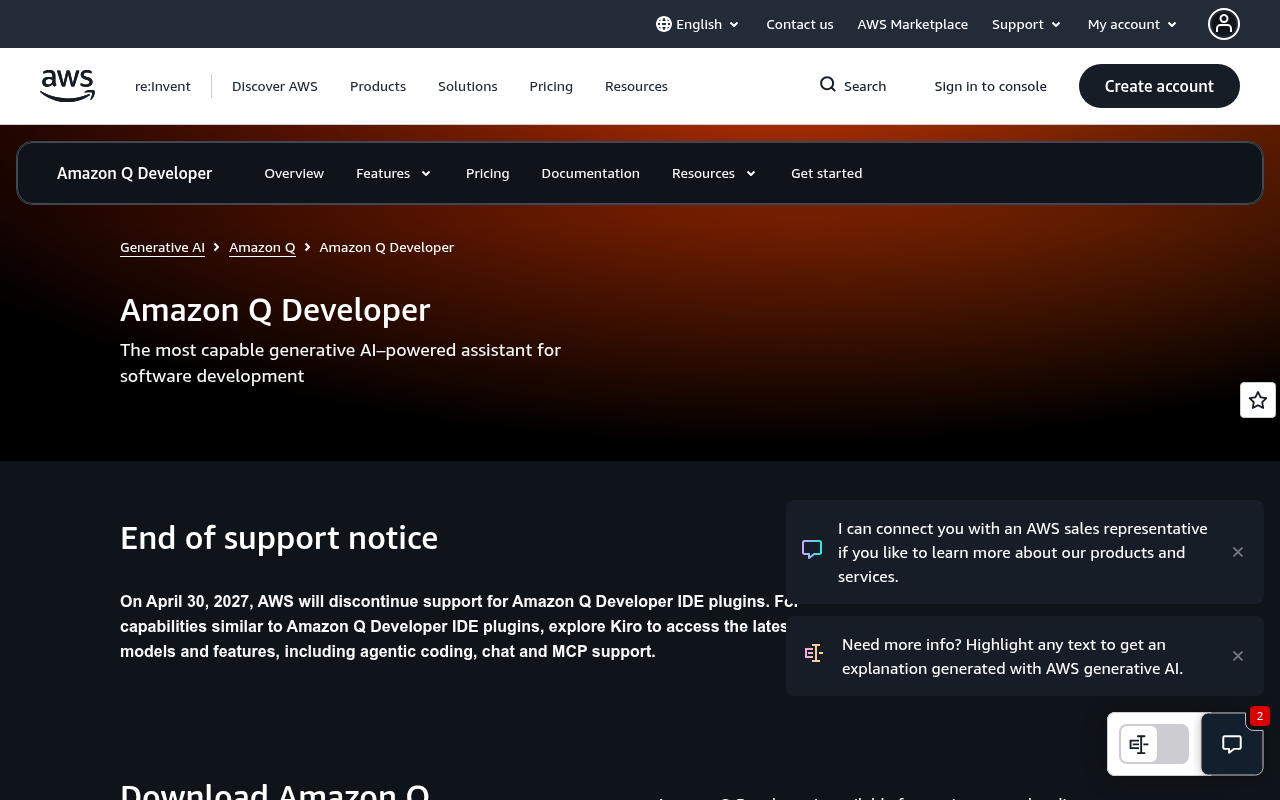
AWS teams get an assistant of their own. Amazon Q Developer handles agentic coding in the IDE and the CLI, with security scanning and automated refactoring built in.
It does one job few rivals attempt: transforming legacy code. Upgrading aging Java applications comes with a monthly line-of-code allowance on the paid tier.
Despite the Amazon branding, it runs on the latest Claude models. Reference tracking comes on every tier, along with the option to suppress suggestions that match public code. That matters if you track licenses.
It also works inside the AWS console, answering questions and diagnosing common errors in place. Security scans cover both generated code and your existing codebase.
A free tier covers evaluation. The Pro tier at $19/user/month raises limits and adds administration dashboards and IP indemnity, with subscriptions landing on your existing AWS bill.
Pros:
- Deep AWS integration from the console to the CLI
- Java and .NET transformation tooling with pooled allowances
- Free tier to evaluate before committing
Cons:
- Far less compelling outside AWS-heavy environments
- 50 free agentic requests run out quickly in daily use
- Setup assumes AWS identity tooling, such as IAM Identity Center for teams
Bottom line: Inside an AWS shop, Q Developer earns its place through account integration and transformation tooling alone. The legacy-modernization agents solve a problem few competitors even attempt. Outside AWS the case thins quickly, and you will likely be happier with a multi-IDE tool.
JetBrains AI Assistant

JetBrains AI Assistant is the native option if your team is standardized on IntelliJ IDEA, PyCharm, WebStorm and the rest of the JetBrains family. It goes well past a bolted-on chat panel.
AI lands inside the workflows you already rely on: multi-file refactoring, context-aware completion, commit messages and inline documentation. The subscription also includes Junie, JetBrains' own agent for larger tasks in supported IDEs. Claude Agent and Codex plug in as external agents.
Plans run on AI credits, with a free tier and paid plans from $10/month. Top-ups cover the months when the allowance runs short.
Your own API keys and local models work with no subscription at all. Coverage extends past the IDEs to ReSharper and Android Studio, with a free 30-day AI Pro trial across supported products. Organization plans add zero data retention and per-team AI controls.
Pros:
- Feels native inside every JetBrains IDE
- Junie agent and third-party agent support in one subscription
- Your own keys and local models work without a paid plan
Cons:
- Credit allowances are modest for heavy agent use
- Only worthwhile if you work in the JetBrains ecosystem
- Junie's agent coverage varies by IDE and plan
Bottom line: For JetBrains loyalists this is the lowest-friction path to serious AI help, and Junie makes the subscription more than a chat panel. The credit allowances fit steady daily use better than heavy agent sessions that burn through them. Everyone else should look at the multi-IDE tools above.
Open-source alternatives: Aider and the fate of Continue.dev
Aider
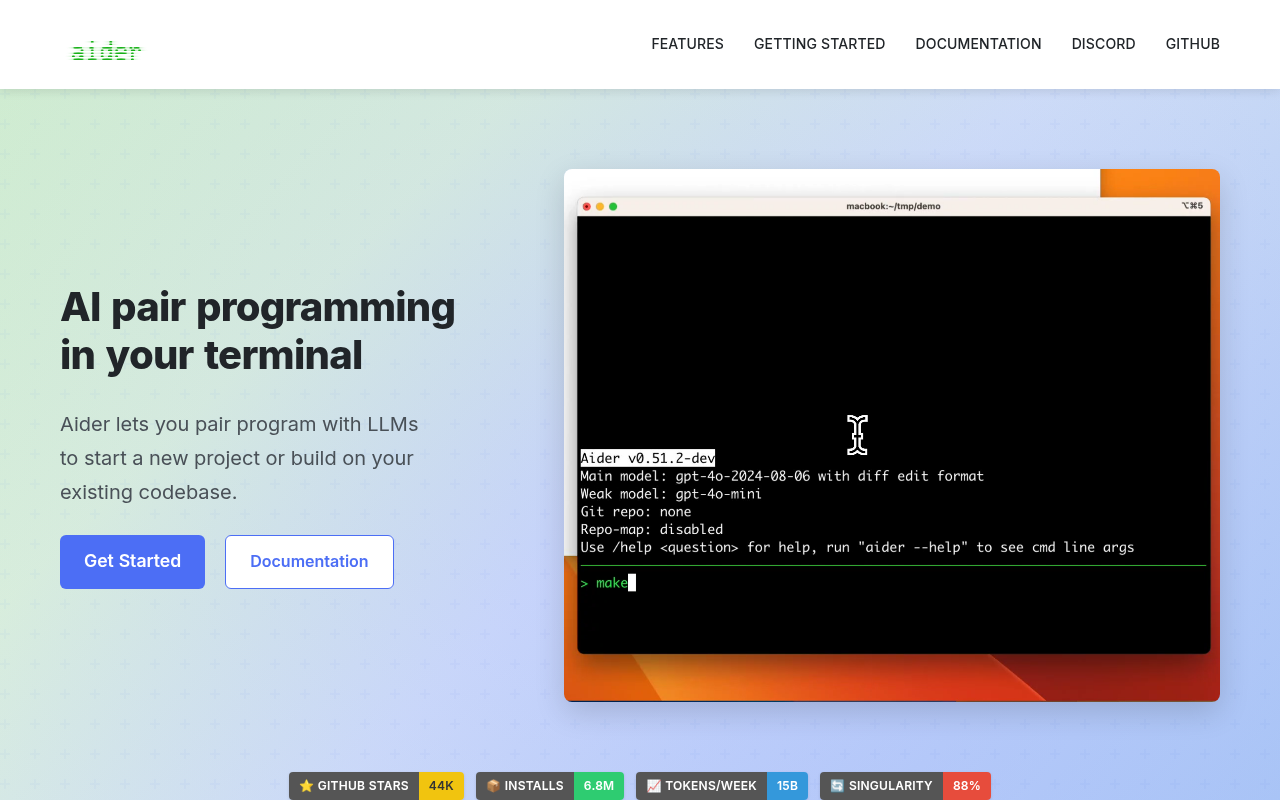
You run Aider in a shell alongside your editor, point it at a Git repository, and ask for changes in plain language. It is free and open source.
The project counts 44,000 GitHub stars, and installs have passed the 6.8 million mark on PyPI.
A map of your entire codebase keeps it effective in larger projects. It edits multiple files in one pass. Every change lands as a Git commit with a clear message, easy to review and undo with normal Git tools.
After each change it can lint, test and fix what breaks. It connects to cloud or local models with your own API keys, across more than 100 programming languages.
You can even speak a request aloud, or add screenshots and web pages to the chat for visual context. There is no subscription. The only cost is the model usage you pay your provider.
Pros:
- Completely free, with automatic Git commits for clean review
- Repo map keeps it effective on larger codebases
- Works with cloud or fully local models
Cons:
- A terminal workflow will not suit developers who want an IDE experience
- Bring-your-own-key setup takes a little more effort up front
- No built-in review interface beyond the diffs Git already gives you
Bottom line: Aider proved terminal-first AI coding before most rivals existed. Its Git-native workflow builds the trust automated editing needs, since every edit stays reviewable and reversible. The best fit for Git-fluent developers who want precision without another subscription.
One change of guard: Cursor acquired Continue.dev, the open-source extension formerly featured in this guide, in 2026. Its code remains open. Development now sits with Cursor itself, so it no longer belongs on a list of independent alternatives.
If you want an open-source extension rather than a terminal tool, Cline above covers the same ground and further.
Choosing the right alternative
The quickest way to choose is to start from how you want to work.
| Use case | Recommended tools | Notes |
|---|---|---|
| Keeping your current editor | GitHub Copilot, Windsurf (now Devin Desktop) | Lowest friction in VS Code, JetBrains, Neovim and Visual Studio |
| Keeping costs low | Aider, Zed | Free options where you pay only for model calls |
| Control over models, spend and code | Cline | Any provider's key, local models through Ollama, Apache 2.0 codebase |
| Building inside one ecosystem | Amazon Q Developer, JetBrains AI Assistant | Q Developer for AWS, AI Assistant for JetBrains IDEs |
| Meeting security requirements | Replit, Tabnine | SOC 2 Type 2 and SAML SSO, or air-gapped deployment |
| Shipping a working app | Replit | Agent builds, publishes and hosts from one workspace |
You want to keep the editor you already use: GitHub Copilot is the lowest-friction pick for VS Code, JetBrains IDEs, Neovim and Visual Studio. If you would rather swap Cursor for another agent-first IDE, Windsurf, now Devin Desktop, is the closest like-for-like move.
Cost is the constraint: Aider is free and open source, and you pay only for the model calls you make. Zed's Personal plan is also free forever with your own API keys.
You want control over models, spend, or the code itself: Cline is built for exactly that, with any provider's key, local models through Ollama, and an Apache 2.0 codebase you can read. Budget some setup time before it feels effortless.
You build inside one ecosystem: Amazon Q Developer earns its keep on AWS, where its transformation agents modernize legacy Java code that nothing else here touches. JetBrains AI Assistant plays the same role if your team lives in IntelliJ, PyCharm or WebStorm.
Security review sets the pace: Replit meets enterprise requirements with SOC 2 Type 2 infrastructure, SAML SSO and private deployments through its Microsoft Azure partnership. Tabnine remains the pick when policy demands fully air-gapped deployment with zero code retention.
The point is to ship something: Replit's Agent takes your description, builds the app and publishes it from the same workspace, with hosting, a database and deployments already inside. Start free and see how far one prompt goes.
Conclusion
The best Cursor alternative depends on your workflow, budget and development environment. Start with free tiers to test AI-powered code completion without commitment. If you want to go beyond code editing to a full browser-based environment with built-in deployment, start with Replit.
Frequently asked questions
Who are Cursor AI's main competitors?
Cursor AI's main competitors include GitHub Copilot, Zed and Replit, along with Windsurf, which now operates as Devin Desktop, and open-source options such as Cline and Aider. The right choice depends on whether you prefer a desktop IDE, an editor extension or a full cloud development environment.
Is there a free Cursor alternative?
Yes. Aider and Cline are completely free and open source, so you pay only for AI model usage, and tools such as GitHub Copilot, Zed and Replit offer free plans. That makes it easy to try a few before committing to a paid plan.
What should I look for in tools like Cursor?
Compare the pricing model, the editors each tool supports and how much autonomy you want from the AI. Options range from free editor extensions to cloud platforms where an AI agent can code from natural language prompts and deploy the result.
Can I get a Cursor alternative inside my current IDE?
Yes. GitHub Copilot and JetBrains AI Assistant integrate with IDEs you may already use, including VS Code, JetBrains IDEs, Neovim and Visual Studio, while Cline runs as a VS Code extension or straight from the terminal. That means you can add AI assistance without switching editors.