Why developers choose Aider AI alternatives
Aider operates as an open-source command-line AI coding assistant integrating directly with Git repositories. Rather than IDE plugins, Aider runs in your terminal and automatically commits AI-generated changes with descriptive messages.
The tool excels at multi-file editing through natural language commands while maintaining clean version control.
As open-source software, Aider itself is free, with users paying only API costs to their chosen LLM provider. Still, a terminal is not where everyone wants to work. Here is how nine of the strongest Aider alternatives now compare, one verdict at a time.
How we picked these tools
This list spans four lanes. Extensions bring AI into the editor you already use, AI-first IDEs replace that editor outright, self-hosted tools keep code on your own hardware, and one cloud platform builds and deploys for you.
To make the cut, a tool had to be actively maintained, publicly priced and independent of Aider itself.
| Tool | Best for | Free plan | Paid plans from |
|---|---|---|---|
| Replit | Building and deploying full apps from prompts | Yes | $20/month |
| Cursor | An AI-first IDE with multi-file editing | Yes | $20/month |
| GitHub Copilot | AI in the IDEs you already use | Yes | $10/month |
| Windsurf (now Devin Desktop) | Agent-first desktop IDE workflows | Yes | $20/month |
| Cline | Full control over models and spend | Yes | Pay per model use |
| Zed | Raw editor speed with optional AI | Yes | $10/month |
| Tabby | Self-hosted AI on your own hardware | Yes | $19/user/month |
| Amazon Q Developer | Teams building on AWS | Yes | $19/user/month |
| Tabnine | Enterprise privacy and air-gapped deployment | No | $39/user/month |
Product and pricing information: vendor product and pricing pages, August 2026.
Replit
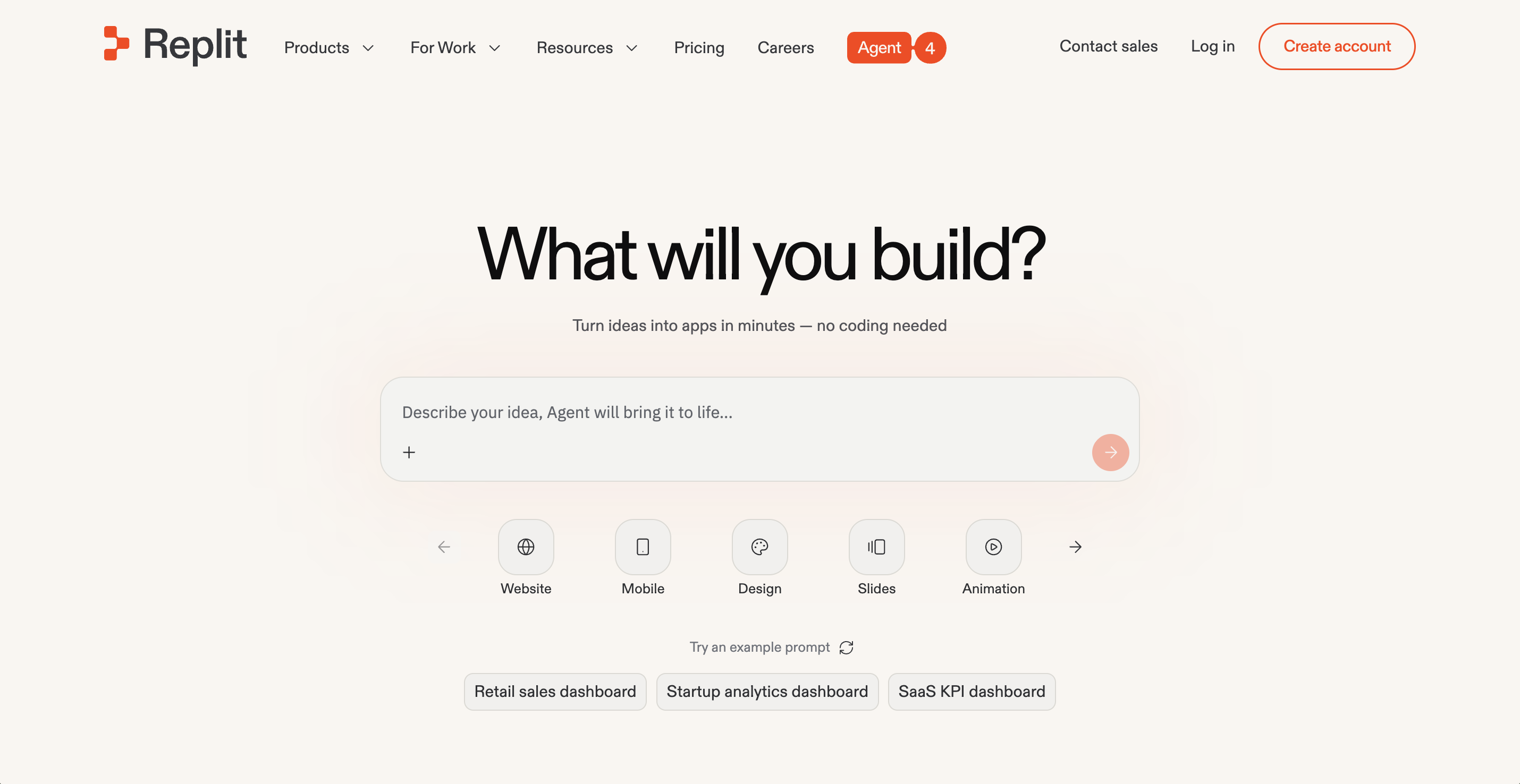
Replit takes a different approach from every terminal tool on this list. There is nothing to install. The workspace, database, hosting, deployment and real-time collaboration all live together in the browser as one product.
Agent 4 operates autonomously. Describe what you want and our Agent plans the build, writes the code, tests it in the browser, fixes what breaks and reruns until requirements are met.
The output is ready to go: full web apps, internal tools and dashboards, data pipelines, automations, even slide decks and design work. The public gallery shows what users ship.
For enterprise teams, Replit has a partnership with Microsoft Azure, and the Enterprise plan carries SOC 2 Type 2 compliance, SSO and single-tenant environments. At Rokt, 700 employees built 135 internal applications in 24 hours.
Replit pricing is built on effort-based pricing. Simple requests cost less than complex ones, Starter is free, and Core starts at $20/month.
Pros:
- Ready-to-go output, from full web apps and dashboards to slide decks and automations
- Agent 4 plans, builds, tests and deploys from a single prompt
- Zero setup, with hosting and a database already in the workspace
Cons:
- Browser-first work is an adjustment if your habits are built around a terminal
- Complex agent builds use more credits under effort-based pricing
Bottom line: Replit is the only tool here that replaces the whole stack around the editor, hosting included. Agent 4 makes that stack answer to a single prompt. The free Starter plan gives you room to test that claim before any money changes hands.
Cursor
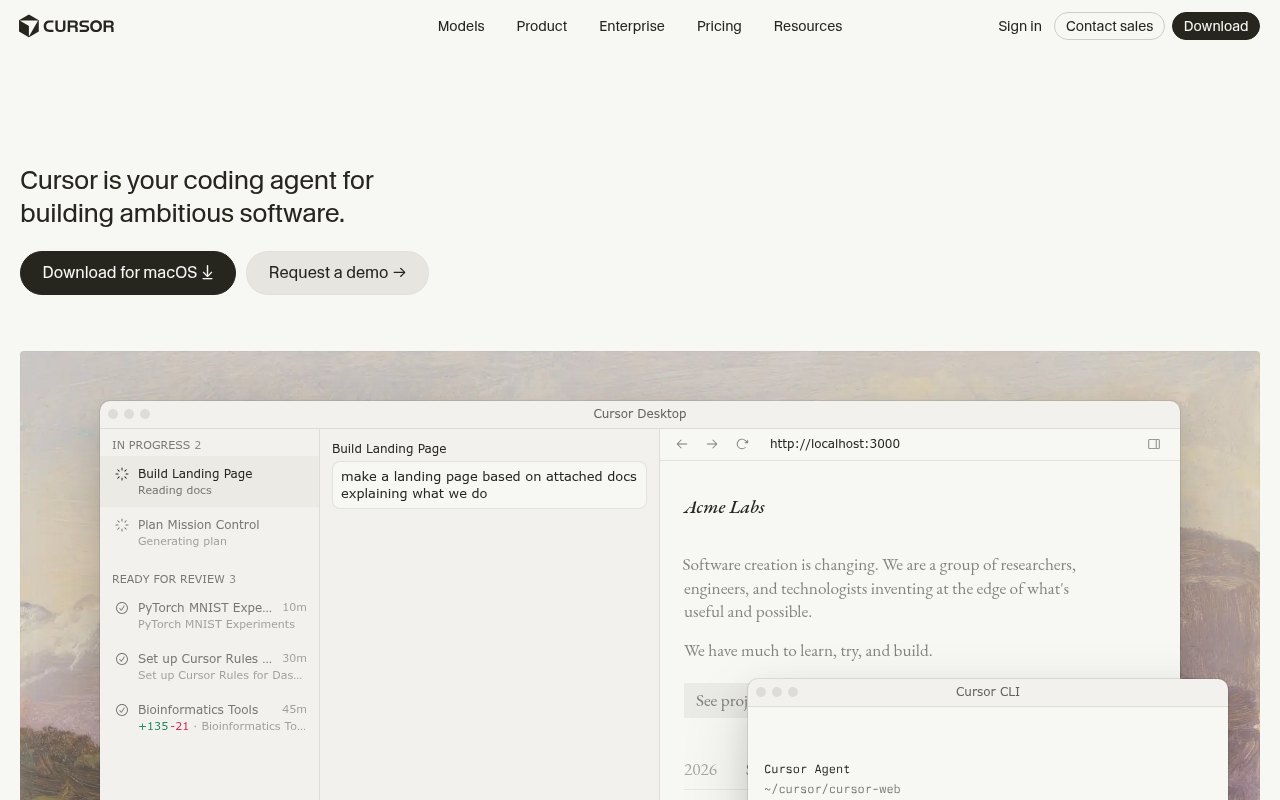
Cursor moves the AI from your terminal into the editor itself. It is an IDE built on VS Code with AI woven through every surface, from tab autocomplete to inline chat and agent panels.
Composer, Cursor's coding agent, plans and applies multi-file changes. Cloud agents run tasks away from your machine, and Bugbot reviews the code they write.
Model support spans Anthropic, OpenAI and Google frontier models, so you can pick the engine per task the way Aider users switch models per session. On paid plans, MCP servers, skills and hooks extend the agent into your own tooling.
Every plan includes a set amount of model usage, and on-demand billing continues past it. Heavy agent months can outrun the subscription.
The Hobby plan is free with limited agent requests and Composer access. Pro runs $20/month with extended limits, and Teams adds SSO and centralized billing at a higher per-user rate.
Pros:
- AI is native to every editing surface of the IDE
- Free Hobby plan includes Composer and limited agent requests
- Cloud agents and Bugbot code review on paid plans
Cons:
- Usage-based billing past plan limits makes heavy months hard to predict
- Requires adopting a whole new editor instead of extending your current one
- Privacy mode exists, but there is no self-hosted deployment
Bottom line: Cursor sets the reference point that other AI-first IDEs get measured against. It rewards developers who want the agent close to the code, with model flexibility Aider users will recognize. Watch your first month's usage before rolling it out wider.
GitHub Copilot
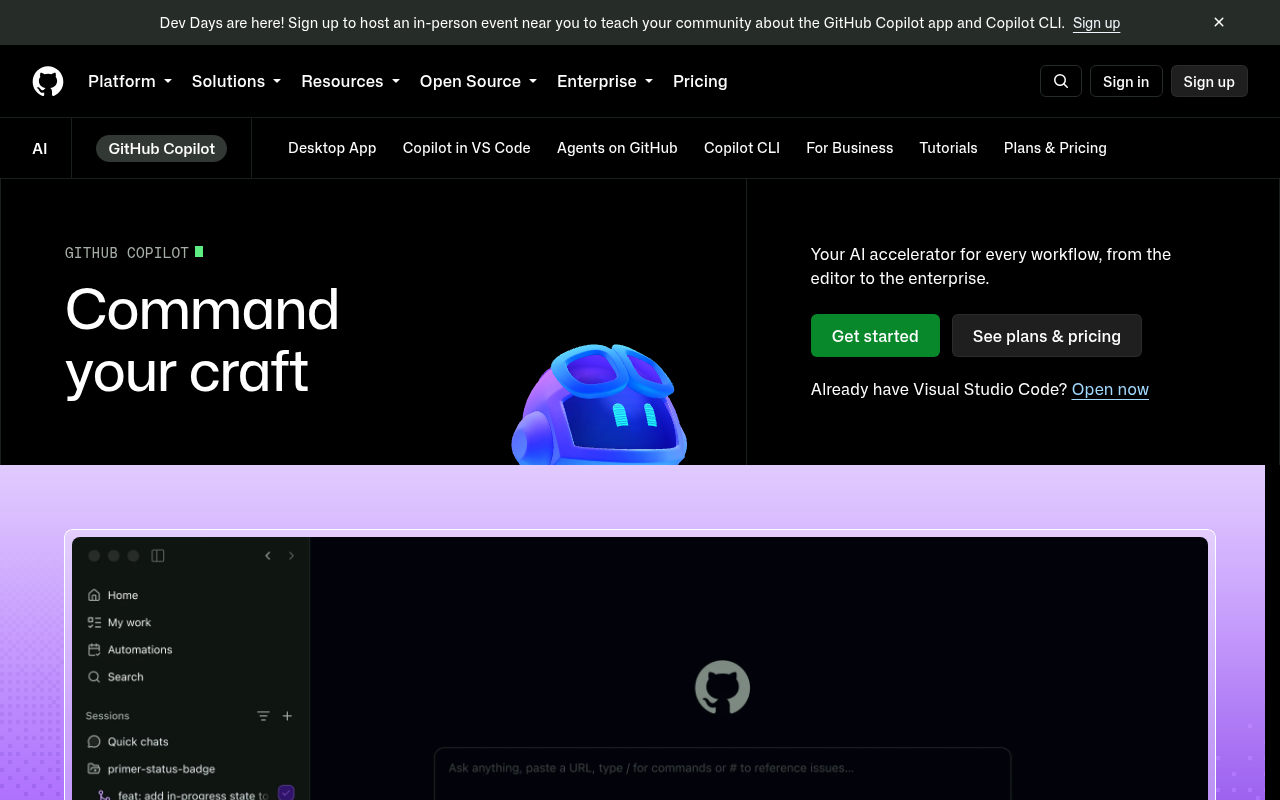
GitHub Copilot integrates directly into VS Code, JetBrains IDEs, Vim, Neovim and Visual Studio. You keep your current editor, and context from your repositories, issues and pull requests feeds everything the assistant does.
The free tier includes 2,000 completions per month plus the Copilot CLI, which brings the assistant to the terminal Aider users already live in.
Pro adds a cloud coding agent, AI code review and third-party agents such as Claude Code and Codex. Hand the agent an issue and it returns a finished pull request for review.
Billing has moved from per-request counts to GitHub AI Credits. Each plan carries a monthly credit allowance, heavier agent work draws it down faster, and Pro starts at $10/month.
Business seats add SSO, centralized policy management and IP indemnity, so the rollout stays governable as agent use spreads across a team.
Pros:
- Works in every major IDE with deep GitHub context
- Free tier with 2,000 monthly completions and the Copilot CLI
- Predictable $10/month entry with agents included
Cons:
- Agent-heavy use burns through monthly AI credits
- Least compelling outside GitHub-centered workflows
- No self-hosted or air-gapped deployment
Bottom line: Copilot is the lowest-friction move for teams already on GitHub. The credits model keeps entry cheap while heavy users pay for what they use. Anyone set on Aider's zero-subscription economics will look elsewhere, though the CLI narrows the gap in workflow terms.
Windsurf (now Devin Desktop)
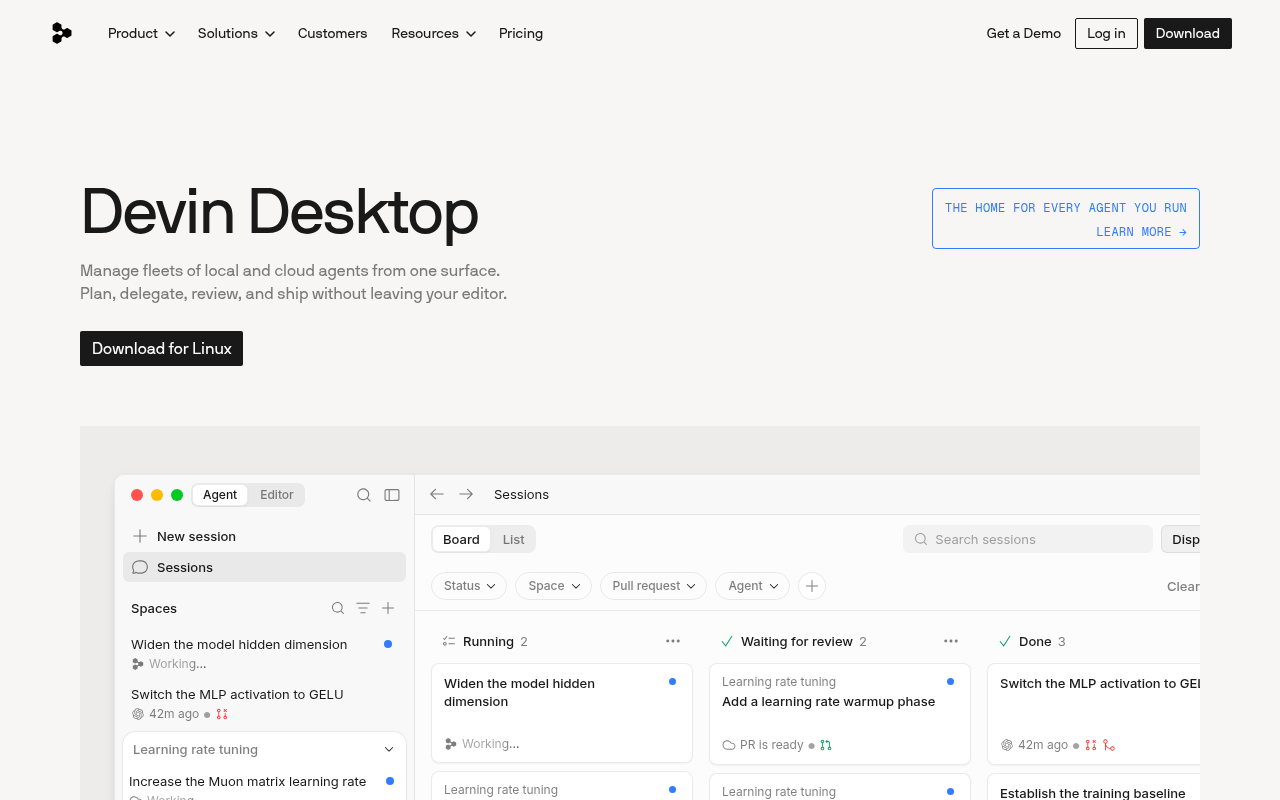
Windsurf made its name with Cascade, an agent with deep codebase understanding that keeps context across sessions and executes multi-step tasks on its own. In 2026 the product changed hands and names.
Cognition acquired the company, and the editor now ships as Devin Desktop with windsurf.com redirecting to devin.ai.
The new shape is a command center for agents. Local and cloud agents run side by side, outside agents plug in through the Agent Client Protocol, and Fast Context finds the files they need in milliseconds. Supercomplete predicts whole next edits.
The free plan includes unlimited use of SWE-1.7, Cognition's own coding model, with paid plans for new users from $20/month. Windsurf for JetBrains remains a separate download, and legacy plans keep their existing pricing and terms.
Pros:
- Unlimited free use of Cognition's SWE-1.7 coding model
- Polished agent workflows with outside-agent support through ACP
- Existing Windsurf plans, extensions and settings migrate automatically
Cons:
- Two rebrands in two years make the roadmap harder to read
- JetBrains support lives in a separate plugin
- The agent command center assumes interest in the wider Devin platform
Bottom line: The IDE under its new name remains one of the most capable agent editors available. Free unlimited SWE-1.7 makes a serious trial cost nothing. The open question is direction after two rebrands in two years, so let the free plan earn the upgrade.
Cline
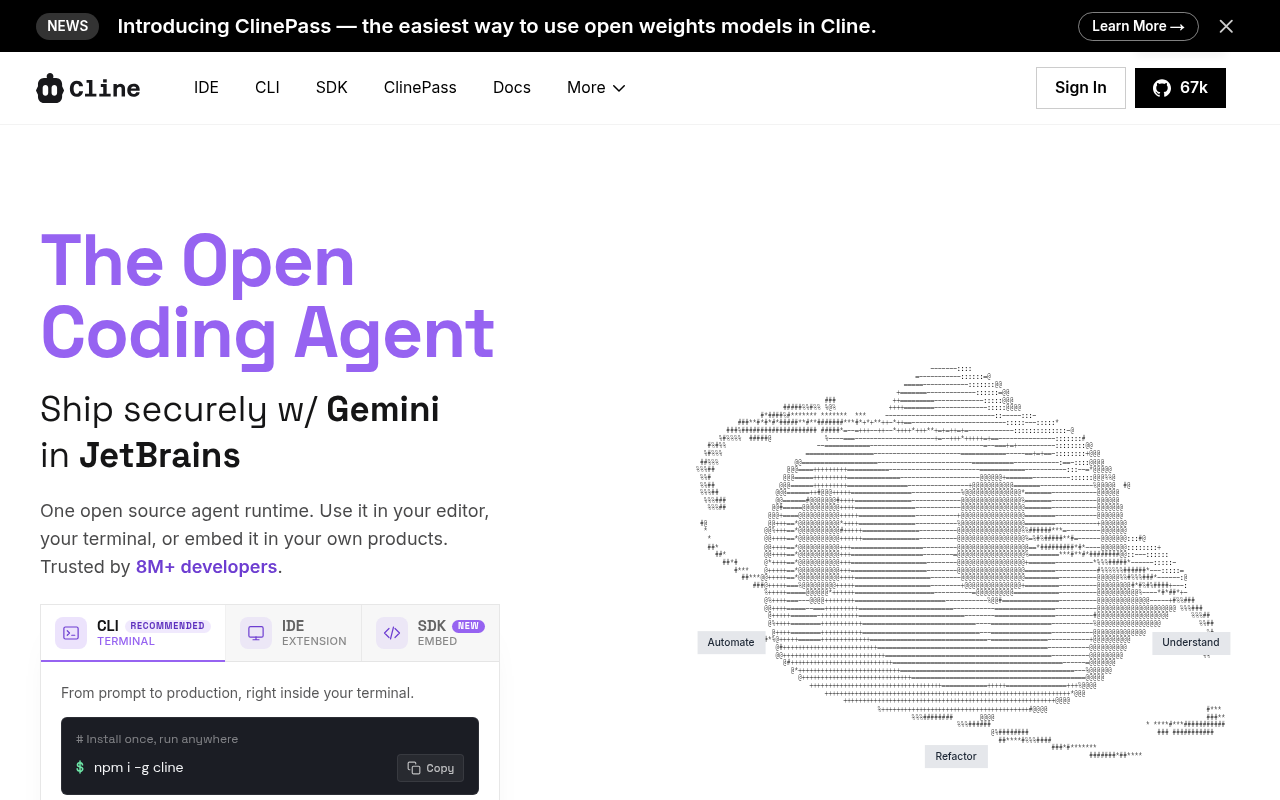
Cline is the closest thing to Aider that lives inside VS Code. It is a free, open-source agent under an Apache 2.0 license, with more than 8 million installs.
The workflow will feel familiar. You bring your own API keys for Anthropic, OpenAI, Google, OpenRouter or local models through Ollama, and you pay only for the model usage itself.
Plan and Act modes split the work: agree the approach first, then let it edit files, run terminal commands and fix what the linters catch. You approve each step or turn on auto-approval.
It has grown past the extension. A CLI runs the same agent from the terminal or CI, JetBrains support is in early access, and MCP servers connect it to databases and internal tools.
Rules files teach the agent your coding standards, so its output follows your conventions from the first task.
Pros:
- Free and open source with no subscription
- Any provider's key or fully local models through Ollama
- Plan and Act modes keep every change reviewable
Cons:
- Costs track your API usage, so spend needs watching
- More initial configuration than subscription tools
- Quality depends on the models you bring
Bottom line: Cline gives Aider users the shortest bridge into an editor-based agent. The economics stay identical, your keys and your bill, while the diffs and approvals gain a real interface. Expect some setup before it feels effortless.
One roster note: in 2026 Cursor acquired Continue, the open-source extension this guide formerly featured. Its code remains open, and development no longer sits with an independent team, so it comes off the list. Cline covers the same ground with the same bring-your-own-key model.
Zed
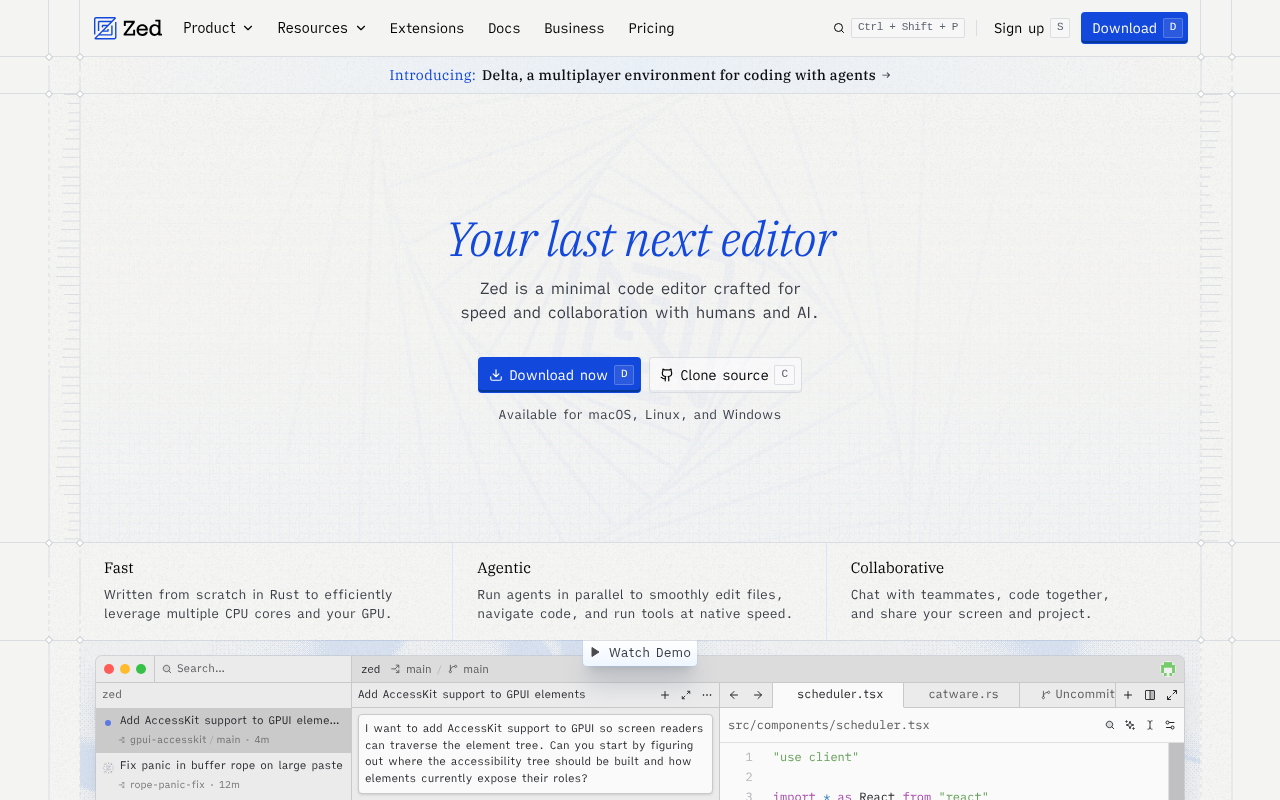
Zed is an editor written from scratch in Rust with AI as a core design principle. It renders on the GPU, so big projects stay fast.
Weekly releases keep improvements landing on a steady schedule, and the editor runs on macOS, Linux and Windows.
Multiplayer collaboration is built in, and the whole editor is open source. You can read the code, patch it, or switch the AI off entirely and keep the editor.
For AI, Zed connects to major model providers and to external agents such as Claude Agent and Codex CLI. The free Personal plan takes your own API keys and includes 2,000 accepted edit predictions.
Pro runs $10/month with unlimited edit predictions and hosted model credits, and usage past the credits bills at list price plus 10 percent. A Business tier adds org-wide AI policies and data governance.
Pros:
- Rust-fast performance with a fully open-source codebase
- Free plan supports your own keys and external agents
- AI is optional, the editor stands alone without it
Cons:
- Extension ecosystem is younger than VS Code's
- No SSO or SAML for teams yet
- Hosted AI beyond included credits bills at list price plus 10 percent
Bottom line: Zed makes the strongest case as a pure editor here. The AI layer stays optional by design, which suits developers who want Aider-style control over what runs and what it costs. Teams that need SSO will have to wait.
Tabby
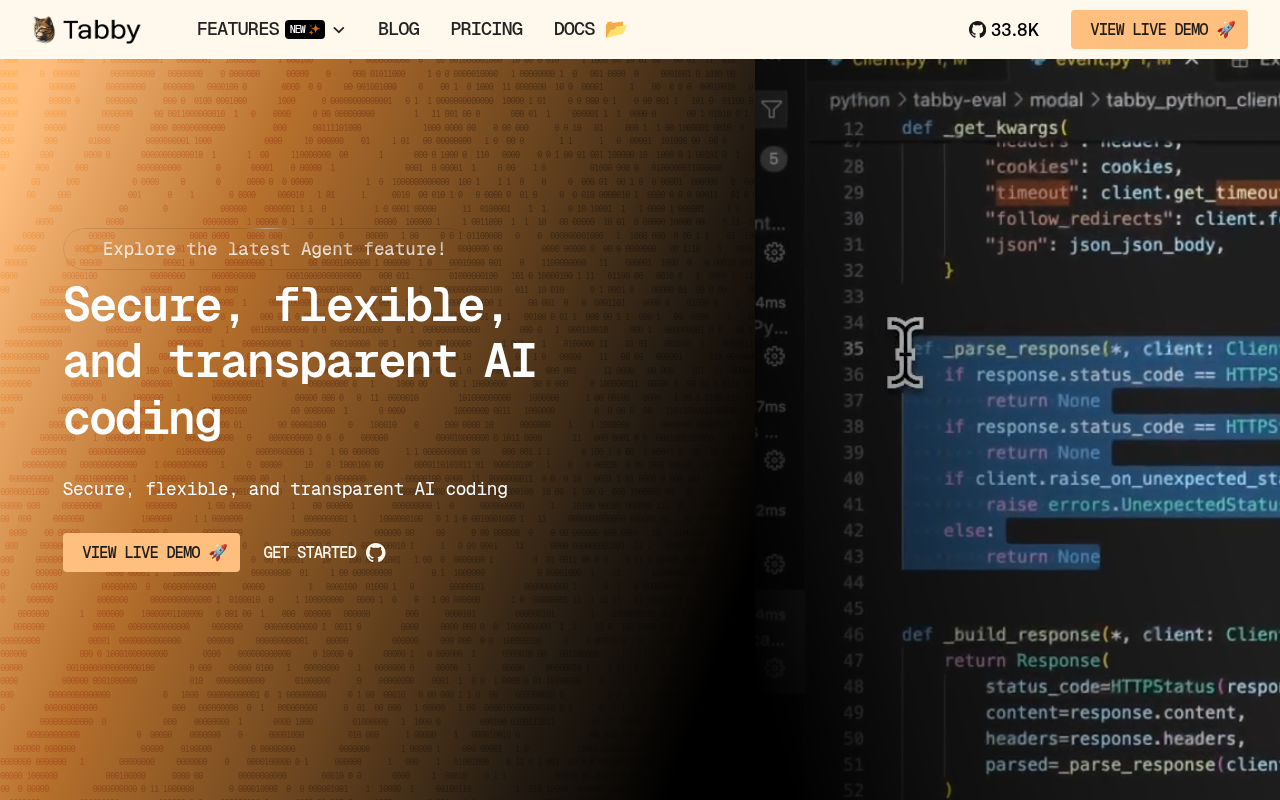
When no code can leave your network, Tabby is the tool built for that constraint. The assistant is open source and runs entirely on your own servers, with completion served by models you pick, host and control.
The server deploys with a Docker command. From there it serves code completion, an answer engine and a code browser to your whole team, all from your own GPUs.
The Community plan is free for up to 5 users. Tab completion carries no usage limits on any plan, and the Team plan runs $19 per user per month for up to 50 users.
Nothing leaves your servers unless you point it at a cloud model, which is the argument that wins security reviews.
An Enterprise tier adds SSO, an authentication domain and bespoke support for teams past the 50-user mark.
Pros:
- Fully self-hosted, code never has to leave your infrastructure
- Open source with a free Community plan for small teams
- Tab completion is free without usage limits
Cons:
- You provision and maintain the GPUs it runs on
- Completion quality depends on the models you deploy
- Lighter on autonomous-agent features than the IDE tools here
Bottom line: Tabby occupies a lane most rivals ignore, full self-hosting without an enterprise contract. The fit is a team with spare GPUs and a firm rule that code never leaves the building. Anyone wanting agentic autonomy should look further up this list.
Amazon Q Developer
Amazon Q Developer targets teams building on AWS. Integration spans AWS services, the console and the SDKs, with agentic coding in the IDE and CLI and security scanning built in.
It also does a job few rivals attempt, transforming legacy code. Java upgrades come with a monthly line-of-code allowance, pooled across the account on the paid tier.
Despite the branding, it runs on the latest Claude models. Reference tracking and the option to suppress suggestions matching public code come on every tier.
Inside the AWS console it answers questions and diagnoses common errors in place, which shortens the loop for infrastructure work.
The free tier includes 50 agentic requests a month. Pro costs $19 per user per month, adds admin dashboards, IP indemnity and higher limits, and lands on your existing AWS bill.
Pros:
- Deep AWS integration from console to CLI
- Java transformation tooling with pooled allowances
- Free tier is enough to evaluate seriously
Cons:
- Thin value outside AWS-centered stacks
- 50 free agentic requests run out fast in daily use
- Team setup assumes IAM Identity Center
Bottom line: Q Developer earns its seat wherever the AWS bill already exists. Its transformation agents solve a legacy modernization problem that nothing else on this list touches. Outside that world, a multi-IDE tool will fit better.
Tabnine
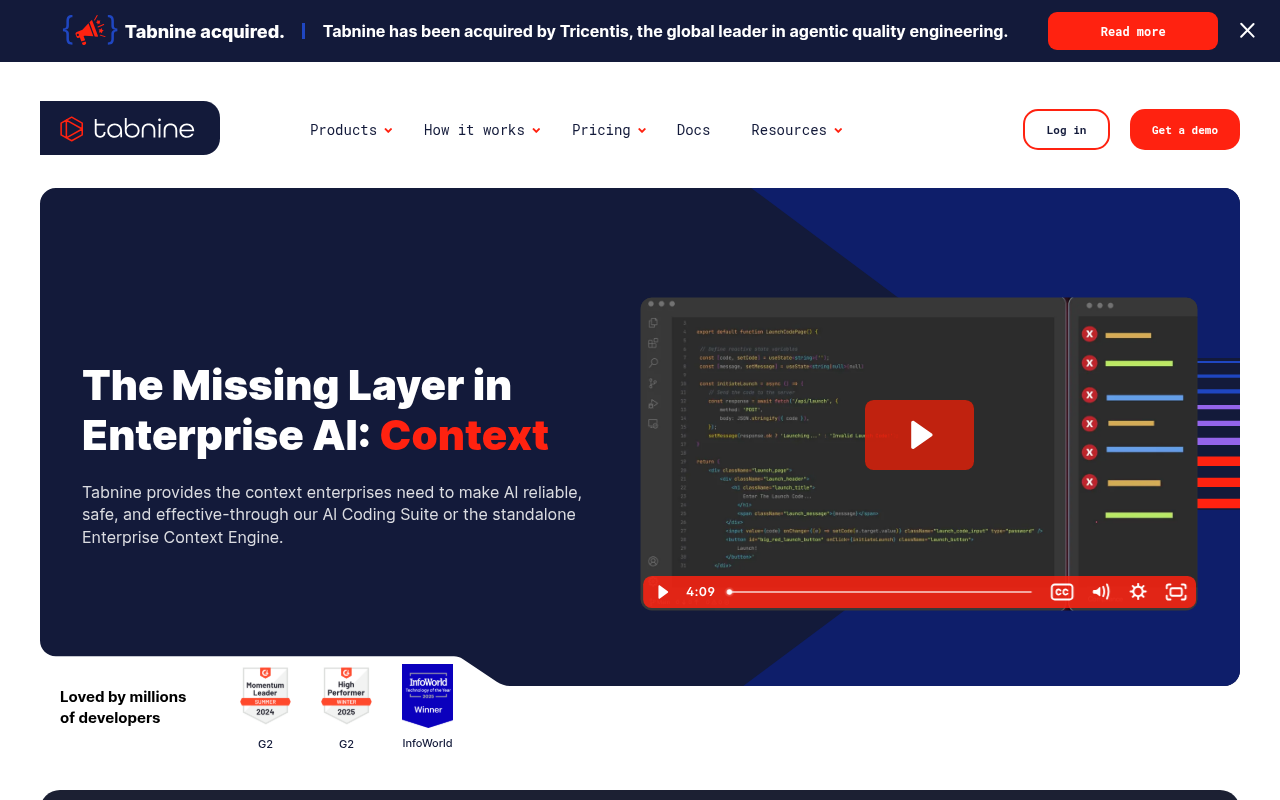
Tabnine sells to the security review as much as to the developer, and the Tricentis acquisition in 2026 sharpened that focus. Privacy is the product.
The free tier is gone. Plans are annual and per user, with the Code Assistant platform from $39 per user per month and an Agentic platform above it.
What the price buys is deployment freedom: SaaS, VPC, on-premises or fully air-gapped. Zero code retention comes standard, with SOC 2, ISO 27001 and GDPR compliance and IP indemnification alongside.
The Agentic tier adds autonomous agents, a terminal CLI and a context engine that reads Git, Jira and Confluence to apply your standards consistently.
Models come from Anthropic, OpenAI, Google, Meta and Mistral, and governance controls set which ones each team may use.
Pros:
- Deployment down to fully air-gapped environments
- Zero code retention with enterprise compliance certifications
- Model-agnostic across every major IDE
Cons:
- No free tier and annual-only per-user pricing
- Individuals get little value at enterprise rates
- Plans are quoted through sales, with no self-serve checkout
Bottom line: Tabnine has left the individual market and aims squarely at regulated enterprises. Inside that lane, air-gapped deployment with zero code retention is an offer almost no rival here can match. If security review is your slowest step, shortlist it first.
Choosing the right alternative
The quickest way to choose is to start from how you want to work.
| Use case | Recommended tools | Notes |
|---|---|---|
| AI in your current editor | GitHub Copilot, Cursor, Windsurf (now Devin Desktop) | Copilot extends your editor, the other two replace it |
| Keeping costs low | Cline, Zed | Both free, you pay only for the model calls |
| Control over models and code | Tabby | Self-hosted on your hardware, you maintain the server |
| Working inside one ecosystem | Amazon Q Developer | Strongest on AWS, its case thins away from it |
| Passing security review | Replit, Tabnine | SOC 2 Type 2 and SSO, Tabnine for air-gapped deployment |
| Shipping a finished product | Replit | Agent builds and publishes from the same workspace |
You want AI in the editor you already use: GitHub Copilot drops into VS Code, JetBrains IDEs, Vim, Neovim and Visual Studio with the least friction. If a full AI-first IDE appeals more, Cursor and Windsurf, now Devin Desktop, fill that role as complete editors.
Cost is the constraint: Cline is free and open source, so you pay only for the model calls you make, exactly the economics Aider taught you. Zed is also free to start, with a Personal plan that runs on your own API keys.
You want control over models, spend and the code itself: Tabby runs entirely on your own hardware with models you pick, and its code is open to read and patch. The trade-off is that you provision and maintain the server yourself.
You build inside one ecosystem: Amazon Q Developer earns its keep on AWS, from console help to legacy Java transformation. Away from AWS its case thins quickly.
Security review sets the pace: Replit's Enterprise plan pairs SOC 2 Type 2 compliance and SSO with a Microsoft Azure partnership, so approval starts from known ground. For fully air-gapped deployment with zero code retention, Tabnine is the specialist.
The point is a shipped product: every other tool here assists work inside an environment you maintain. Replit closes that gap because our Agent takes a description, builds the app and publishes it from the same workspace.
A database, hosting and deployments are already part of the workspace, so there is no setup step waiting at the end. Start free and see what one prompt gets you.
Making your decision
The AI coding assistant landscape is changing fast. The best Aider alternative depends on your context, team structure and budget. Test candidates on real projects during free trials and monitor costs before committing. If you want to go from idea to deployed app without terminal setup, start with Replit.
Frequently asked questions
What is the best Aider alternative?
It depends on where you want to work. Cline keeps Aider's open-source, bring-your-own-key model inside VS Code, GitHub Copilot and Cursor lead the editor-based options, and Replit goes furthest by building and deploying complete apps from a single prompt, hosting included.
Is there a free Aider alternative?
Yes. Cline and Tabby are free and open source, and GitHub Copilot, Cursor, Zed and Windsurf offer free plans alongside Replit's free Starter plan. Only Tabnine on this list requires a paid subscription to start. Free plans differ on agent limits, so test one real project before committing.
What should I look for in tools like Aider?
Match the tool to where you work first: terminal, editor extension, full IDE or cloud platform. Then compare the pricing model, the models each tool supports and how much autonomy you want the AI to have. A free plan makes it cheap to run two finalists side by side.
Can I get an Aider alternative inside my current IDE?
Yes. Cline and GitHub Copilot run inside VS Code and JetBrains IDEs, and Copilot extends to Vim, Neovim and Visual Studio. Tabby also works from IDE extensions, backed by a server you host yourself. Tabnine covers every major IDE too, with enterprise controls layered on top.