
Web3 Website Builder
Build a web3 website in minutes for free with AI. Write in plain English or tap buttons to create your website.






How to Use the Web3 Website Builder
Web3 Website Builder Example
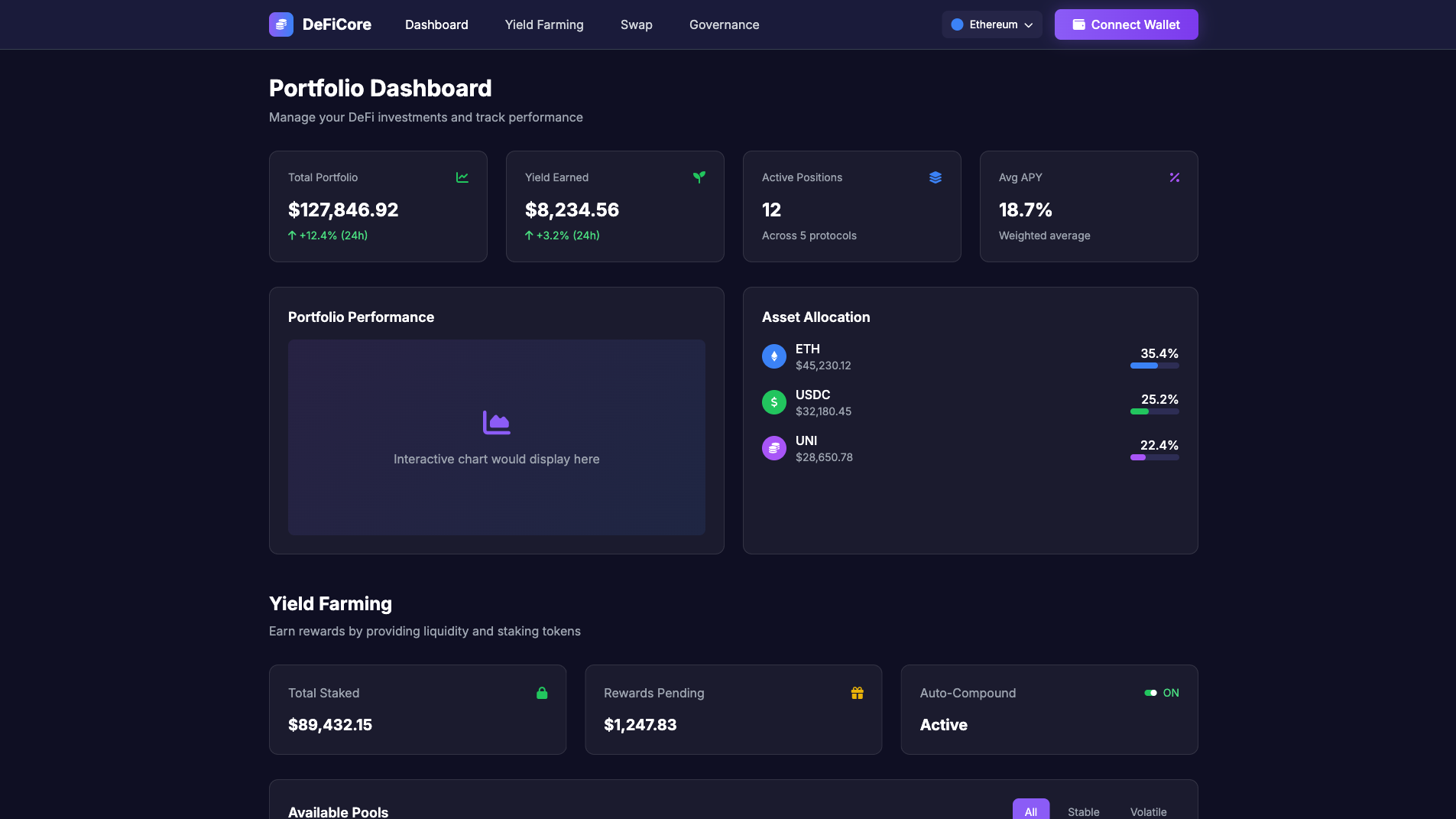
Built with Replit.
Build your vision in minutes for free without writing a single line of code.
Prompting the Web3 Website Builder
Build a DeFi web3 site with non-custodial wallet connections (MetaMask, WalletConnect, hardware), a yield farming dashboard for staking, liquidity provision, and auto-compounding, seamless cross-chain swaps and bridging across major chains, and DAO governance where token holders propose and vote on upgrades, fees, and treasury use.
Build a Web3 NFT marketplace with lazy minting at purchase, an on-chain royalty engine for every resale, provenance and rarity analytics for verifiable ownership and pricing, and a unified fiat/crypto checkout supporting cards, stablecoins, and escrowed bids/offers.
Build a blockchain gaming Web3 site featuring play-to-earn token rewards for achievements and quests, player-owned NFT items/skins/land, a peer-to-peer marketplace with time-bound rentals, and immutable on-chain leaderboards with seasonal tournaments and provable results to drive retention, an in-game economy, trading, casual player utility, asset-owner income, competitive integrity, esports potential, and sponsorships.
Build a decentralized social network with a tokenized social graph (user-controlled, interoperable follows/reputation), portable identity (DIDs and verifiable profiles across apps), creator monetization (tips, subscriptions, token/stablecoin-gated posts), and DAO-based moderation with staking and appeals for transparent, community-driven policies.
Top Web3 Website Features by Type
Non-Custodial Wallets
Users connect wallets like MetaMask, WalletConnect, or hardware wallets without giving up keys. This increases security and trust while reducing platform liability.
Yield Farming
Provide a dashboard for staking, liquidity provision, and auto-compounding strategies. It attracts users seeking passive income and boosts protocol liquidity.
Cross-Chain Swaps
Enable seamless asset swaps and bridging across major chains. This expands market reach and improves capital efficiency for users.
DAO Governance
Token holders can propose and vote on upgrades, fees, and treasury use. Community control increases engagement and long-term alignment.
Lazy Minting
Creators mint NFTs at purchase time to avoid upfront gas costs. This lowers barriers to entry and encourages more listings.
Royalty Engine
Automated, on-chain creator royalties on every resale. It incentivizes high-quality content and sustains creator revenue.
Provenance & Rarity
Show verifiable ownership history and rarity analytics. Buyers gain confidence and can price assets more accurately.
Fiat/Crypto Checkout
Support cards, stablecoins, and crypto with escrowed bids and offers. Broader payment options increase conversion and liquidity.
Play-to-Earn
Reward players with tokens for in-game achievements and quests. This drives retention and forms a real in-game economy.
NFT Assets
Items, skins, and land are NFTs owned by players. True ownership boosts value, trading, and longevity of the game.
Marketplace & Rentals
Peer-to-peer trading and time-bound rentals of in-game assets. It unlocks utility for casual players and income for asset owners.
On-Chain Leaderboards
Immutable leaderboards and seasonal tournaments with provable results. Competitive integrity increases esports potential and sponsorships.
Tokenized Social Graph
Follow relationships and reputations are stored on-chain or via open protocols. Users control their network and apps can interoperate.
Creator Monetization
Built-in tipping, subscriptions, and gated posts using tokens or stablecoins. Direct monetization reduces reliance on ads and intermediaries.
DAO Moderation
Community-driven content policies with staking and appeals. This increases transparency and reduces unilateral censorship.
Portable Identity
Decentralized IDs and verifiable profiles work across apps. Users keep their followers and reputation when switching platforms.
The Web3 Website of Your Dreams
Build your vision in minutes for free without writing a single line of code.
FAQ about the Web3 Website Builder
How to create a web3 website?
To create a web3 website, you build a frontend application that connects to a smart contract on a blockchain. This allows users to interact with decentralized applications directly from their browser, often using a crypto wallet.
A typical web3 site has a user interface built with a framework like React and uses libraries such as Ethers.js to communicate with the blockchain. The site's logic is handled by a smart contract, which must be deployed to a network like Ethereum before the site can interact with it.
You can start by using a web3 template. The workspace lets you edit your frontend and smart contract code in one place. Smart contracts must be deployed to a blockchain using scripts, which you can run from the workspace. For assistance, you can ask Agent3 to generate code for connecting a wallet, explain smart contract functions, or debug interaction errors.
How much does it cost to build a web3 website?
The cost to build a web3 website can range from under a thousand dollars using templates to tens of thousands for custom development. On Replit, you can start building for free.
A project's final cost depends on its complexity, including the blockchain used, the number of smart contracts, and whether you hire developers. Custom features and design are the largest cost drivers.
You can start on Replit by forking a web3 template, which provides a functional base. From there, you can modify the code in the workspace to fit your needs. If you need to add features, fix errors, or write smart contracts, you can ask Agent3 for assistance. While Replit is not a no-code builder, its integrated development and deployment tools can significantly reduce the time and cost of getting your project live.
Can you host a website on web3?
Yes, you can host a website on web3, though not directly with one-click deployment.
Web3 hosting involves storing your site's files on a decentralized network like the InterPlanetary File System (IPFS), instead of on a single, centralized server. This requires preparing your static site files and using a service to upload them to the network.
You can build a static website in the workspace. When the site is complete, you can ask Agent3 to help prepare the files for decentralized deployment or write scripts to interact with third-party web3 hosting services. You would then use one of those external services to upload your project files to a network like IPFS.
What features should a web3 website include?
A Web3 website must include a feature to connect to a user's cryptocurrency wallet. This allows the site to interact with blockchains, which is necessary for verifying asset ownership, managing digital identities, or processing transactions.
On Replit, you can start with a template that includes Web3 libraries like ethers.js or web3.js to handle wallet connections. You can then modify the front-end code to build your user interface. If you need to customize the connection logic or fix errors in your smart contract interactions, you can ask Agent3 to write, explain, or debug the necessary code.
How do I design a professional-looking web3 website?
To design a professional-looking Web3 website, you combine modern web design practices with user-friendly interfaces for blockchain interactions. This means creating a site that is both visually appealing and easy for users to connect their wallets and perform transactions.
A professional design prioritizes a clean layout, intuitive navigation, and responsive performance across devices. For Web3, it's crucial to build user trust with clear, secure workflows for any on-chain actions. The goal is to make complex blockchain technology feel simple and accessible.
On Replit, you can start with a Web3 template to get a functional foundation. From there, edit the HTML and CSS files in the Workspace to customize the visual design. If you need help, you can ask Agent3 to suggest design improvements, generate CSS code for specific elements, or modify the layout. Agent3 can also help implement and debug the code for wallet connections and other Web3 features. Once you are satisfied with the design, you can deploy your website directly from your workspace.