For engineers
Replit for Engineers
Build and ship production apps with built-in security testing.

Live workspace
Connect your stack. Build what's missing.
Bring issues, code, requirements, and approved datasets into one reviewable workflow.

 GitHub
 Linear
 Jira
Jira Notion
 ReplitYour team's
working tools
 Google Docs
 Slack
Slack BigQuery
 Snowflake
Integration and reliability investigations
Test refresh behavior, rate limits, identity, and token lifetimes before relying on a connected workflow without supervision.

1 of 4 — Integration and reliability investigations
Reproduce bugs. Ship tested features. Modernize legacy systems.

Workflow 01
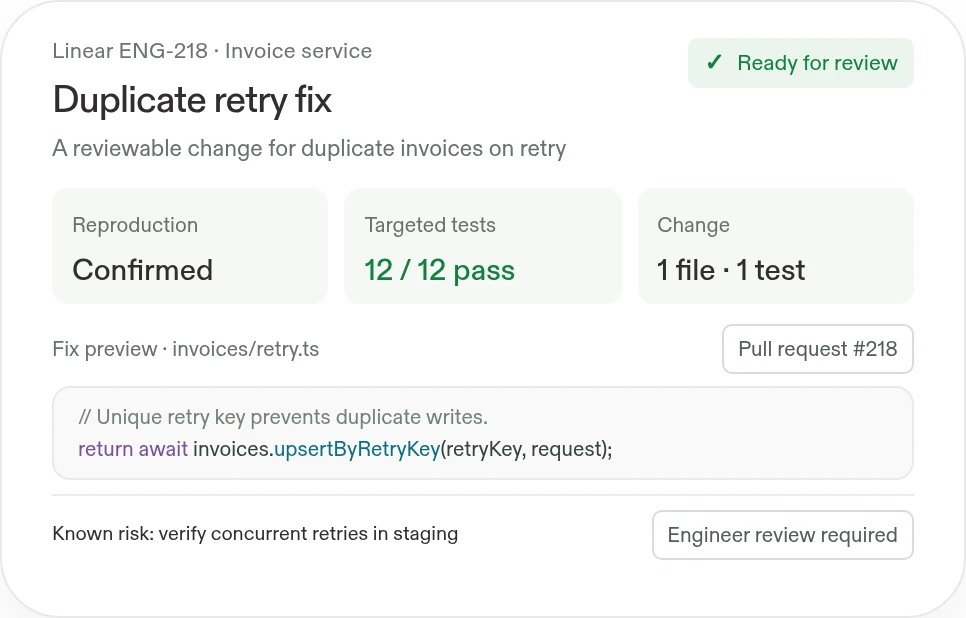
Issue reproduction and tested fixes
Get from an unclear bug report to a change an engineer can evaluate.
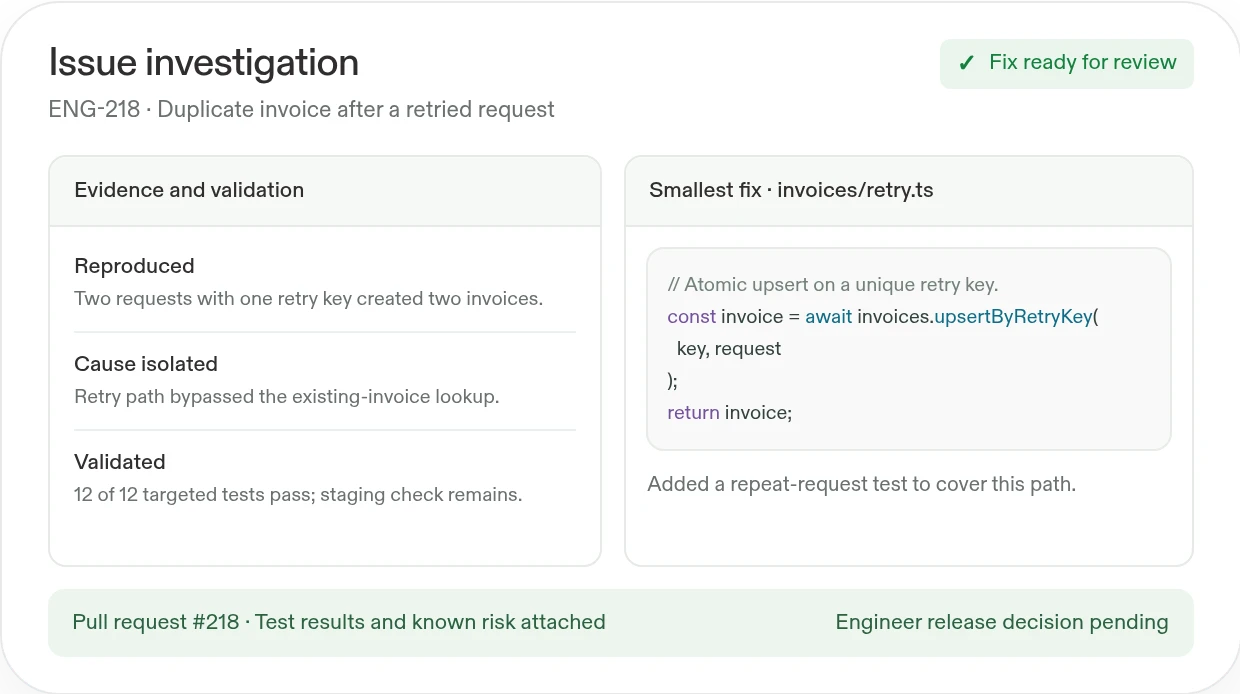
- Reproduce and isolate the issueUse the tracked issue, relevant code, logs, and environment details to distinguish the symptom from the cause.
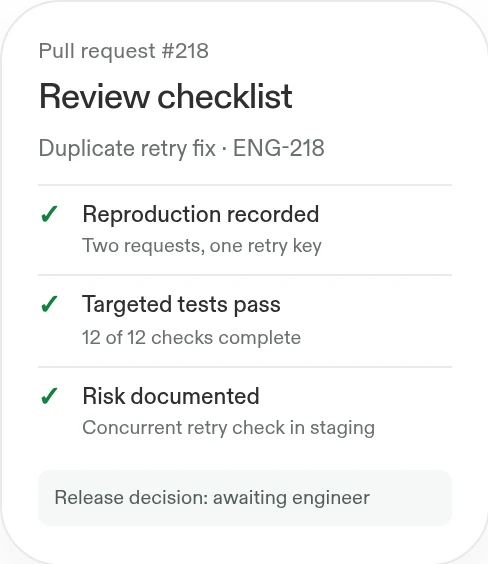
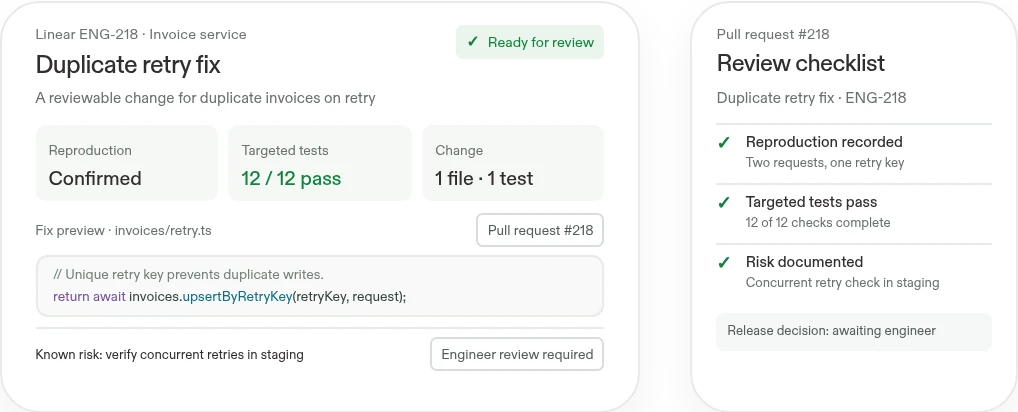
- Prepare the smallest validated fixImplement the change, add targeted tests, and preserve the evidence and remaining risks for review.
Fix the cause.
What you'll build
A reproducible case and review-ready change with test results and known risks. An authorized engineer decides whether it is ready to release.
Investigate this Linear issue, reproduce the bug, implement the smallest fix, and validate it with targeted tests. Prepare a pull request with the evidence for review.
Works withLinearJiraGitHub
LinearJiraGitHubBuild with Replit.
Workflow 02
Feature delivery and security testing
Build working features and check code, behavior, and access boundaries before release.
- Build and ship featuresImplement the interface, backend logic, data model, and integrations needed for the approved scope; test before release.
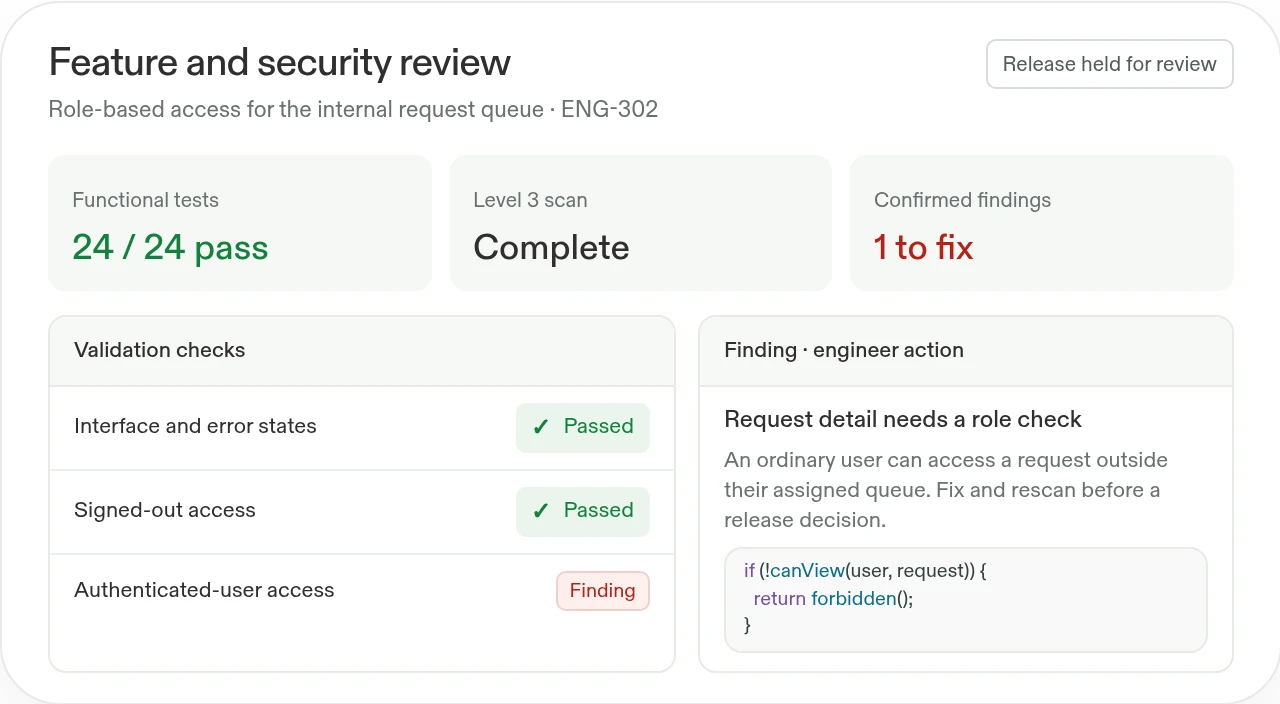
- Review code and test the running appCheck correctness, error handling, access boundaries, and operating behavior. Run a Level 3 scan from Security Center: it runs both a white-box scan with full access to your code and an external black-box scan against a private sandbox copy through the browser and network without reading its source. It checks both signed-out access and ordinary authenticated-user access, then returns confirmed findings to review and fix. These scans complement code review and other release checks; they do not guarantee security.

Build
features
the risks
features
What you'll build
A testable feature, a reviewable change, and security findings from code-aware and black-box scans, with remaining risks documented for the release owner.
Implement this approved feature with its acceptance criteria, error states, and tests. Review the code, run a Level 3 Security Center scan for our Replit app, and address confirmed findings. Prepare the change, test results, and remaining risks for engineer review; do not deploy it.
Works withGitHubLinearJiraNotionGoogle Docs
GitHubLinearJiraNotionGoogle DocsWorks withGitHubLinearJiraNotionGoogle Docs
GitHubLinearJiraNotionGoogle Docsthe risks

Live workspace
Workflow 03
Legacy systems and workflow modernization
Replace brittle workarounds with maintainable, validated applications.
- Rebuild a constrained workflowReplace a spreadsheet model, legacy UI, or manual business process with a purpose-built application.
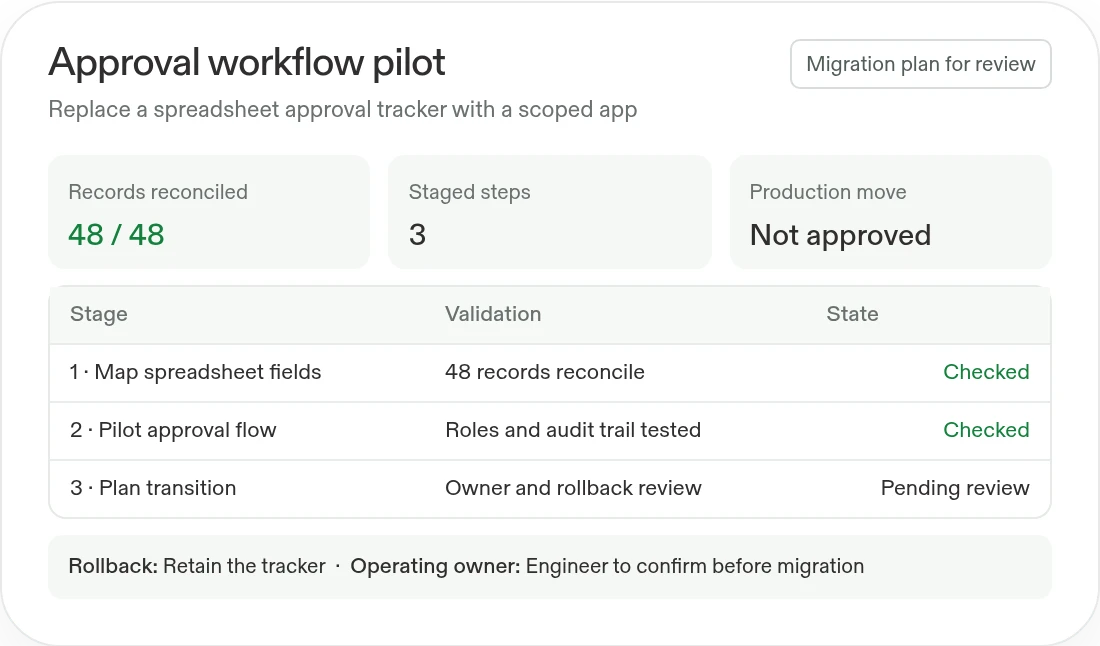
- Plan and validate the migrationMap dependencies and data flows, stage the transition, check compatibility and reliability, and define ownership and rollback.
What you'll build
A working modernization pilot plus the technical evidence needed to decide what should move into production.
Assess this legacy workflow, map its dependencies, and build a scoped replacement. Produce a staged migration plan with validation checks, rollback, and an operating owner.
Works withGitHub Google SheetsSnowflakeBigQuery
GitHubGoogle SheetsSnowflakeBigQuery ↔From
↔Fromworkarounds.
To a plan.
↔From
workarounds.
workarounds.
What you'll build
A working modernization pilot plus the technical evidence needed to decide what should move into production.
Start with this prompt
Assess this legacy workflow, map its dependencies, and build a scoped replacement. Produce a staged migration plan with validation checks, rollback, and an operating owner.
Works withGitHubGoogle SheetsSnowflakeBigQuery
GitHubGoogle SheetsSnowflakeBigQueryTo a plan.
Build the software.Keep the path to release explicit.

Before
A convincing demo can hide missing tests, integration constraints, unclear ownership, and a deployment path that has not been exercised.
 With Replit
Build the software and the evidence for its review together. Use scoped work, realistic validation, and explicit release ownership rather than assuming a successful generation is a successful rollout.
Prepare recurring engineering reviews with Replit Routines
Flag unusual production patterns and give engineers evidence-backed next steps.
Create a Routine named "Production signal watch" that runs every 4 hours at 30 minutes past the hour in my confirmed timezone. Before scheduling, connect and authorize approved BigQuery metrics, an authorized Datadog feed or approved monitoring export, and business-event context; confirm metric scope, thresholds, permissions, and timezone. Compare with the same period over the prior four weeks, correlate traffic, errors, latency, and key business events, and report only threshold-crossing patterns. Include service, time window, source-linked evidence, likely hypotheses, and next query or dashboard; label unknowns. Return the read-only investigation in this Replit conversation. Do not modify monitors, alerts, data, code, or production systems; engineers review.