Agent Habitat Architecture
A proposed security architecture for enterprise AI agents.
Explore principles for environments where agents run code and use tools, plus maturity tracks for evaluating your security controls.
Get the whitepaper
See the full picture.
Core principles, a proposed architecture, and a maturity model.
What's inside
A blueprint for agents you can trust with real work.
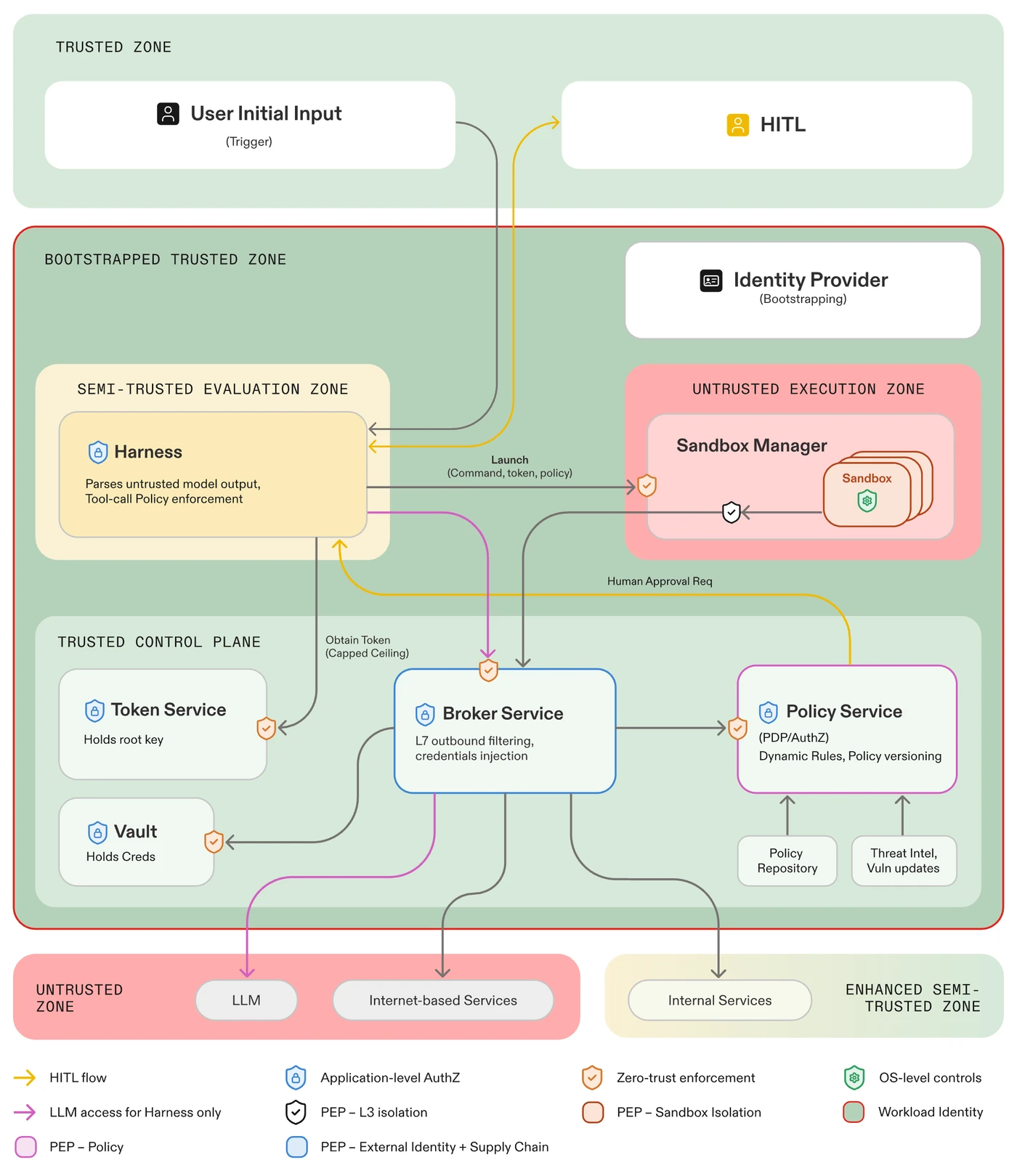
Security boundaries designed to hold even when an agent is manipulated or actively looking for gaps.
Controls that go beyond “tell the agent not to.”
Permissions that only shrink, credentials agents never see, and consequential actions that require human approval.
A practical way to separate security claims from proof.
A maturity scale with testable evidence for assessing your environment or evaluating vendors.
Real-world failures turned into actionable lessons.
How agent systems break, what would have stopped them, and where to strengthen your defenses first.
A closer look
Learn about practical frameworks
Discover how secure agent habitats should be built. The white paper complements industry efforts like the NVIDIA Open Agent Safety Platform and the Blueprint Alliance reference architecture, and goes into more detail for practical application.
Get the whitepaper