Therapy Website Builder
Build a therapy website in minutes for free with AI. Write in plain English or tap buttons to create your website.
How to Use the Therapy Website Builder
Step 1: Share your therapy website's features and requirements.
Step 2: Replit generates your website instantly.
Step 3: Customize features and user experience.
Step 4: Launch your new therapy website.
Therapy Website Builder Example
Built with Replit.
Build your vision in minutes for free without writing a single line of code.
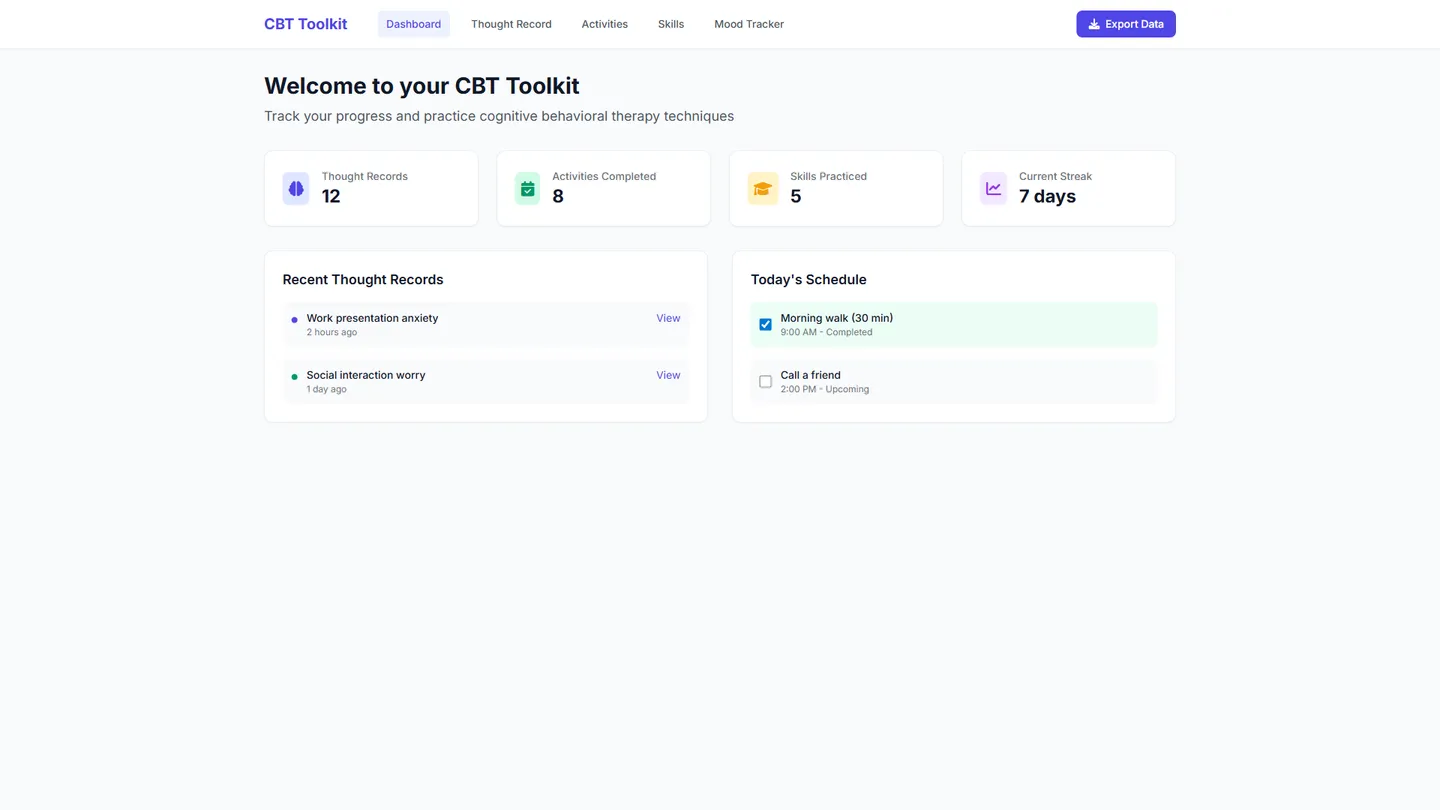
Example
Therapy Website Builder
Prompting the Therapy Website Builder
Cognitive Behavioral Therapy Website Builder Prompt
Create a CBT website that includes a Thought Record Tool to capture situations, automatic thoughts, emotions, and evidence to challenge distortions; a Behavioral Activation Planner to schedule value-based, graded activities with reminders; interactive CBT Skill Modules (cognitive restructuring, exposure, problem-solving) with quizzes and practice tasks; and a Mood & Trigger Tracker for daily mood, anxiety, sleep, and trigger logs with charts and correlations.
Use promptPsychodynamic Therapy Website Builder Prompt
Build a psychodynamic therapy site/app featuring a Life Story Timeline to map significant childhood and life events with emotional tags and narratives, a low-friction Free Association Journal with prompts and voice-to-text, a Dream Log & Symbols tracker with search and pattern detection, and a Relationship Patterns Mapper to chart recurring dynamics, triggers, and emotional responses—supporting insight into unconscious themes, developmental origins, and transference/attachment patterns.
Use promptSpeech Therapy Website Builder Prompt
Create a speech therapy website with an Articulation Practice Studio (targeted word lists, minimal pairs, model audio, visual mouth cues, focused drills), Real-Time Pronunciation Feedback (recording with instant acoustic/visual feedback for targets like /r/ and s-blends), a Language Games Lab (adaptive gamified practice for vocabulary, syntax, categories, narratives), and a Home Exercise Scheduler (therapist-assigned custom practice with reminders, streaks, and parent reports).
Use promptPhysical Therapy Website Builder Prompt
Build a physical therapy website featuring an HD exercise video library (proper form, cues, common errors aligned to evidence-based protocols), a home program builder (personalized routines with sets, reps, progressions, printable PDFs and easy updates as capacity improves), a progress & pain tracker (pain, ROM, functional scores with trend charts), and wearable/tele-rehab sync (real-world step counts, heart rate, motion sensors with secure video sessions) to reduce injury risk, improve adherence, enable timely intervention adjustments, and enhance accountability and access to care.
Use promptTop Therapy Website Features by Type
Thought Record Tool
Users capture situations, automatic thoughts, emotions, and evidence to challenge distortions. This directly supports CBT’s core technique of restructuring thoughts and builds measurable cognitive flexibility.
Behavioral Activation Planner
A planner schedules value-based, mood-boosting activities with graded difficulty and reminders. It combats avoidance and low motivation, which are central CBT targets for depression and anxiety.
CBT Skill Modules
Interactive lessons teach skills like cognitive restructuring, exposure, and problem-solving with quizzes and practice tasks. Structured, skills-first learning aligns with CBT’s psychoeducational, goal-oriented approach.
Mood & Trigger Tracker
Daily tracking logs mood, anxiety, sleep, and triggers with charts and correlations. Data helps identify patterns and reinforces the CBT cycle between thoughts, feelings, and behaviors.
Life Story Timeline
Users map significant childhood and life events with emotional tags and narratives. This supports insight into developmental origins of current conflicts, a central aim of psychodynamic work.
Free Association Journal
A low-friction journal captures unfiltered thoughts with prompts and voice-to-text. Encouraging spontaneous expression can surface unconscious themes and defenses for reflection.
Dream Log & Symbols
Structured entries record dreams, symbols, and feelings upon waking with search and patterns. Exploring latent content provides material for meaning-making consistent with psychodynamic exploration.
Relationship Patterns Mapper
Users chart recurring relational dynamics, triggers, and emotional responses across contexts. Making transference and attachment patterns explicit fosters insight and change in real-life relationships.
Articulation Practice Studio
Targeted word lists and minimal pairs come with model audio and visual mouth cues. Focused articulation drills build accuracy and generalization for speech sound disorders.
Real-Time Pronunciation Feedback
Users record speech and receive instant acoustic and visual feedback on targets like /r/ or s-blends. Immediate knowledge of results accelerates motor learning and self-correction.
Language Games Lab
Gamified activities practice vocabulary, syntax, categories, and narratives with adaptive difficulty. Engagement plus repetition supports expressive and receptive language growth across ages.
Home Exercise Scheduler
Therapists assign custom home practice with reminders, streaks, and parent reports. Consistent carryover between sessions improves outcomes and therapist-client collaboration.
Exercise Video Library
HD demos show proper form, cues, and common errors for each therapeutic exercise. Clear guidance reduces injury risk and improves adherence to evidence-based protocols.
Home Program Builder
Clinicians assemble personalized routines with sets, reps, progressions, and printable PDFs. Tailored plans match patient goals and streamline updates as capacity improves.
Progress & Pain Tracker
Users log pain, range of motion, and functional scores with trend charts. Objective data motivates patients and helps clinicians adjust interventions promptly.
Wearable & Tele-Rehab Sync
Integrates step counts, heart rate, and motion sensors with secure video sessions. Real-world metrics and remote supervision enhance accountability and access to care.
The Therapy Website of Your Dreams
Get started freeFAQ about the Therapy Website Builder
What is the best therapy website builder for therapists?
The best therapy website builder is one that balances ease of use with the flexibility to create a professional and secure online presence. Standard builders offer templates but can limit custom features and design. A more flexible platform gives you full control over your site’s code, allowing you to add specialized functions like secure contact forms or integrate with booking systems.
Replit provides this flexibility. You can start with a website template and edit the code directly in the workspace. If you need help, you can ask Agent3 to modify the design, add features, or fix errors. For instance, you could ask it to implement a specific color palette or add a section for client testimonials. This gives you the power of custom development without needing to write all the code yourself.
How to create a therapy website?
You can create a therapy website by customizing a pre-built template or by building one from scratch with code.
Generally, creating a website involves structuring content with HTML, styling it with CSS, and adding interactivity. For a therapy practice, this means building pages for your services, professional background, and contact information.
Replit simplifies this process. You can start by forking a website template from the Templates page. Then, edit the files in the workspace to add your own text and images. If you need to change the layout or fix a bug, you can ask Agent3 to write or debug the code for you. When you're finished, you can deploy your website directly from the workspace.
What is the best hipaa compliant therapy website builder?
The best HIPAA-compliant therapy website builder is a service that signs a Business Associate Agreement (BAA) with you. Replit does not sign BAAs for its standard hosting services, so it is not a HIPAA-compliant builder out of the box.
HIPAA compliance for a website requires protecting all patient health information (PHI). This involves secure data handling, encryption, and a formal BAA with any third-party service, like a hosting provider, that handles PHI.
You can use Replit as a development environment to build your website's code. You can ask Agent3 to help you create forms, customize a template, or debug your code. To achieve HIPAA compliance, you must then deploy your project on a separate hosting provider that will sign a BAA. You cannot use Replit's standard deployment for websites that handle PHI.
What features should a therapy website include?
A therapy website should include a professional design, clear service descriptions, an "About Me" page, and secure contact methods.
These features build trust and provide essential information for prospective clients. A clean, easy-to-navigate site establishes credibility, while secure forms are vital for protecting private information when handling inquiries.
You can build this by starting with a portfolio or business template. Customize the HTML and CSS files to add your pages and content. For features like a secure contact form, you can ask Agent3 to generate the necessary backend code. If you encounter errors, Agent3 can also help debug your project.
How do I design a professional-looking therapy website?
To design a professional therapy website, start with a clean template that uses a simple layout, a calming color scheme, and intuitive navigation.
A professional site must build trust. Key elements include clear descriptions of your services, easily accessible contact information, and an overall design that feels secure and uncluttered. The focus should be on making potential clients feel comfortable and able to find information quickly.
You can begin by selecting a suitable business or portfolio template. From the workspace, you can directly edit the HTML and CSS files to customize the look and feel. For assistance, ask Agent3 to perform tasks like "change the font to a clean, sans-serif style" or "create a two-column layout for the services page." Agent3 can also help debug code or add new sections. Once complete, you can deploy your website directly.
What are you waiting for?
Build an app without knowing how to code. Tell Replit what you have in mind, then make it your own.